3 preparedness fails

Hand crank radios are a thing.
img src: https://preparedhero.com/blogs/articles/hand-crank
“Sweden lacks a basic preparedness in case of a crisis or war.”

Such was EU’s assessment after looking – in vain – for Sweden’s back-up plans for its electricity system in a disaster scenario. Sweden is not following up on its commitment to EU law. There are other consequences as well.

In 2017, the EU passed a binding law. EU states were to have three plans in case of electrical disruption in place by 2020: a system protection plan, a reconstruction plan, and a test plan. The system protection plan is supposed to kick in when electricity distribution is no longer operating within safety margins.  The reconstruction plan is to provide steps to restore electricity when there has been a partial or complete network collapse. Finally, the test plan is a system of checking that the first two plans are in place and actually work. According to a report in DN this week, Sweden has none of these in place.

Jorunn Cardell from the Swedish Energy Markets Inspectorate says that securing normal electrical distribution has been the focus over the last few years. “If it’s not a normal situation, then we’re in bad shape.”

DN reports that the risk for a sudden and necessary manual disconnect from the grid went from “low” to “real” already in 2022. Yet there has yet to be a practice run.  Swedish Kraftnät has recently handed a test plan in to the Energy Inspectorate for approval. The other plans are still being worked on.

Not just national security

The three plans are considered important for national security reasons. Electricity is important for the basic functioning of society. In addition though, Cardell notes, a lack of functioning electricity frightens people.

The EU is no stranger to bureaucratic regulations. What is strange, however, is that Sweden is failing to live up to a basic preparedness obligation.

Safer, freer, and heavy weapons

Sweden to send in the big guns
image source: Andrea Adriani https:esgnews.com

Greener, safer, freer. With these words, Prime Minister Ulf Kristersson summed up Sweden’s vision for the EU during its presidency. A large part of the “safer and freer” bit is shoring up, and even increasing, support to Ukraine. A few days, later, and to that end, the government announced that Sweden will be sending the biggest package of military help to Ukraine than it has ever sent before.

“Fastest Howitzer in the world”

The Swedish package consists of the artillery system called Archer, the infantry carrier called “90,” as well as other military items. The Archer is a relatively zippy and mobile wheeled vehicle, that can send artillery grenades over a 50km range and can go 65 km/hour. The gun carriage is mounted on a long bed truck from Volvo and that tips up to fire. As it can be controlled via computer, a soldier doesn’t need to leave the relative safety of the cab to operate it. Youtube’s Extreme World calls it “the fastest howitzer in the world,” and Ukraine has been asking for it for months.

Sweden will also send around 50 armored infantry light tanks called “90,” that can transport up to eight soldiers and that has a mounted 40mm automatic canon. The package will also include the light, portable, Next generation Light Anti-tank Weapons (NLAWs), mine clearing equipment and assault rifles according to USNews.

Gathering dust anyway

It will take months for the main events, Archer and 90, to arrive in the Ukraine and be up and running. Ukrainian soldiers need to be trained on the Archer system somewhere – perhaps here in Sweden, which would be new. Also, the Archers that Sweden may now send to Ukraine are not the latest model, but the Archer B model that are mostly sitting in garages under car covers. The latter is due to the fact that Sweden must still be able to mount a defense itself should it be attacked, while the former’s time factor is due to current laws on weapons export. 

In the future, the time lag might be shortened. To enable Sweden to send Ukraine these heavier munitions, Sweden and Ukraine have to enter into an agreement to cooperate on defense equipment procurement. This way, Ukraine can jointly order defense equipment with Sweden, allowing Sweden to place additional orders to existing contracts and give the equipment to Ukraine. Time and money saved.

All this is not 100% uncontroversial, but a full-scale war happening on the European continent has changed everyone’s notions on what the future was going to look like. To be greener, we’ll need safer and freer.

When a covid vaccine becomes available

Who gets the vaccine?
pic: verywellhealth.com

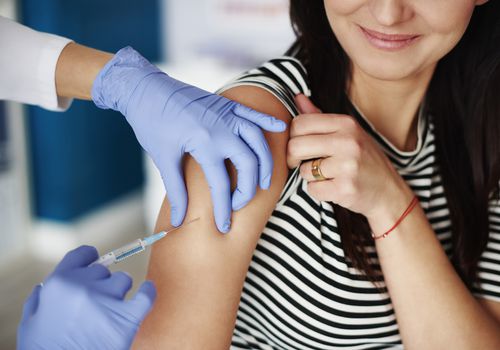
Yesterday afternoon, Reuters reported that Astrazeneca had signed a 400 million dollar contract to supply “european countries” with 400 million doses of an eventual vaccine. However, not all countries were actually in on the deal, and it’s unclear what the arrangement means for Sweden.

The contract is for a vaccine called AZD1222, developed at Oxford, that isn’t at all fully developed and tested yet, but is expected to be perhaps ready for delivery at the end of the year. Germany, France, Italy and the Netherlands are the countersigning parties, in a constellation called “Europe’s Inclusive Vaccine Alliance”. In another contract, Astrazeneca has another deal for 1.7 millions doses with the US, the UK and India.

SVT reports that, so far, Sweden has no similar deal. Minister for Health and Social Affairs Lena Hallengren, however, came out yesterday to say that Sweden is in intensive negotiations with Astrazeneca and other vaccine developers. As for the deal that the other European countries have made, it is still unclear as to if these countries were out for themselves or whether the deal they signed is meant to help all or any other European countries. When asked specifically whether Sweden was any kind of partner to this, Hallengren said that the signing countries should come out and say what the story is: “The ambition is to see to it that other EU countries are a part of it, but speed has been needed.”

It was only at the end of May that Sweden came around to the realization that maybe a vaccine deal might be a good thing. The strategy they put together consists of a “continued international cooperation” and the nomination of a vaccine coordinator (!) with a mandate to see that Sweden’s needs are taken care of. The Public Health Agency of Sweden (Folkhälsomyndigheten) has been given the responsibility to prioritize the vaccine’s distribution when it becomes available.

Seeing, perhaps, that these measures are likely ineffectual (bordering on pathetic) the government announced Sunday that it has upped the stakes a bit. From originally only granting a limit of 350 million kronor for “preparedness investments” (bereddskapsinvestering), the Public Health Agency has now been given permission to loan up to 2 billion kronor. “When a vaccine becomes available, the means to procure it must also be available” said Minister Hallengren.

This may mean that Sweden has come to understand that Sweden’s municipalities do not, and have not had, the muscle or the weight to bid against other countries when trying to purchase supplies: Sweden’s system of decentralization has meant that every municipality has had responsibility to get its own supplies. It was only lately realized that the municipality of Västerås doesn’t quite have the purchasing power that buying for the entire country of say, Austria has. To give a heavy purse to the Public Health Agency to swing with for Sweden, if it’s not too late, will help.

Furthermore, any vaccine doses that are procured shall be evenly distributed around the country: “it makes no difference where you live” proclaimed Hallengren. Sadly, it has been all too apparent in the case of Sweden’s elder care, that when supplies are limited, a reckoning of your importance is indeed taken into account.


EU summit and budget coming right up

many factors at play between Sweden and the EU budget
pic: wired.com

The EU’s Corona crisis support package/recovery plan/budget is still being negotiated, and quite rightfully so. It’s a huge number that is being thrown around – 1.85 billion euro, or 2000 million dollars. (The United State’s bailout package is way more – 2 trillion dollars aka two million million dollars.)

Sweden has been one of the “frugal four” – countries that want the aid package to countries who have been hardest hit by covid to be in the form of a loan instead of a gift, but it looks like that position is weakening.

Sweden’s EU commissioner Ylva Johansson says that Sweden’s position is short-sighted. “The lessons learned from the finance crisis [in 2008/9] is that we acted way too slowly” Johansson said in Sweden’s Radio Saturday interview program: “If we don’t implement a big recovery, we’re going to have the worst crisis that the EU has ever experienced. Way, way worse than than the finance crisis.”

However, the package’s main financing comes from loaning money with all of the EU countries as guarantors. This would be a first, and is likely also precedent-setting, and allows the EU to act – even more – as a single, overarching government sitting far away from Sweden. The Swedish government’s critique of the plan, Sweden’s radio reports in another article, is that the budget is too big, there is too much money in the fund, the funds should be loaned out and not given out, and it should be a fairly short term loan at that. The way in which the money is spread out is not popular in Sweden either: “A lot of money goes to countries that aren’t even hard hit by corona” remarked Minister for Finance Magdalena Andersson, “and that seems a little strange.”

The Left party, never a fan of EU in the first place, is more virulently opposed to the plan. In a debate article in Aftonbladet a few days ago, party leader Jonas Sjöstedt and EU parliamentarian Malin Björk write that the recovery fund increases EU’s power over Sweden dramatically. Money that could have gone to climate investments and welfare in Sweden now goes to “Orbán’s oligarchies and Brussels’ bureaucrats.”

On the other side of the equation is the Liberal party who have always been very EU-friendly. Both of them, officially or unofficially, are supporting parties for the reigning Social Democrats. The Left party has way more votes and is an ally of old, while the Liberal party has always been on the right, before former party leader Björklund’s children pushed them into the center-left camp. The Social Democrats are getting it from both sides, and the EU is pushing as well, in the form of EU commissioner Johansson.

The next EU summit (via video this year) is – per usual – during Midsommar. Sweden was never able to persuade the EU to change the date, even by a day, to accommodate the single biggest holiday in Sweden, so it’s kind of unlikely (sadly) Sweden will have a deciding voice in the EU budget.

28 Nov. – Johansson at the gate

Ylva Johansson finally on the job
pic: epthinktank.eu

The European Union’s Commision is finally fully staffed, approved, and ready to get to work. With a vote of 461 for, and 246 against, the commission headed by Ursula von der Leyen was approved by the EU parliament yesterday after an occasionally bruising interview process.

Sweden’s own Ylva Johansson (see this post) officially begins her stint as Commissioner for Employment and Integration – in other words, Migration – one of the most visible and controversial posts in the EU (see this post). She is starting off with getting her boots on the ground in Greece, where she will speak to Greek representatives and NGOs to discuss how they can move forward.

The Greek refugee camp at Moria has been regularly labelled a human rights disaster for its wretched conditions, most recently in a report from EU’s auditors (you can read it for yourself here) describing situations of 16 boys sleeping in a container built for max 10, people and families living in tents in the bush, and more. Although the initial contact regarding asylum is supposed to take place only a few days after arrival, the average time is 218 days for a decision at the first level. Asylum seekers who arrived in 2018 have appointments for 2023.

Greek officials are in the process of closing the camp, and transferring the refugees inland, but nothing is expected to essentially change just because of a new location.

One of the suggestions for an EU-wide migration policy is that countries would pay to not take refugees – in which case a price would be attached to each migrant.

“Not a suggestion I would choose at first go” said Johansson. “What’s been discussed between member countries, that I’ve heard, is that they could contribute in a practical way with personnel or other efforts. That’s perhaps a better track to start discussions on.”

Von der Leyen has gone on record to say that “Migration is a phenomenon that is not going to disappear. Our job in the EU is to develop an overall migration model that is humane and effective. A model that can make us an example for the rest of the world in how migration can be handled” (DN.se/UvdL).

No pressure for Johansson, in other words.

20 Nov. – Will the EU renew Sweden’s exemption?

bus biofuel threatened by subvention ending
pic: mostphotos.com

Traveling by bus could be become more expensive if EU has their way with Sweden. Sweden has been enjoying an EU Commission-approved exemption from taxes on biofuels for several years, which has not only spurred use of the environmentally-friendly propellent, but has made it cheaper than regular gas or diesel (pwc.se). According to SVT.se, this subsidy is likely to end by 2021.

All of Stockholm’s busses are fossil-fuel free. 15% run entirely on biogas, and 51% of Stockholm buses run on biodiesel, according to biofuel express.

Just over 10 years ago, ethanol-driven cars were all the rage, and were considered the future. In 2006, the government passed a law requiring all gas stations to install ethanol pumps – those that couldn’t afford it had to close. Then, it turned out that motors didn’t actually handle ethanol that well, and questions were raised about how fabulous it really was if food stuffs were being turned into driving fuel. As SVT reports in this older article, the government also decided, at about the same time, to cut its subsidies for ethanol – as it was all going so well. It was soon curtains for ethanol, and everyone turned to wonder-fuel diesel instead. Fast forward a few years and we find that diesel is bad and electricity is transportation’s future.

Stockholm’s buses, however, have been using biogas very successfully, cheaply and cleanly. If Sweden is to enjoy the current lower cost, a new subsidy application to the EU will be needed. Right now, though, the EU is trying to get Sweden to pay more to the EU budget (negotiations on the next five-year EU budget are already very heated), and the EU isn’t likely to look too favourably on bailing Sweden out on this issue.

8 Oct. – Johansson: the verdict, later today

commissioner-to-be? Ylva Johansson
pic: europeaninterest.eu

Ylva Johansson, Sweden’s candidate to the European Commission, will find out today if she has to return to sit before the EU parliament for further questioning, or whether her written answers were good enough. Johansson is up for the position of Commissioner for Employment and Integration, a posting that has got to be one of the most difficult and visible positions in the commission.

After the initial 3-hour long interview a week ago, there were several disgruntled listeners. Johansson was accused of being unclear on several points, from asylum and migration goals to human rights and security issues. Only the Progressive Alliance of Socialists and Democrats party (S&D – in which group Sweden’s Social Democratic party belongs) and the Alliance of Liberals and Democrats (ALDE) gave her the thumbs up right away. After the interview, she was given a list of questions to answer in written form, and 48 hours in which to answer them. These answers were sent to the committees for each EU party (who are different than Sweden’s party constellation) for their consideration.

We’ll find out later today if her answers are sufficient.

Update: her answers were sufficient, so Johansson wasn’t asked to come back for a second round of grilling. This means that she is on track for approval, when, on October 23, the EU parliament votes thumbs up or down on Ursula von der Leyen’s entire slate of commissioners.

Mon. 19/8 – GDPR takes down school photos

pic: japanphoto.se

The new school year has kicked in and families everywhere are scrambling to get the kids out of the door in time to make it for the first bell. Most of us can look back on our school days – braces, odd haircuts, ugly clothes and all – with the help of our school photos, those portraits that painfully documented each school year. But class photos, and the photos in their paper, fake-wood frames sent to grandparents the world over, may no longer be made available. GDPR, the General Data Protection Regulation instituted by the EU in 2016, has hit the classroom.

GDPR’s regulations require, that in the case of school photos, parents and guardians must sign a release form allowing the photograph of their child be taken. This means a lot of paperwork, and some schools just don’t feel like they have the time and energy to make that effort. The city of Malmö has made just that decision for all of it’s public schools. Other municipalities have said they’ll keep up the tradition, and take on the paperwork, at least for the time being.

GDPR has caused administrative headaches for much more than just schools. The cost of implementing GDPR rules, especially for small businesses, has been by all accounts astronomical – hurting the small business that GDPR was meant to help. In many cases, only the (already) strong have survived.

Type in “GDPR uninten” … and the rest is filled in by Google automatically. The latest unintended consequence is the demise of the school photograph. Not a big deal, perhaps, but most certainly something that the regulators didn’t see happening.

Thurs. 8/8 – Commissioner Johansson

Ylva Johansson
pic: regeringen.se

The Löfven government today nominated current Minister for Employment, and Integration, and long time Social Democratic party member Ylva Johansson to be Sweden’s next EU commissioner.

In case you’re not 200% on the topic, the EU has 28 commissioners, one from each member country. After being nominated, they are questioned by the EU Parliament regarding their general suitability, and if that goes well, they form the EU President’s cabal. Team. Once there, they are allotted their own portfolio to manage, with the expectation they will act in the EU’s interests, not in their country’s interests. 

Since 2010, Sweden’s EU Commissioner has been Cecilia Malmström from the Liberal Party. She has held the Home Affairs portfolio, and for the last five years, the Trade portfolio. With Trump alternately slapping on tariffs or threatening to slap on tariffs, she has had her hands full, and has arguably done a great job parrying, yet not quite antagonizing, the Trump administration. Trade is a high level portfolio and it’s been nice for Sweden to hold it. 

Ylva Johansson began her political career as a member of the Left Party Communists (Vänsterpartiet Kommunisterna) back in 1988. (In 1990, the party changed its name to the Left Party after the collapse of the Soviet Union.) Johannson become Minister for Schools for the Social Democratic party in 1994. (Wikipedia doesn’t say why she changed parties, but it was definitely a good career move.) She has also served as Minister of Health and Social Affairs. Johansson represents north and east Skåne in Parliament.

Since the nomination is always worked out with the EU President in advance (the newly appointed Ursula von der Leyen from Germany – see earlier post), Johansson’s nomination is basically secured. von der Leyen has also gone on record for being in favor of a gender-equal commission (it’s currently – and always has been – very unequal) so that works for Johansson as well.

Sat. 27/7 – omg what is that stuff?

pic: pbs.org

Just when you want to throw yourself out of your office window from the heat, and preferably right into the nearest swimming hole, the swimming hole in question is closed because of algae blooms. Stockholm city has closed one major beach, Lövstabadet, and even warned people from coming into direct contact with the ground around it (!).

EU, in cooperation with Stockholm County Administrative Board (länsstyrelsen), is tracking algae blooms, hoping to find them before they hit the beaches and hit all the people that are hitting the beaches ().

An algae bloom (algblomning) is that green, soupy mess that looks like huge vats of stringy pea soup were just poured into the water right where you want to go swimming. Don’t swim in it. The stuff is seriously bad for you, and for the environment. Algae blooms are entirely natural and can happen even without human interference. But they are worse, and more frequent, when fertilizers full of nitrogen and phosphorus wash away from farmland and into water.

Nitrogen and phosphorus are not just the greatest thing for growing crops, the also grow algae. All these sunny days, plus water, plus carbon dioxide plus the extra fertilizer? It’s one big bonanza for algae, and also for all the itsy bitsy bacteria in there. The bacteria start to hog all the oxygen that is naturally dissolved in the water, leaving less and less oxygen, and eventually none, for the fish and other air-needing organisms. So yes, fish death. Lake death. Baltic Sea death. It’s all bad. The soupy green stuff is often also toxic as all get out to us humans as well. These particular algae blooms in English are generally called HABs, or harmful algae blooms (so original!) and are the home of a particularly unpleasant strain of bacteria called cyanobacteria. Don’t even think about swimming in it, even if you’re really really cool, or really really hot. This goes for your pets too.

Shout out to Wikipedia ( https://en.wikipedia.org/wiki/Algal_bloom ), for the concise explanation of algae blooms.