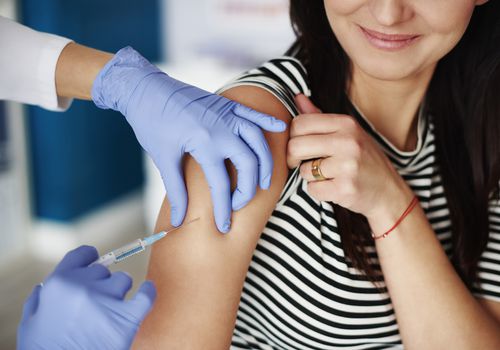
Halland, a county just south of Gotheburg (Göteborg) on the west coast of Sweden, isn’t pulling any punches: persons under 65 won’t be vaccinated until August, SVT reports.
The plan was that most everyone was going to get the first dose sometime in April and that everyone would have gotten the second dose by midsummer – late June . However, the latest with the internationally unpopular but at least local vaccine, from half-Swedish Astra Zeneca, is that the second dose needs a ten-week interval from the first dose. Which pushes the second dose date weeks later, in August.
It was unclear how many actually believed the original prediction, but for some it is undoubtedly a gut punch. It also leaves other counties’ residents wondering how much their representatives’ promises are worth. Time to revisit those summer travel plans – again.
Sweden’s neighbors less than delighted with Swedish tourists pic: Nordiclifescience.org
Sweden’s borders aren’t closed, and everyone is welcome to Sweden. Swedes, on the other hand, are not at all welcome in any one of countries it borders. No one wants Sweden’s infection rate to become their infection rate. Or, as the Finnish Minister for home affairs Maria Ohisalo put it in DN, “We must continue to be pretty careful. Finland has sacrificed a lot to decrease infections.”
And now for some covid statistics
In other words, they’re not going to blow all their hard work keeping their death toll down just to let Swedes come in and infect them with covid. (Finland’s stats: 7,234 covid cases, 329 deaths.)
The same attitude has also been found in Norway, (Norwegian stats: 8,954 covid cases, 251 dead), and Denmark (Danish stats: 12,916 covid cases, and 609 deaths).
Sweden’s stats (73,858 covid cases and 5,482 dead) are just not impressing our neighbors for some reason. The hope that herd immunity would quickly establish itself or that the economy would be spared has so far not impressed anyone either. The New York Times quotes Jacob F. Kirkegaard, senior fellow at the Peterson Institute for International Economics, saying “They literally gained nothing. It’s a self-inflicted wound, and they have no economic gains.”
These negative reviews have really gotten the dander up of Sweden’s leading politicians and the Swedish Public Health Authority. And quite possibly, the border situations will soon change.
border restrictions changing
SvD reports, that Denmark is now lightening up on their restrictions. Swedes living in Skåne, Blekinge and Västerbotten may be allowed over the border starting Saturday morning. Norway’s leading daily paper Verdens Gang reports that also Norway might open its borders to Swedes living in Skåne, Blekinge and Kronoberg. (Apparently, Västerbotten and Kronoberg are not considered same same to Norway and Denmark.) Finland will get back to us in about two weeks when they review their restrictions again.
New corona commission leader Mats Melin introduces himself while appropriately distancing himself from party politicians pic: SvD Ari Luostarinen
After the first suggestions regarding the directives and staffing of the coming corona commission were rejected by a majority of parliament, the government has now put a plan together for the corona commission. In a press conference this afternoon, DN reports, the government announced that lawyer and legal consultant Mats Melin will head up the commission, and that the commission will be comprised of six or seven other, as yet unnamed, persons.
When the idea of a commission was first floated, the governing Social Democratic party’s suggestion was not to publish any results until after the next election. “We want to remind everyone that what we hear from the municipalities and regions is that they’re a little tired of reporting, and that they need to focus on dealing with the virus. I don’t want to have a situation in which we put yet another burden on them” was the word then from Prime Minister Löfven. In addition, it was said, the staffing of the commission would largely be made up of people with specific party affiliations.
The response from the majority in parliament was along the lines of “nice try,” and the government has since been forced to back away from both suggestions. Which is good since, as DN reported a couple weeks ago, the government has a poor track record when it comes to corona-related transparency. Emails have a way of being erased, DN wrote, and meeting notes have a way of being classified as “working material” and are thus not part of the official (and public) record. This can still happen in the future, but at least the grossest risks might be avoided by more strongly separating the commission from party politicians.
The corona commission that will be formed sometime in the near future must now be staffed by people who have the trust from all the different parties in parliament. “I think it’s extremely important that those who are chosen have the trust of all parties, and that they can’t be suspected of favoring one party’s interests over another’s” said Left party leader Jonas Sjöstedt to SvD. In a remarkable constellation, the Sweden Democrats, Christian Democrats, and the Center, Liberal and Moderate parties are all united on this. (No word from the Green party but one must assume that they’re somewhere behind the Social Democrats.)
The plan is that Sweden’s elder care during the corona crisis will be the focus of the first part of the investigation, with a report due to be presented in the fall. A more in depth report will come in the fall of 2021, and then on February 28th, 2022, the final results of the commission’s findings will be presented. “I’m looking forward to seeing the results” said Löfven.
Another important date is the next election: September 11, 2022.
home services may be denied for summer guests pic: senioradvice.com
In another ripple in the wake of Covid, several municipalities have petitioned the government to be able to deny summer residents (people moving to the summer houses for the summer months, for example) the home services they’re granted in their home municipalities. Many parliamentarians understood and agreed with the municipalities, and on the 3rd of June a majority said that the government must temporarily change the law and allow municipalities to deny services. But yesterday, the government said no, the municipalities must provide these services by law. This has caused consternation and anger on the part of these municipalities. Some have now said they’re ready to go their own way and ignore the law.
Home services cover a lot of things. Municipal employees are sent out to homes to help elderly, sick and/or injured with things like cleaning, shopping, getting dressed, taking a shower, making the bed, cooking food, accompaniment on shopping rounds or just helping with a walk, and more. What clients can get help with depends on their needs – there isn’t a ready-made list. Furthermore, different municipalities can grant different help: One municipality can say that a client can get help with their shopping four days a week while another might say something different. One municipality can grant 10 hours of help a week without being any more specific about what tasks the person is to get help with. It’s not free – there’s a price list for each activity and the prices can vary per place. However, it’s subsidized, and the monthly maximum price, for the user, is currently just over 2000 SEK.
This is not the real cost of the services though, and the municipalities say they can’t afford it. When people who normally receive services in their home municipality move for the summer, the summer municipality takes over the responsibility for them, including the manpower and the cost.
Lena Hallengren, Minister for Health and Social Affairs, explained the no by saying changing the law was just too complicated a thing to accomplish in a short time: It can’t be done in a wave of the hand, but needs a thorough inquiry and an impact analysis (DN.se).
Not good enough, say several municipalities. “We’re going to continue saying no” said Orust town councilor Catherina Bråkenhielm, DN reports. “We’re holding the line and denying home services for the time being” said town councilor Mats Abrahamsson.
Not even the Swedish Association of Local Authorities and Regions (SKR) is happy with the government: The muncipalities “don’t want to say no to summer guests, but they don’t have the staffing. They’re also worried about a higher local infection rate now when the government has lightened up on restrictions,” noted Gregor Bengtsson, coordinator for elderly care at SKR. There are about 60 who are saying no, Bengtsson says.
The consequences of the municipalities’ actions are at this moment still unclear. Bengtsson says the they might be investigated by the Swedish Health and Social Care Inspectorate (Inspectionen för vård och omsorg, IVO) and that some have been reported to the Office of the Parliamentary Ombudsman (justitieombudsmannen, JO). More immediate effects, though, are going to be felt by the elderly or ill, who have been granted assistance in their home area, and who are asking for it – as allowed by law – also when they enjoy the summer away from home as well.
Absolut midsommar – keeping health care funded pic: absolut.com
Is Sweden a socialist country?! Although even through the 80’s it was still a thing, the idea that the Swedish state owned more businesses than not has pretty much been put to rest by this time. Still, there are several huge businesses that are owned or partly owned by the state, who has proven to be, at best, only a so-so business partner. SvD‘s Torbjörn Isacson went through part of the list today, with Telia’s recent sale of its Turkish business as a starting point.
Sweden owns 39.5% of Telia. The next biggest owner of Telia is Blackrock, which owns 3.1%. It’s safe to say Sweden’s ownership is the big one. Although it’s a controlling interest, the state doesn’t control Telia. Telia has a board like any other public company, who does the day to day work (for more about Telia see this blog post). However when Telia loses value or does bad business decisions it’s the state that takes a major hit as any huge shareholder would. Also when Telia does a good deal and makes money the state makes money. In this case, this means Swedish taxpayers.
That’s why Telia’s recent sale of its holdings in the Turkish company Turkcell must make the news. Not only did Telia and its shareholders take a huge, huge loss because the board’s idea was a disaster, Telia sold its holding to a buyer whose CEO is Turkey’s authoritarian leader Recep Tayyip Erdogan. As shareholders, Sweden’s taxpayers should be in the know – but in reality taxpayers have perhaps even less power than an average shareholder since the Swedish state must resign its active partner role to prevent a truly socialist state of affairs (see China for comparison).
Still, that doesn’t mean that the state ignores its business holdings entirely. Just recently, SvD reports, the parliamentary committee on enterprise (näringslivsutskottet) called on the three top state-owned businesses – Vattenfall, Jernhusen and Swedavia – to answer some questions on business practices like annual dividends, and handling the corona epidemic.
Vattenfall has been a leading money-loser. If it’s not one thing, it’s the other: too much snow, too little sun, too little snow, too much sun – and we won’t even bring up wind – they’re all reasons why Vattenfall needs to raise prices on Swedish energy consumers. Then there are other issues like nuclear power and electricity infrastructure that the state of Sweden is directly responsible for but again, must somehow disengage from their effects on its own business, Vattenfall, which, again, is somehow the reason Vattenfall must raise it’s prices on Swedish energy consumers. But it isn’t only Sweden where Vattenfall has its business. Vattenfall has business all over the world and the current record-low cost of electricity is again a reason that Vattenfall is losing money.
Jernhusen owns buildings and other real estate all along the Swedish railroad network and also has dealings inside Norway. Swedavia runs the airports. Both of these were taking losses even before Covid pulled the rug out from under them. And then, of course, we have SAS of which Sweden and Denmark each own just under 15%.
Another 100% state-owned, and Covid-hit business like all others, is Svenska Spel where the lack of sports and the closing of casinos has been financially disastrous. One would think that the state would be happy about less gambling, but it’s uncomfortable when it’s also making money for the state. We all know PostNord, which is 70% owned by the Swedish state and 30% owned by Denmark (note: for some reason, however, voting power is split 50/50). It has the impossible task of trying to be profitable while being prevented from raising prices or laying off workers, or even quitting the business entirely, by its own owners.
To make matters worse, it was in the 100% state owned LKAB (Luossavaara-Kiirunavaara AB) mines in Gällivare that a cluster of Covid virus has recently exploded. But even before that a number of questions regarding work practices were piling up.
Corona makes life more difficult for basically everybody, and misbehaving companies are common. Plus, some essential services should be guaranteed by the state, even if they’re not profitable. But as a general rule, should states be in the business of making money? Oh. Wait. We can’t forgot the good news – Systembolaget! A sure money-winner in Covid times and not. Swedes will have to keep drinking to keep the money rolling in – good thing it’s Midsommar.
Yesterday afternoon, Reuters reported that Astrazeneca had signed a 400 million dollar contract to supply “european countries” with 400 million doses of an eventual vaccine. However, not all countries were actually in on the deal, and it’s unclear what the arrangement means for Sweden.
The contract is for a vaccine called AZD1222, developed at Oxford, that isn’t at all fully developed and tested yet, but is expected to be perhaps ready for delivery at the end of the year. Germany, France, Italy and the Netherlands are the countersigning parties, in a constellation called “Europe’s Inclusive Vaccine Alliance”. In another contract, Astrazeneca has another deal for 1.7 millions doses with the US, the UK and India.
SVT reports that, so far, Sweden has no similar deal. Minister for Health and Social Affairs Lena Hallengren, however, came out yesterday to say that Sweden is in intensive negotiations with Astrazeneca and other vaccine developers. As for the deal that the other European countries have made, it is still unclear as to if these countries were out for themselves or whether the deal they signed is meant to help all or any other European countries. When asked specifically whether Sweden was any kind of partner to this, Hallengren said that the signing countries should come out and say what the story is: “The ambition is to see to it that other EU countries are a part of it, but speed has been needed.”
It was only at the end of May that Sweden came around to the realization that maybe a vaccine deal might be a good thing. The strategy they put together consists of a “continued international cooperation” and the nomination of a vaccine coordinator (!) with a mandate to see that Sweden’s needs are taken care of. The Public Health Agency of Sweden (Folkhälsomyndigheten) has been given the responsibility to prioritize the vaccine’s distribution when it becomes available.
Seeing, perhaps, that these measures are likely ineffectual (bordering on pathetic) the government announced Sunday that it has upped the stakes a bit. From originally only granting a limit of 350 million kronor for “preparedness investments” (bereddskapsinvestering), the Public Health Agency has now been given permission to loan up to 2 billion kronor. “When a vaccine becomes available, the means to procure it must also be available” said Minister Hallengren.
This may mean that Sweden has come to understand that Sweden’s municipalities do not, and have not had, the muscle or the weight to bid against other countries when trying to purchase supplies: Sweden’s system of decentralization has meant that every municipality has had responsibility to get its own supplies. It was only lately realized that the municipality of Västerås doesn’t quite have the purchasing power that buying for the entire country of say, Austria has. To give a heavy purse to the Public Health Agency to swing with for Sweden, if it’s not too late, will help.
Furthermore, any vaccine doses that are procured shall be evenly distributed around the country: “it makes no difference where you live” proclaimed Hallengren. Sadly, it has been all too apparent in the case of Sweden’s elder care, that when supplies are limited, a reckoning of your importance is indeed taken into account.
Covid meets national security pic: shufordprinting.com
When China became one of the biggest shareholders in Norwegian Air this spring, a bunch of red flags suddenly went up for the government. Quite correctly, the market crash that was a result of the initial Covid shock opened the way for some big and little investments in different industries – just ask any one of the thousands of small investors that took the opportunity to buy some expensive stock at rock bottom prices. But for many people, it’s one thing for some guy to buy some Ericsson stock (and, sadly, it generally is some guy) and it’s quite another when a foreign government becomes a controlling shareholder.
Up until this point, people who thought that foreign ownership of more or less strategically crucial national assets was worrisome were basically ignored. It was a very near miss when Russia was about to buy the chance to “cooperate on maintaining” the Slite harbor in Gotland for their oil pipeline Nord Stream 2, for example. At first a lot of breath was wasted trumpeting that Swedish municipalities could verily make their own decisions about these things (kommun självbestämmande) – but then both Slite and Karlshamn voted in favour of the “cooperation project”.
Only in the 11th hour did the Social Democratic government step in and manage to convince Slite, at least, to say no to the deal. Karlshamn didn’t say no, and the government couldn’t convince its own municipality that a slew of Russian engineers crawling around laying cables and whatever else was perhaps a poor idea. Karlshamn got jobs and a slew of cash from a Dutch company named Wasco, who provides for and supplies the Russian pipeline, and Slite got some vague promises of similar levels of investment from the government.
The same government also gave the go-head (read: silence) to other sales. Imego, Norstel och Silex, all advanced hi-tech companies with products that can be used for both civilian and military purposes, are now owned by China (see this article for more information). These are just three examples of many. At the time, Minister for the Interior Michael Damberg expressed “dismay” that not more Swedish hi-tech companies could remain Swedish, but that was all that was done or said. It took the Norwegian Air example to finally get Sweden’s attention.
As anyone who has lived here knows, for any issue there is a commission to investigate it. The issue of direct foreign ownership by not-so-friendly and not-so-democratic regimes also has an ongoing investigating commission, whose conclusions are set to be made public sometime late next year. The Moderate party, and now a majority in parliament, has said that the issue is too important to wait on some commission’s report. “Threats of these kind have actually existed for a long time. Other countries have had laws about this for a long time. What no one could have known was that Covid would make the issue [of direct foreign ownership] so acute” said Ulf Kristersson to SvD.
That was in April. At a press conference late yesterday, the Social Democratic government announced that it was now taking the bull by the horns, and presented list of measures it was getting ready to take in order to protect Swedish assets. Foremost among them? Another commission is going to look at the issue.
“Sweden, and the EU, are vulnerable in a pandemic” stated Michael Damberg. So one of the most immediate actions he’s taking is giving the Swedish Defence Research Institute the authority to do a study on foreign investment in “protection worthy” operations (skyddsvärda verksamheter) in order to have better background knowledge. The Institute is to map out which branches in particular could jeopardize Sweden’s security (if, say, they were to be bought up by non-friendly states). Another measure is to authorize Sweden’s Inspection for Strategic Products (ISP) to collect information on foreign companies that want to buy Swedish companies.
If those measures do not a good night’s sleep make, the EU is taking its own steps. Due to be done in December of this year, the EU is putting together a framework for laws that can help prevent foreign ownership of assets that have security implications. Germany, and other EU countries, already have laws that allow the government to put a stop to sensitive sales.
This is not to say that SAS couldn’t be majority owned by China in the future though. When the Norwegian government was tasked with saving Norwegian Air with taxpayer’s money, one of the requirements to be bailed out was that Norwegian convert its leasing obligations into stock. Norwegian had a leasing arrangement to the tune of lots of billions to a company that in the end is owned by the Chinese state. When it had to convert the leasing agreement into stock, suddenly that company owned a lot of Norwegian Air stock. In other words, it wasn’t like the Chinese government went discount shopping and bought a bunch of Norwegian Air on purpose and because it was such a great deal (it could actually be a really bad deal – how long will it be before people fly like they used to?). SAS also has plane leasing obligations with Chinese companies, so much will depend on how much they might need to be bailed out and what the requirements for a bailout will be.
One would hope that the requirements made to SAS, if an even huger bailout becomes necessary, could not result in the same ownership that Norwegian now has, but you never really know. And besides, foreign direct investment is something Sweden always tries to encourage – it brings jobs and development. The trouble is foreseeing what human rights and environmental track record a direct investment brings along.
Covid changes a lot of things. Even prison sentences. DN reports that the sentences being handed out after conviction are being shortened because of the isolation measures instituted at the prisons to keep Covid out.
Yesterday, a man convicted of selling large amounts of narcotics was given a 5-year sentence instead of the original 6-year sentence because of the pandemic. “I pressed for a lesser sentence… he isn’t allowed to have visitors. It’s very trying,” said defense lawyer Frida Wallin.
In another particularly serious narcotics case (synnerligen grovt narkotikamål) the number of days the suspect was held before being charged was counted in reducing the sentence the suspect eventually received. While he was being held, he wasn’t allowed visitors due to the risk of spreading Covid. In this case, the judge of appeal (hovrättsråd) explained, the later-convicted felon was under particular physical and mental strain during that time, which should be taken into account in sentencing, even if the restrictions themselves were proper.
“Since a court has in these cases made the call that [Covid] can affect sentencing, we can be pretty sure that there will be more sentencing of this kind,” reported lawyer Carl Mellberg. “We have to hope it’s a temporary situation and doesn’t go on for a long time.”
“It’s extremely tough not to be able to have visitors” said lawyer Frida Wallin. Ask any innocent inmate in Sweden’s old age homes.
people and restaurants trying to do a good thing pic: New York Times
Sometimes it’s difficult to do the right thing. Members of parliament, namely the Moderates, Christian Democrats and Sweden Democrats are pushing for extending tax-free benefits to include parking spaces near hospitals and the lunches that ordinary people and local restaurants are donating to hospital personnel. The Social Democrats are saying that’s harder to do than it looks.
Benefit tax, förmånsbeskattning, is a system in which a tax must be paid for any work benefits given to an employee. For example, perks might be having a car for work, or a parking place, or lunches when at work. Almost any compensation for doing work, in the form of money or anything else, is taxed: When it comes to work perks, the employee must pay income tax on whatever perk they get, and the employer pays the social fees on it. (Yes, there are official flat rate social security contributions for each perk – a lunch that is included in a work day has a flat rate tax of about 98 SEK.) Perks turn out to be not so perky.
Back to lunches. The parties above are arguing that hospital employees in these Covid times should be exempt from these taxes, times being what they are. But the government is putting the brakes on. It is apparently hard to give one small group an exemption from the rule. SvD writes that the government is going to lighten up on the benefit tax for parking, but that it is doing it for all occupations, not just hospital workers, because of this difficulty. For the moment, it is suggesting a 1000 SEK rebate on the lunch benefit tax, but the opposition parties think the government should go further.
The Committee on Finance will be meeting on Tuesday to hash it out.