Hand crank radios are a thing. img src: https://preparedhero.com/blogs/articles/hand-crank
“Sweden lacks a basic preparedness in case of a crisis or war.”
Such was EU’s assessment after looking – in vain – for Sweden’s back-up plans for its electricity system in a disaster scenario. Sweden is not following up on its commitment to EU law. There are other consequences as well.
In 2017, the EU passed a binding law. EU states were to have three plans in case of electrical disruption in place by 2020: a system protection plan, a reconstruction plan, and a test plan. The system protection plan is supposed to kick in when electricity distribution is no longer operating within safety margins. The reconstruction plan is to provide steps to restore electricity when there has been a partial or complete network collapse. Finally, the test plan is a system of checking that the first two plans are in place and actually work. According to a report in DN this week, Sweden has none of these in place.
Jorunn Cardell from the Swedish Energy Markets Inspectorate says that securing normal electrical distribution has been the focus over the last few years. “If it’s not a normal situation, then we’re in bad shape.”
DN reports that the risk for a sudden and necessary manual disconnect from the grid went from “low” to “real” already in 2022. Yet there has yet to be a practice run. Swedish Kraftnät has recently handed a test plan in to the Energy Inspectorate for approval. The other plans are still being worked on.
Not just national security
The three plans are considered important for national security reasons. Electricity is important for the basic functioning of society. In addition though, Cardell notes, a lack of functioning electricity frightens people.
The EU is no stranger to bureaucratic regulations. What is strange, however, is that Sweden is failing to live up to a basic preparedness obligation.
What do caps, controls, floors, and ceilings have in common? They are all attempts to keep the prices of goods from going above or below a set amount. Emperor Gaius Diocletian, back in the third century AD, was the first on record to try to set a maximum price, a price cap, on goods for his fellow Romans. He was in no way able to enforce his idea and everyone just ignored it. A bigger fiasco example is perhaps from Brazil, which during its period of crazy, extreme inflation tried to put a max price on foodstuffs: Farmers outside of the city actually hid their cows to avoid having to sell at the set price.
We may now see if the EU can do it better. Talks are set to begin Friday on the seriously acute energy cost crisis and its possible remedies at the EU level. The factors that need to be taken into account are many: The price of electricity in Europe still closely follows the price of gas even if the electricity source is different; Russia recently turned off its natural gas pipeline coming into Germany, Nord Stream 1, but Russian gas (natural and crude) is still coming into Europe because of previously signed contracts (good because there are some very gas-dependent EU countries); There are ongoing gas deliveries by cargo ship and pipelines through Turkey and Ukraine – and the price for it is crippling.
Will it work?
Setting a price cap for Russian oil and gas is the main thrust in Brussels. The price cap idea has been pretty widely ridiculed because caps so rarely work as intended (see hiding cows). However, some Foreign Policy magazine writers, among others, are coming out in favor of it. A price cap now, they argue, would mitigate the shock and the even worse heating costs that the upcoming February 2023 ban on Russian refined oil products will no doubt incur. A price cap would keep the oil flowing into global markets (though with less profits for Putin) keeping the rest of the world from freaking out and going into an economic tailspin.
The FP writers also believe that while gas hungry nations like China and India won’t officially join the price cap crowd, they’ll be happy using it to negotiate for an even lower price than what Russia’s currently offering them.
In addition, getting on the wrong side of both US wishes and EU sanctions can be costly for other countries. No one was thrilled about the anti-terrorism financing sanctions the US initiated after 9/11, but financial institutions around the world stepped up to meet them anyway. Smaller actors that try to sneak around import bans, or even neutral parts, will soon find their Russian-oil filled ships difficult to insure as most of the insurance companies are in the EU and follow the playbook. All in all, the EU’s price caps may have holes, but not big holes.
Finally the elephant that everyone is talking about, inflation, will very likely be lessened if the price of oil and gas actually drops, either through price caps or something else. (Who knows, though. Economic correlations have been so wacky since covid.)
You blink first
Russia has threatened they’ll turn off the tap entirely rather than sell at a lower price, even though oil and gas exports are their major source of income. The writers, and many others, are counting on Russia blinking – on them taking the capped price that’s being offered. On them keeping the flow of gas moving. On them needing the revenue so badly they won’t do anything drastic.
It’s a really big game of chicken, one that is all about Ukraine. One side is betting Russia will sell gas at the capped rate because they need the money to fund the war they started, and the other side is betting that when Europe gets really cold, and really broke, they’ll crack on the sanctions. Who will give? As the Swedes say “those who live will see.”
PS. What will Sweden do to aid its citizens this winter? After the election on Sunday, we’ll find out.
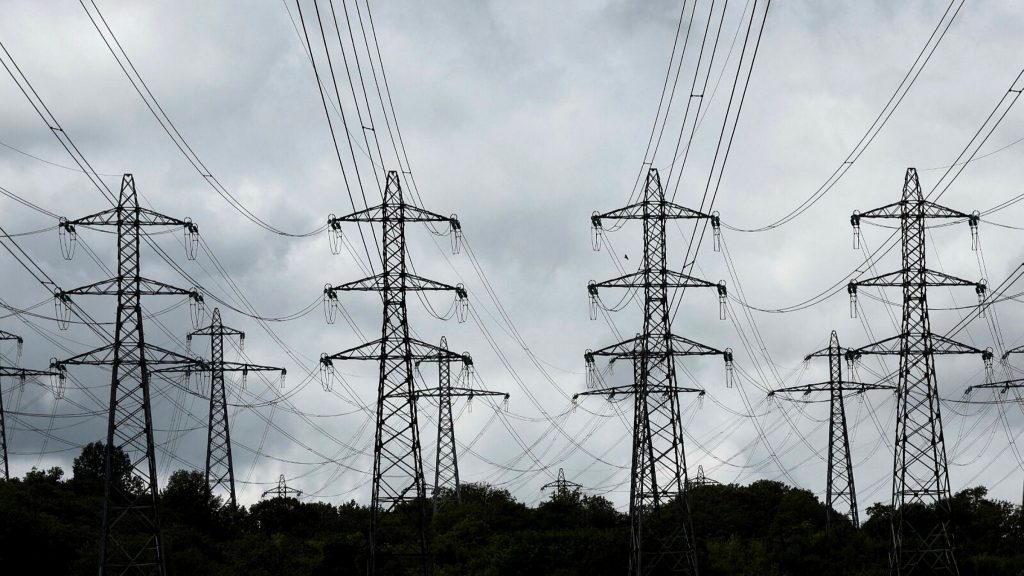
Stormy skies on the electrical front source: https://www.ft.com/content/a0c81387-ba59-44c7-a490-d879d103c2c0
It was cold out today. It will get colder as early fall turns to real fall and then to winter. Just how cold people will get is the question.
The electricity crisis is on everyone’s mind and there are no quick fixes. The immediate cause of electricity’s higher cost is of course Russia’s war in the Ukraine. However, there is one main underlying cause that has been years and years in the making and that is only now obvious to everyone: All our sources of energy are not enough to make up for Europe’s loss of Russian gas, or even meet our own needs reliably.
Khashayar Farmanbar, Minister for Energy and the one currently taking the government’s heat, only recently has admitted that closing down nuclear plants was perhaps a not-so-good idea. While the various political parties blame each other for the decision now, it was actually pretty untenable to support them at the time. There was little popular support, and the only thing anyone liked about them was that they were a terrific place on which to raise taxes. It simply wasn’t worth it to the companies running them to keep them going. Plus, the focus then, as now, was purely renewable power.
In addition, at that time, Sweden led the world in installing wind power turbines and on that front, the future looked rosy. Sweden is now way behind many other countries on new wind power installation (hello, municipal veto), and in fact, no new wind power turbine has been turned on in over nine years. Neither is wind power dependable – when it’s particularly cold it’s usually also particularly still.
Similarly, solar power is fine at a small scale and during sunny summer months. Otherwise, not so much.
Being a part of the EU’s power grid has also been blamed for Sweden’s problems, but it isn’t to blame. The electricity effect that the EU grid gives is bigger and more stable. But now with the war, all those countries that got their gas from Russia now need electricity from other sources, which strains the system’s capacity – a strain we haven’t yet begun to see on a large scale yet.
There is no particular energy source that we can scale up in the next few years except possibly burning more waste. Although the steelworks in the north are still burning coal, Sweden has basically stopped using coal for heating. No one wants to burn coal anyway (I’m sure some people would actually rather freeze). Burning waste is lousy with carbon dioxide of course, but there are carbon capture systems out there – imperfect, likely expensive, but available. It’s a pretty lousy short term solution but there are not a lot of options…
except paying tons of money of course. As someone once said, there isn’t a problem money can’t solve – and if there is, you just haven’t thrown enough money at it. Both the current government and the opposition have their plans to financially bail out the Swedish population when the cost of a kWh hits the fan. We’ll get to that next post.
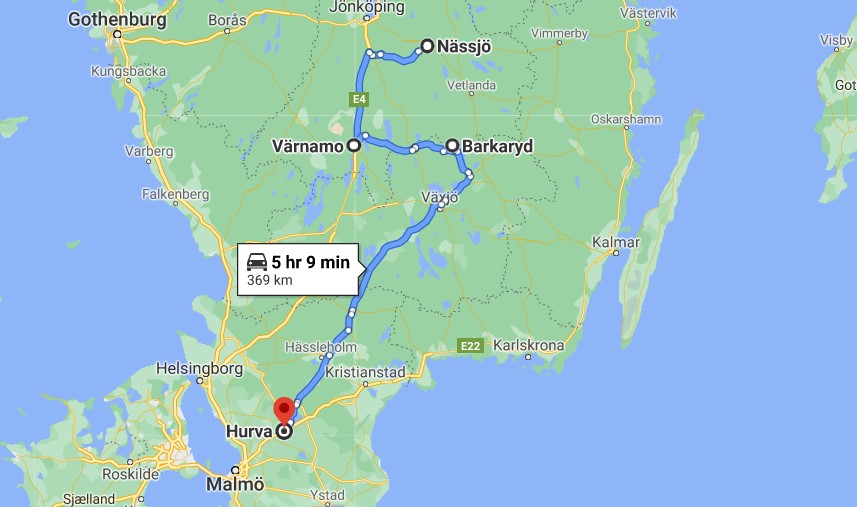
Two days ago, and with so little fanfare that I didn’t hear or read about it until today, a new electricity transmission cable was turned on. The Southwest Direct Electrical Current Link – SydVästlänkens likströmsförbindelse – is great news! Running underground to Barkaryd, and from Barkaryd to Hurva on poles, it greatly widens the electrical bottleneck that used to reduce electrical capacity in southern Sweden. The potential for new companies and new jobs is cause for rejoicing.
The bad news is that it cost seven billion kronor, and took six years longer to build than expected. As Naod Habtemichael at DN correctly notes, the process was “a horrifying example of the state building infrastructure.”
I’m thrilled about it finally happening (see the abundance of posts in this blog about Sweden’s electrical challenges) but, omg, it has to become faster and easier if everyone is going to plug in their cars.
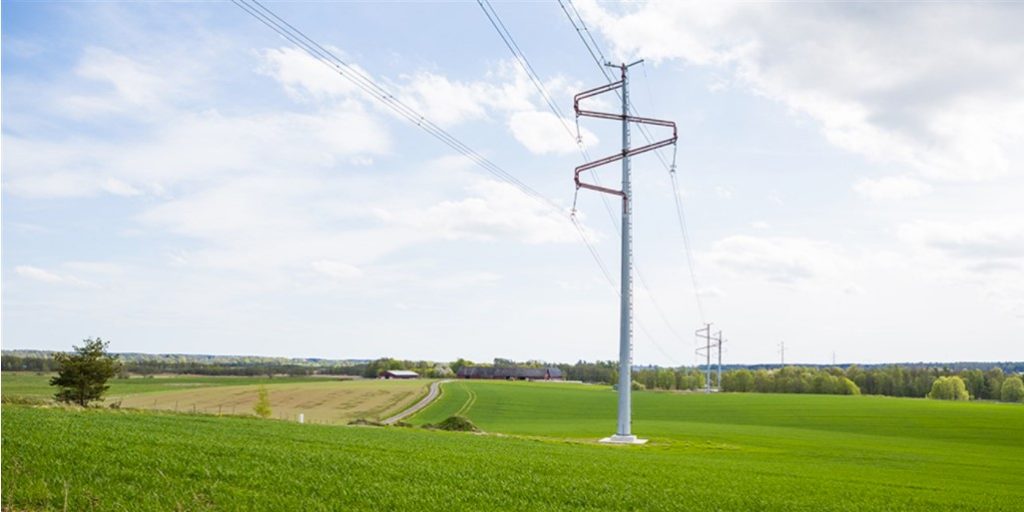
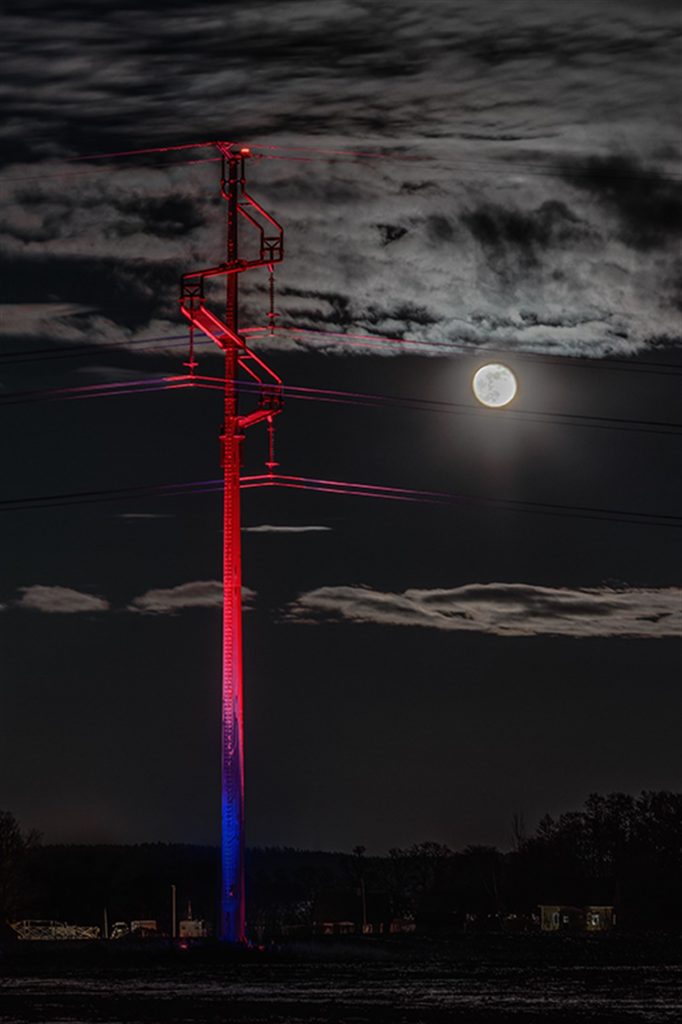
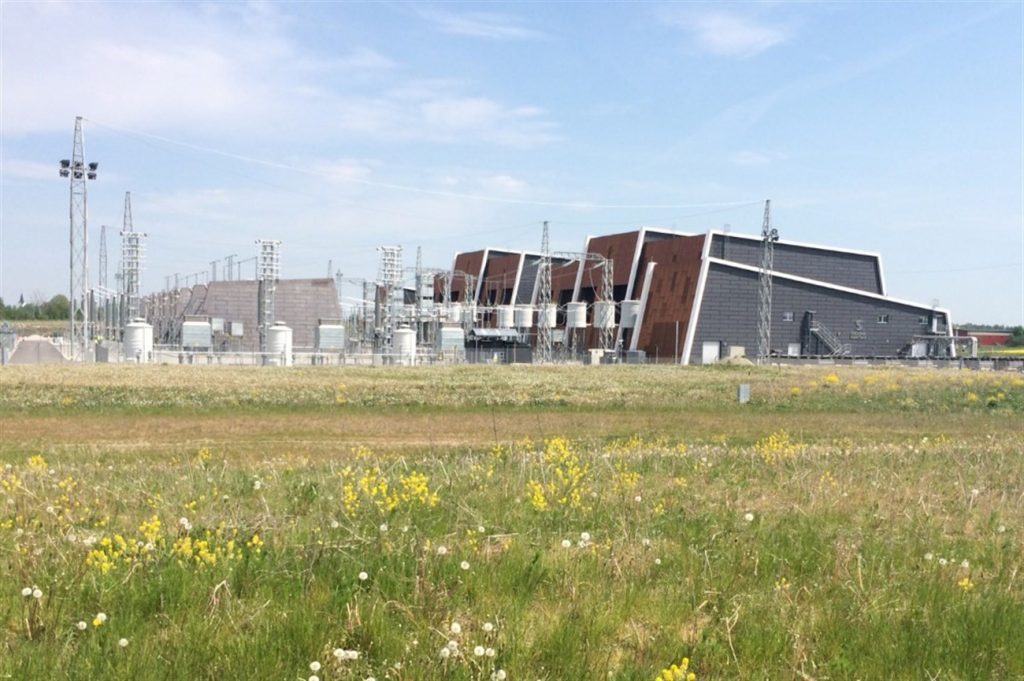
It is pretty though. Svenska Kraftnät – yes, that’s what they call themselves in English – brought in some pros to make the different elements in power transmission fit into the landscape. Below are pics from their website.
transmission poles by day…
and by night.The power station at Hurva, designed to reflect the surrounding landscape.
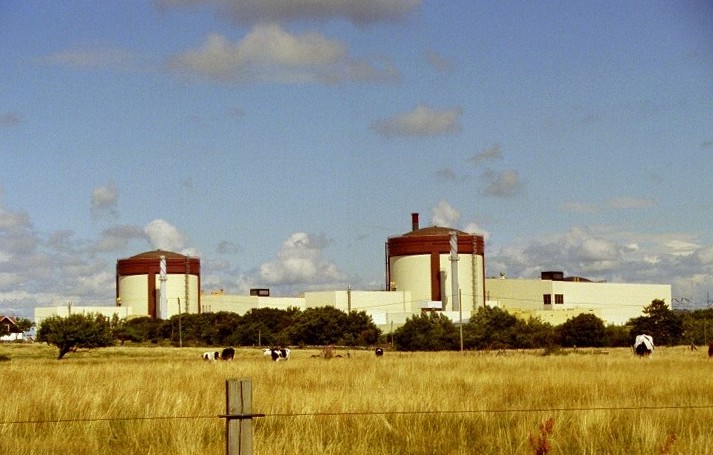
Ringhals 1 to be started up to secure electricity supply pic: wikipedia.se
Electricity – it’s cost, where it comes from, who produces it and where – is a heated and complicated subject. The topic has been touched upon in this blog earlier (here, here, here and even here), but it’s time for an update because nuclear power plant Ringhals 1 is being started up.
Ringhals 1 closed in April per usual, and wasn’t expected to be started up ever again due to regulations enacted in the wake of the Fukushima disaster. (Ringhals 2 was closed last year.) Although many people were pleased by this decision, businesses and government officials have been more concerned. A stable and powerful electricity grid is considered by most people a requirement for a responsible running of the country. When Pågen bakery decided not to open a plant in Malmö last year, due to the fact that the city couldn’t guarantee a steady supply of power, people became alarmed.
Anders Ygeman is often all over the airwaves saying Sweden produces more energy than it uses. Although that may indeed be the case over the course of a year, it doesn’t mean that everyone (like hospitals, factories, houses in the dead of winter…) gets their energy needs met when they need them. A few recent headlines paint another picture: A few here, for reference:
It doesn’t look good. But back to Ringhals 1. It was closed, it was likely to stay closed until the end of the year, and then start the long dismantling process. But a press release from Vattenfall, and a notice from the Swedish power net (Kraftnät) on June 18th said something else, namely that they’re starting up Ringhals 1 and have a contract to run it to at least September 15th. “…the electricity grid needs a significant proportion of planned electricity generation that does not fluctuate with rain or wind” said Torbjörn Wahlsborg, Senior executive vice president at Vattenfall. “[…] we are happy to be able to make an extra effort for grid stability.”