31 aug. – bankrolling the army

pic: corren.se

Ever wonder where your taxes go? Sweden’s expenses run to about 990 billion kronor a year (this, and following numbers, are courtesy of the Finance Department at regeringen.se). The largest expense, 111 billion, goes out to the municipalities who use it for their expenses. Economic help for families and children, people who are sick and people with disabilities together comes to about 194 billion kronor. As far as expense posts go, defense comes in 8th at about 54 billion kronor, just after (and less than) Communications and telecommunications. It’s sobering at this moment to consider the state of Sweden’s train infrastructure, or the security of our digital networks, the main components of Communications, and then think that Sweden’s armed forces receive less.

The additional 20 billion kronor going to the Department for Defence, that the government and its support parties have agreed upon, is a welcome shot in the arm. But it is not exactly clear where the money is going to come from. The hot rumour is a new bank tax, something the Left Party has been pushing for quite a while – they wanted the revenue to go to health care not the military, but apparently “whatever”. Left Party economic spokesperson Ulla Andersson was openly amused that “their” tax was now going to become reality thanks to the traditionally tax-unfriendly Center and Liberal parties.

The Moderate party spokesperson, Elisabeth Svantesson, was more critical, meaning that higher taxes, on banks or otherwise, shouldn’t be the very first measure taken when expenses rise. Instead, she says, the Green Party’s “free year” and/or the Social Democrat’s “family week” could be cut instead. The Christian Democrats, on the other hand, are reserving judgement. They have previously even suggested a bank tax, but one that is based on taxing banks’ risk-taking products and ventures and not just taxing the entire business ().

What they mean by that and how that would actually work is anyone’s guess. What is certain, although no one in the government is saying it, is that however the tax is formed, banks will pass on the expense to their customers (. Banks made approximately 100 billion kronor last year (compare to budget numbers in first paragraph) which makes them an easy target for ire and jealousy. Although one could hope for a more cool-headed approach from our elected representatives, a bank tax sells well to many people. The check, though, will likely eventually land in fewer bank hires, reduced hours, and fewer free bank services, trends that are already in the making.

Taxes are all about paying, whether or not the bank does it first or whether we all do it in a lump sum every May. If it’s going to contribute to making Sweden’s defense more reliable than say, the trains running on time, it could be worth it.

30 aug. – more upset politicians

pic: https://www.expressen.se/nyheter/rekordhogt-fortroende-for-akesson/

There have been many politicians speaking their outrage over the violent crimes that have made the papers recently – see yesterday’s post. But they’re not happy today either. Despite concerted efforts at ignoring, freezing out, shunning and generally speaking ill of the Sweden Democrats, the popularity of party leader Jimmie Åkesson continues unabated. The latest DN/Ipsos poll shows that the number of people who express a strong confidence in – nay, have faith in – Jimmie Åkesson, is at its highest level ever: 27%. ().

Somewhat comforting might be that 68% of respondents say they have no confidence in Jimmie Åkesson. But that is his lowest number ever. As Expressen notes, he now has fewer voters opposed to him than Isabella Lövin, the Green Party leader.

That has just got to hurt.

Stefan Löfven (S) remains at the top with a 40% trusted rating. He is followed by Ebba Busch Thor (KD) at 35% and Ulf Kristersson (M) at 31%. Jonas Sjöstedt (V) and Annie Lööf (C) are neck and neck at 30%. Jimmie comes next with his 27%, followed by the last three: Sabuni (L) at 20% and the two Green Party leaders Lövin and Bolund at 17% and 11% respectively.

Jenny Madestam at Expressen explains the phenomenon by reasoning that Åkesson is a leader with firm principles: “He’s a known quantity – you know where you have him.” Possibly, the razor that is the January Agreement between the left block and members of the right block has cut both ways. Löfven’s average numbers can reflect a lack of enthusiasm for giving in to a chunk of right-block demands, and Lööf’s numbers (down from 41% last September) a reflection of the glitter vest and pompoms she waves around for the Social Democrats.

On the other hand, these numbers can mean very little in the larger scheme of things. Everything can be explained, or explained away. The latter is more likely: As Dagens Nyheter notes, every single party leader has more voters that don’t have faith in them than voters that do (). If that doesn’t take some mental manipulation to handle, nothing does.

29 aug. – politicians, affronted

pic: time.com

“The biggest problems in society today are both the shootings and the explosions.”

There aren’t many that would disagree with Minister for Home Affairs Mikael Damberg on this. Two women died this week, one shot at point blank range while out walking – and carrying her baby – and the other from shots fired from the street while she was in her home. These two outrageous incidents are only the latest. But the fact that the victims this week are women, and that they weren’t killed at the hands of a male acquaintance (like in the vast majority of cases), made for a barrage of tweets from the country’s politicians.

“Complete darkness,” chirped Center Party leader Annie Lööf, “criminals have lost all respect for human life.” “Only lame and disgusting monsters go after a new mother” tweeted a shocked, just shocked, Minister for Justice and Migration Morgan Johansson: “They will be hunted to the end of the world if needed.” And the Swedish Prime Minister was not late in chiming in. “This is an incomprehensibly evil action, that makes me and the whole country disgusted. This has no place in our society. We will steadfastly conquer these murderers.” It’s possible these statements of extreme indignation sounded better in Swedish, but they didn’t, really.

Since these are only the latest events in a rising level of violent crime, there have been a slew of suggestions for countering it over the last few years. “More police!” has been a recurring refrain, but this takes time and good will. Police in Sweden have traditionally been seen as only slightly better than old gum scraped off the bottom of your shoe. This attitude should perhaps be changed first, although there is no sign of this from the government.

Two steps that appear more likely to be implemented in the nearer future is a reduction in the number of hoops a police department must hop through to put up a surveillance camera, and an initiative to require registration of all new SIM card buyers. True to form, neither of these “quickest” measures are likely to be in place before well after the new year. If things continue as they’ve been going, 23 more people won’t live to see these measures enacted.

28 aug. – Kakabaveh shut down

pic: aftonbladet.se

Goodbye to one of the Left Party’s strongest voices for women, particularly for women who are caught and held in “honor cultures” (hederskultur). Amineh Kakabaveh is (soon to be was) a popular and outspoken parliament member since 2008, and is the founder of the feminist organization Neither slut nor subdued (Varken hora eller kuvad).

Kakabaveh has often been in conflict with her own party, and in the last election did not take an active stand against her supporters who campaigned for her personally. The Left Party does not condone a personal vote in elections, holding instead that it is the party that must be voted for, not its members. Kakabaveh has been very public in her feminist views and has not been shy in saying that no party in Sweden, including her own, does enough to support women. Instead of blaming more abstract oppressors such as “patriarchal structure,” Kakabaveh directed her ire at particular countries and religions, and even – gasp – certain sisters, as the parties guilty of oppressing women (). This didn’t go over well with everyone, especially some people from these countries. Others applauded her courage in taking a stand and for saying it like it is. But it was no secret that Jonas Sjöstedt, the Left Party leader, wasn’t a big fan. Among many voters, her standing matched his.

Not attending weekly Left Party meetings, not paying the Left Party tax, spreading fake news and falsely representing Left Party policies are her crimes, according to party secretary Aron Etzler (). She has let her party down, he said. The Left Party tax (partiskatt) is money that Left Party parliament members are to take out of their parliament salary and give back to the party.

Responding to DN, Kakabaveh said the entire thing came as a surprise. Her work with the organisation Neither slut nor subdued has though, she admitted, been a thorn in her party’s side for a long time. And, she said, there is no use going to meetings if you are shunned and ignored.

If Kakabaveh refuses to leave her seat although she has been excluded from her party, she will become one of the “politically independent” (politiska vildar) in parliament, of which there are now several (mostly ex-members of the Sweden Democrats). Although they keep their votes (and their salary and attendant perks), in reality they are rarely heard, seen or have any influence. It will take all of Kakabaveh’s conviction and strength to be any different.

27 aug. – no luck for the Liberals

pic: en.wikipedia.org

The latest poll, run by Sweden’s Television (svt.se), shows that the Liberal Party’s new leadership has not been enough to lift the party above the minimum parliamentary threshold. The poll showed that when asked what party they would vote for if elections were held today, people basically answered like they voted the last time. For the Liberals, this means the support of 3.7% of respondents, up only 0.1% from polls before Nyamko Sabuni took on the Liberal Party leadership. The minimum level of voter support to rate a seat in parliament is 4.0%.

Naturally, this is a huge disappointment for the Liberals. As SVT noted, both Ulf Kristersson and Per Bolund, for the Moderate and Green parties respectively, caused a bump in their party’s popularity when they were voted in as party leaders (). Why this hasn’t happened with Sabuni has various analysts buzzing. SVT News reporter Mats Knutsson wonders if it isn’t because, frankly, she hasn’t been half so outspoken after her election as she was before her election (b). Of course, she needed to shore up her base and unite the party after having won a pretty tight race against party colleague Eric Ullenhag, and this explains why she has made no drastic, or even interesting, move on the domestic politics front. But Sabuni hasn’t made much of a peep about anything at all, which doesn’t exactly inspire anyone to say they’d vote Liberal.

The only party that showed an increase in support was the Sweden Democrats, gaining 1.7% to reach a total support of 18.5%. This increase, along with all the other parties’ results, are within the poll’s margin of error, so while they might be happy about it, there actually isn’t much to write home about for them, or for any party. So far, it’s the same old same old.

Sun. 25/8 – bread and butter economy

pic: mirror.co.uk

Bread and milk is the local news today. Though the government meeting at Harpsund has come and gone, the country air clearly didn’t inspire any new ideas. Hanif Bali’s remarks are just tweets in a teacup, and that Sweden builds the most expensive biildings in the EU isn’t even remotely news. Sweden always equates money and quality, so spending more is directly translated to mean better buildings. Anyone who disputes that is reflexively of very dubious character. 

Millk and bread it is. According to Omni news today, Swedish farmers increased their production of organic milk by 12% in the past year. Demand wasn’t quite at that level, so now there’s a surplus. Dagens industri (di.se) traces the impulses behind the extra milk: dairies upped the price they paid farmers for organic milk in 2016, causing milk farmers with an eye on the bottom line to increase their production of the product customers demanded. All these savvy farmers caused an overproduction. Supply, meet demand. Nothing new in other words. 

In a similar vein, Swedish grain farmers are expecting one of the best seasons in years. Grain production is looking at a 10% increase over the average, which could mean cheaper bread prices at the supermarket, and even, hold on to your hats, perhaps cheaper fika bread prices! But it’s still weather dependent so don’t start making plans – if the rest of August is rainy, the quality of the grain could be lessened, making the grain better snacked on by farm animals than humans. Keep your eye on those clouds before making coffee dates. 

Unfortunately for veggie lovers, none of the above news events will have any effect on the price of greens. Avocado prices have gone up by 40%, noted by avocado lovers. But being sufficient in milk and grain isn’t a bad thing for any country, and as for politics, there are worse things than the price of milk. 

Fri. 23/8 – locals ask for help on Preem

pic: ogi.com

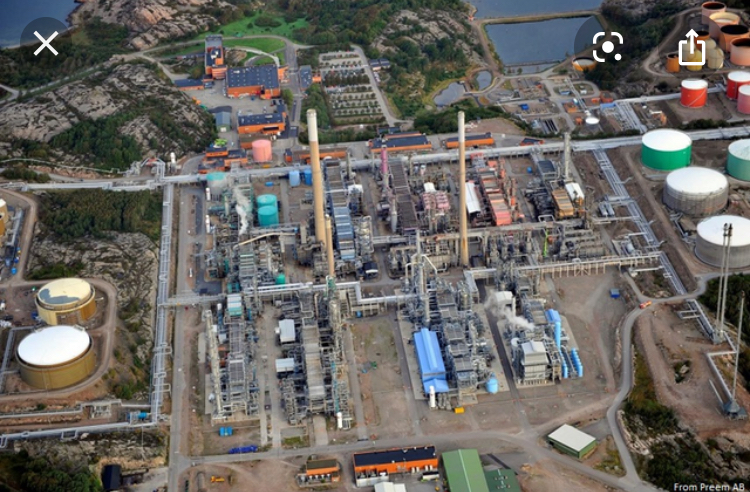
The government gave notice today that they will make the final decision on whether or not Preem will be allowed to expand their business in Lysekil as planned. Preem is Sweden’s largest fuel company, refining 18 million cubic meters of  crude oil every year. It also is the third largest source of carbon dioxide emissions in Sweden, and the expansion would make them the number one emission source. Some estimates have Preem’s expansion raising Sweden’s total CO2 emissions by three percent (svt.se).

Preem’s plan is to build a new refinery that would  process crude oil to gas and diesel fuel with reduced sulfur content. About 150 new jobs would be created, according to Preem, and the refinery would be handle its emissions with carbon collections and storage efforts. Preem says that they are a way more environmentally friendly company than any another company who would otherwise process the oil would be. 

Preem originally got the ok to go ahead from the court of property and environmental affairs (mark- och miljödomstolen). Soon afterwards, however, the decision was appealed by not only a slew of private citizens but also by the Swedish Society for Nature Conservation (Naturskyddsföreningen). Now, both the Conservation Society and the Swedish Association of Local Authorities and Regions (Svenska Landsting) want the government to take it out of the hands of local authorities, and decide how to handle it at the state level.

Green Party leader and vice Prime Minister Isobella Lövin  welcomed the chance, saying that the government has a responsibility to live up to the climate law. This law, passed in 2017, requires the government to push environmental policies that adhere to climate goals passed by parliament. Since the parliament has decided that Sweden will have zero CO2 emissions by 2045, Preem’s timetable might be tight: There are several preliminary instances to go through first, and the government won’t get near the question until earliest next year. 

Meanwhile, the question still divides Lysekil. While many say that thinking Preem or Lysekil is going to save the world  is ludicrous, others believe it’s still important to take a stand. Preem’s spokesperson Dani Backteg says Preem welcomes the government to make a decison: ”It’s obviously a complex question.”  

Thurs. 22/8 – Harpsund Day one

pic: videoblocks.com

The Löfven government convened on Harpsund today for their annual team building session, getting together to consolidate their politics and vision for the coming year. The Swedish Green Party is attending as well, as government coalition partner, while the Center Party and Liberals will be listening carefully to see what signals the Social Democrats send out in regards to their agreed-upon 73-point plan. 

What political ideas can be actualized depends on the economy, and how much the government can afford to spend. Minister for Finance Magdalena Andersson’s presentation and analysis of how much economic margin exists for any further reforms was the first day’s highlight – and/or the dark cloud hanging over all the bright ideas the government might come up with. 

Andersson’s afternoon press conference didn’t hold any surprises, only an acknowledgement that the wind in Sweden’s economic sails is slackening a bit. Her deeper analysis will serve as the frame for the fall budget negotiations that need to be held with the Center Party and Liberals. Without these two parties on board, the budget risks failing in parliament – leading, if not to a new election, then at least to massive uncertainty and instability. Not good, in other words, for the Löfven government.

One reform already agreed upon by the four parties is getting rid of the emergency austerity tax (värnskatt) – an extra tax on high incomes. The tax was supposed to be temporary, but has been in place since 1995. Other reforms are almost a given as well:  the ”free year,” a repris of ”year off for personal development” Green Party demand (that was roundly derided as a monetary black hole the first time around), and a reduced employer tax (arbetsgivaravgift) if the employee is a young person or a new immigrant. These reforms are already expected to cost 19 billion kronor, which doesn’t leave much over for new demands from cooperating parties or any unexpected expenses. Any worsening on the trade horizon, a harder than expected Brexit, or the complete collapse of the Italian government are a few of the worst case scenarios that the government (and the rest of us) are hoping don’t happen. 

But, Andersson concluded with, Sweden has the muscles to meet the future. So far, then, no economic stimulus measures are in the works. 

Wed. 21/8 – a hoped-for comeback

Aida Hadzialic is back
pic: en.wikipedia.org

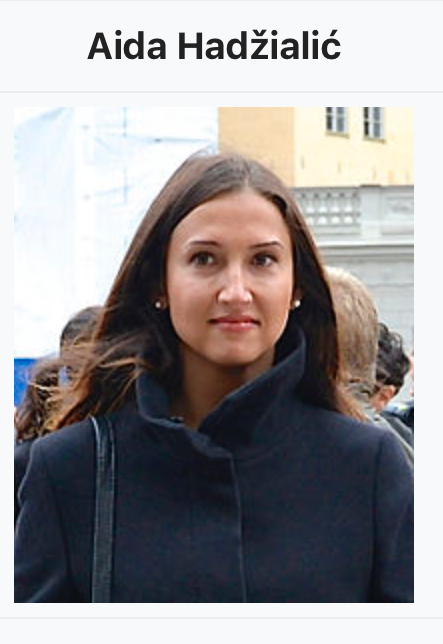
Aida Hadzialic is back. Three years ago, after having been pulled over driving home from a party, she was found to be over the breath alcohol limit. Of course it was a huge scandal – driving drunk is right up there with tax evasion.  But now Hadelius has been plucked out of the freezer of shame and is being rehabilitated by her party as council member of the Social Democratic opposition in Region Stockholm (Stockholms landsting).

Aida Hadzialic was considered a rising star in the Social Democratic party. At only 27 years old, she was made a minister in the first Löfven government. Her immigrant background (her family came here from Bosnia when she was five years old) contributed to her poster child status. But while success stories like hers are massively  marketed in Sweden, she was actually popular and respected by party members and even the populace at large.

Many thought her lapse of judgement, resulting in her being put in the party’s doghouse, was a damn shame. Many thought that a couple parts per thousand over the limit was no reason to be so hard on her. The DUI conviction (Driving Under the Influence) could have derailed her chances for a continued political ascent. But she wasn’t considered savvy for nothing. Hadzialic made a full mea culpa and quickly resigned, taking the wind completely out of the sails of her political opponents. Such a cool move only strengthened the premonition that she’d be back.

Not that her new position is much of a boon. With the fiasco spelled New Karolinska, many believed the Stockholm Moderates would be sitting ducks at the last election, and that they’d suffer a withering defeat. But that was not to be, and the Social Democrats lost fairly big. Hadzialic’s return is perhaps a hoped-for comet with coattails big enough for the rest of the party to ride on. 


Tues. 20/8 – paper bags full of cash

pic: today.com

DN and Aftonbladet reported today that the Swedish Enforcement Authority (Kronofogden) can be, and is, easily used by criminals to launder money. The deal is that the Agency is not allowed to deny people paying their debts with a cash — paper bags full of cash, according to Johannes Paulson, a commissioner at Kronofogden (). Furthermore, in the interests of privacy, they are not allowed to ask where the money comes from either.

One way to work the system is to pay into an account depot as if the money is being put there to pay for a settlement that is supposed to be coming, similar to paying your taxes early. Then, because it wasn’t really a case, the person can take out the money again – and because it came out from an official Swedish agency, the money smells like it just came from the cleaners. Yes, it’s been laundered.

For Kronofogden, someone can put together a fake debt, pay it with ill-gotten gains, and collect the money again when the debt disappears – only this time, the money is wonderfully pure and innocent courtesy of the Enforcement Agency.

For members of the police and of Kronofogden, this is not a news flash. In fact, Kronofogden has been aware of the problem for years. In an effort to make the process a teeny, weeny bit harder for customers bearing cash, they have tried limiting the number of offices and hours they will accept paper money. (This of course makes it also difficult for non-criminal, cash-bearing customers, like the elderly.) During 2018, the Enforcement Agency reported 122 suspicious instances to the police. Kronofogden believes about 26.7 million kronor has come into the system via cash.

Even the Swedish Tax Agency (skatteverket) and the Swedish Companies Registration Office (Bolagsverket) can be be used for money laundering, the National Risk Assessment of Money Laundering and Terror Financing Report (2019) writes (bit.). The Tax Agency can be used in creating fake identities, and the Registration Office can be used to create fake companies.

There seem to be many opportunities for the criminally-minded. Perhaps an unassuming question regarding the cash’s providence could be considered a small first step? Let the radical privacy legalists complain.