Operation Rimfrost is over, with mixed results

Special operation Rimfrost leaving the scene
pic: Izabelle Nordfjell/TT

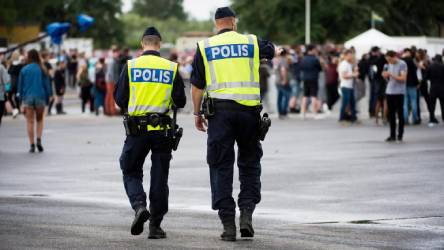
Operation Rimfrost is officially over tomorrow. Rimfrost was the name given to the special police operation last fall after the particularly spectacular shooting death of a woman holding a baby on the street in Malmö last year. The outrage that followed was such that all resources were going to be gathered together for a particular period of intense police presence and law enforcement.

Rimfrost was called, in official Swedish terms, a särskild händelse, which allowed for increased police authority to arrest, charge and hold suspects. As written about in this post, hopes were that more criminals would be taken off the street and that there would be with far fewer shootings as a result. The results would be seen in six months, it was said.

Sadly, six months have now gone by and nationally, shootings have only increased. In official-speak, SvD reports, Rimfrost “had an effect but did not reach the target.” The effect spoken of is in the Malmö and Uppsala region, where shootings and explosions have actually decreased. The number of shootings in the last two years (from well before Rimfrost started, however), has been cut in half. Even the number of explosions has been slightly reduced. The number of shootings and explosions, however, has only increased outside Malmö and Uppsala, making the the total numbers go up. One of the features of these special operations is that police officers can easily be moved to one area from another, reducing forces in one area to increase them in another. The increase in crime outside focus areas has perhaps been the result.

Another result of the Rimfrost operation has been, alas, to see how criminal activity is truly focused in exposed areas. “Crimes are committed more often in those areas that are classified as vulnerable. Crimes are committed up to eight times more often in these areas than outside these areas” said Mats Löfving, chief of the National operations division (Noa): “For criminality to go down […] it is absolutely necessary to fortify security in these areas.” However, as Stefan Hector – chief of national command for Rimfrost – noted, Rimfrost was more meant to break the development of a pattern in shooting and explosions rather than to cure social ills.

Minister for the Interior, Mikael Damberg, said that he “had hoped for fewer shootings” but said he would not call the operation a failure: “The police have become much more aggressive. I see that as a success.”

17 Nov. – yes, pepper spray is illegal

working dogs on the job
pic: svt.se

Swedish Radio reported today that Swedish Customs (tullverket) has broken all records in confiscating pepper spray and tear gas at the border. Last year, customs seized 226 illegal products. This year, so far, they’ve seized 615 products – an increase of nearly 200%.

Jonas Karlsson, an expert with the National Coordination office at Customs, attributed the increase to rising anxiety and feelings of insecurity. “When people want to be able to defend themselves, they don’t usually choose a firearm but turn instead to tear gas or pepper spray.”

However, both tear gas and pepper spray are illegal to have without a license in Sweden. Both of them are considered weapons (read about the law here).

Not so in a couple of our neighbouring countries. Most of the goods are smuggled in from Denmark, where pepper spray is allowed in the home, and from Germany, where they’re both available without a license.

Customs believes that the number of canisters coming into the country is much higher than what they catch. “Our dogs aren’t trained for pepper spray” explained Karlsson. “We’ve also been told to prioritize firearms and narcotics.”

There are pepper-like sprays available for the nervous at heart, so called “defense sprays.” Using them, however, can still have serious legal consequences (see lawline.se). It might be better to sit tight and wait until the end of this government’s term of office – Minister for Home Affairs Mikael Damberg claimed today that he was certain that gang violence will have decreased by that time (Svd.se/Damberg).

31 Oct. – to be deported and yet not deported

scenes we won’t be seeing
pic: masterfile.com

In the spring of this year, Säpo, the Swedish security police, took 6 persons into custody claiming the right to do so under the Act on special alien control (lag om särskild utlänningskontroll). The six men are charged with being active in extremist Islamic circles, and are considered to be a threat to national security (DN.se/threat). Under this law, a person may be deported for these reasons. In order to do so, Säpo must ask the Migration Court (migrationsdomstolen) for permission.

Later this last summer, the Migration court agreed with Säpo’s reasoning, and agreed that they should be deported. (Not that they likely had so much to go on – for the court, the press, the police, as well as the persons charged, a lot of evidence is classified.) However, it wasn’t possible to put the deportation into effect because of the security situation in these persons’ countries. Both the persons in custody, and Säpo, appealed the decision, and it went to the government. Today, the government decided that yes, they should be deported – but they can’t be, because of another law: It is illegal to return or deport people to countries where they run the risk of the death penalty or of being tortured (SvD.se).

The Swedish justice system has no other alternative, in these circumstances, but to let these persons go free. They will be still suspect in Säpo’s eyes, and are are likely to be surveilled, but they are free to go back to their jobs – one as a school employee and others to their jobs as imams. Terror expert Magnus Ranstorp is quoted in DN as saying the government’s decision still sends a sharp signal: “They cannot get citizenship, and the day there is the possibility to deport them, they’ll be deported. They’ll have to report to the authorities and they won’t be able to leave the country. There will be severe limitations on what they can do.”

22 Oct. – eavesdropping police

fighting crime one mobile at a time
pic: tidbits.com

Measures to fight the rising crime rate in Sweden have been mentioned in this blog before. It’s been a month now since multi-party talks on crime fighting initiatives failed (see this post) and the Social Democrats, Green, and Center parties went out with their own 34-point to-do list. Today, the first (and as of yet, the only one) of these measures is ready to be sent out for comments (remissvar).

This first measure out concerns making it easier for the police to plant programs on private mobile telephones. The programs would allow them to decrypt text messages sent on the mobile and listen in on conversations. In some cases, they will even be able to control the mobile phone’s camera and microphone. It will not be allowed, however, to implant these programs in phones belonging to people in some professions, like doctors, journalists and lawyers.

This measure is not going to be widely used, Minister for Home Affairs Mikael Damberg was careful to point out. It will only be used in cases of “serious criminality” (allvarlig brottslighet). “This is what the police and prosecutor have wanted almost the most” he said (DN.se/avlyssning).

The Moderate party was positive to this measure, saying it’s what they’ve wanted ever since the beginning. In fact, they would have liked to see an even stronger list of measures, that would actually “break the pattern and make a difference” said John Forsell, Moderate party spokesperson (DN.se/avlyssning).

Assuming the comments from the various review committees are positive, the new law is meant to go into effect March 1, 2020.

2 sep. – you can’t come

pic: 123rf.com

Minister of Home Affairs Mikael Damberg responded positively yesterday to Moderate Party leader Ulf Kristersson’s top ten list of things he thinks should be done at the government level to combat rising crime (see yesterday’s post). It was time, Damberg opened, to gather round and talk. So far so good. But then, Damberg said that everyone was invited to the party – everyone except the party called the Sweden Democrats.

“Here we go again” commented former Christian Democratic party leader Göran Hägglund in response. “No political issue is important enough to be discussed on its own merits. Instead, the debate is about how to handle SD” he tweeted.

The Christian Democrats, now led by Ebba Busch Thor, were glad of the invite and the reason behind it, but rejected Damberg’s rejection. As did the Moderate Party somewhat later. Via Facebook, Kristersson wrote that one can’t say that you’re getting all the parties together on this issue, and then “exclude the representatives of over 17% of voters – voters who are just as vulnerable and worried about crime as everyone else in Sweden” (expressen.se).

But Damberg is sticking to his guns, so to speak. The Sweden Democrats, he says, have a different set of fundamental values (värdegrunder). They also have, he adds, a very “shallow explanation model” – read: the same explanation for all things. To what might Damberg so coquettishly be referring? Immigration. And yes, it must be said, that no matter how the Sweden Democrats frame something, the real meaning is usually that Sweden’s problems are due to people from other countries, and them being in this country.

The rising crime question is serious to many people though, and Damberg could do worse than allowing SD a chance to be the nazis that he basically thinks they are. But as a science-loving country, it can also be noted that the most wonderful cures can come from the nastiest poisons.

29 aug. – politicians, affronted

pic: time.com

“The biggest problems in society today are both the shootings and the explosions.”

There aren’t many that would disagree with Minister for Home Affairs Mikael Damberg on this. Two women died this week, one shot at point blank range while out walking – and carrying her baby – and the other from shots fired from the street while she was in her home. These two outrageous incidents are only the latest. But the fact that the victims this week are women, and that they weren’t killed at the hands of a male acquaintance (like in the vast majority of cases), made for a barrage of tweets from the country’s politicians.

“Complete darkness,” chirped Center Party leader Annie Lööf, “criminals have lost all respect for human life.” “Only lame and disgusting monsters go after a new mother” tweeted a shocked, just shocked, Minister for Justice and Migration Morgan Johansson: “They will be hunted to the end of the world if needed.” And the Swedish Prime Minister was not late in chiming in. “This is an incomprehensibly evil action, that makes me and the whole country disgusted. This has no place in our society. We will steadfastly conquer these murderers.” It’s possible these statements of extreme indignation sounded better in Swedish, but they didn’t, really.

Since these are only the latest events in a rising level of violent crime, there have been a slew of suggestions for countering it over the last few years. “More police!” has been a recurring refrain, but this takes time and good will. Police in Sweden have traditionally been seen as only slightly better than old gum scraped off the bottom of your shoe. This attitude should perhaps be changed first, although there is no sign of this from the government.

Two steps that appear more likely to be implemented in the nearer future is a reduction in the number of hoops a police department must hop through to put up a surveillance camera, and an initiative to require registration of all new SIM card buyers. True to form, neither of these “quickest” measures are likely to be in place before well after the new year. If things continue as they’ve been going, 23 more people won’t live to see these measures enacted.