Privacy laws between Tax Agency departments to be loosened pic: Christine Olsson/TT, Ali Lorstani/TT
One of the problems that Sweden has had regarding fighting fraud and other crime has been that the Swedish Tax Agency’s department of tax reporting (beskattningsverksamheten) was sealed from its other departments, such as the department for civil registry (folkbokföringsverksamheten). The one department wasn’t allowed to run a check with the other department that the information they had was accurate. For example, someone in charge of doling out housing benefits (bostadsbidrag) couldn’t check to see if the person seeking the subsidy was actually registered as living at the address they gave on the form, and if they had a right to the assistance.
The new rule also allows checking to see if the employment contract someone uses as a reason for being granted residency is actually backed by a legitimate company that employees people and pays taxes.
The separation between the departments were set up for reasons of personal integrity, but now “Things that weren’t possible eight years ago are possible today” said Minister of Finance Magdalena Andersson. ”This is particularly important in these Corona times,” said Andersson, ” because we’re using large amounts of tax payer’s money.”
Sweden’s Radio (SR.se) reports that the regulatory changes will take effect on June 1st.
coordination number application to be stricter pic: kywnewsradio.radio.com
The government proposed today that the rules for granting “coordination numbers” (samordningsnummer) are going to be tightened. Coordination numbers are identification numbers used for bureaucratic purposes and are connected to one person. They began to be given out in 2000 for people who were connected to Sweden, but who were not registered in Sweden – were not folkbokförd.
A person can not request a coordination number for themselves. However, any state authority from, such as, the Swedish Radiation Safety Authority to the Swedish International Development Cooperation Agency, can request a coordination number on behalf of someone. Even an institute of higher education, like Hermod’s or any other adult education (Komvux) institution can request a number on behalf of a person. All that has to be done is affirm that they have checked out that the person is who they say they are. The document that is provided to confirm identity must not be, according to Skatteverket, of “too simple a nature, or easy to fake”. (See the Skatteverket document here.)
Even people who can not formally document their identity can get a coordination number if they need to be registered with, for example, the police, the Swedish Migration Agency or with Skatteverket. In these cases, Skatteverket writes, these agencies should try “as much as possible” to confirm the person’s identity.
There have been a lot of coordination numbers handed out since the system began – nearly 870,000 numbers, according to SVT. And even though a coordination number is not necessarily a work permit or a residence permit, and does not grant the holder the same social service benefits as a person number, it is easy to mistake the two. The person number is used for everything in Sweden, and a person number and a coordination number appear exactly the same – a 6 or 8 number birthdate and four additional numbers. A misspelled name in one instance can result in two coordination numbers. Not even an address has been required. Now, however, a couple changes are on the way.
At a press conference today, SvD reported, Minister for Finance Magdalena Andersson said that coordination numbers that have not been used for five years would be unregistered, and, if a mistake is discovered in the application’s information, the number can be revoked. In addition, an address will be necessary for the paperwork to be completed – although that requirement can be waived if the person in question cannot confirm their identity.
An address isn’t so hard to get, though: They’re available for a few hundred kronor to the right person. “We see clusters of fraudulent activities and crimes associated with certain persons and certain addresses” commented Tobias Wijk at Skatteverket. In one case, over a hundred foreign citizens with coordination numbers were registered as living at one address, SvD reported, and there were more addresses like that around. In one case, Skatteverket found 80 convicted criminals giving the same address as their contact for state agencies.
It isn’t actually illegal at all to offer this “mail service.” The problem, says Wijk, is if the person being paid for this service is not paying tax on the income they receive, or if the address is being used in some criminal way. SVT‘s investigation in last December found that the price for a month’s use of an address was up to 500 kronor.
In a 2017 investigation, SvT reported, Skatteverket found that in a sample of 4000 coordination numbers, 45% of the holders were not able to confirm their identity and 75% of them were not legally allowed to work in Sweden. Aftonbladet reports that the Moderate party has called for the recall of all coordination numbers, due to their fraudulent use.
The coordination number is a necessary identification measure for people who do not have a person number but who have ongoing contact with Swedish authorities. The government is now acknowledging that there are too many ways in which the system can be subverted, or, as Andersson put it, “there are shortcomings in the system as it is today.” The changes that were announced are a “quick track” to more thorough changes to the system that are still under consideration.
when you get the numbers wrong pic: Christine Olsson, DN
The good news is that unemployment in Sweden was 6%, not the 7.1% that was the official number made public in September (see this post). The bad news, is that the number was revised not because unemployment went down, but because the first number was completely wrong.
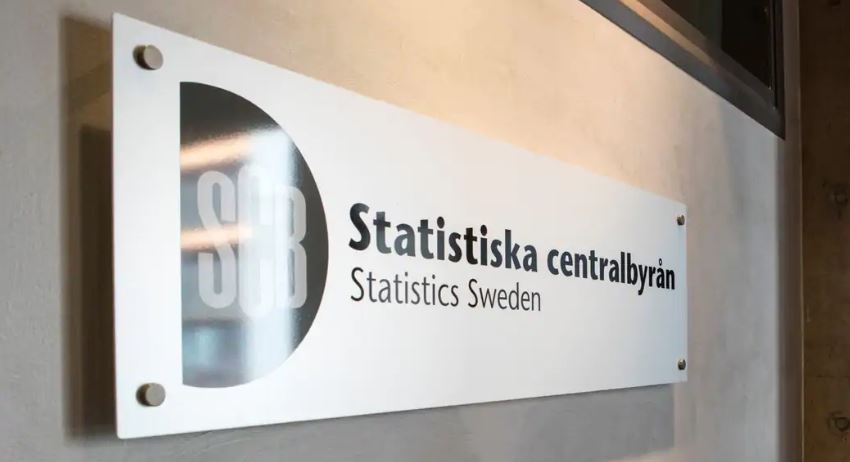
Statistics Sweden (SCB) is the official government agency tasked with supplying government agencies with statistics on which to base their decisions and policies going forward. But when SCB does their surveys, it costs somewhere between 345 to 620 kronor per interview. Looking to outsource and cut costs, SCB took in some offers. One company came back with an offer of 217 kronor per interview, while another said they would take 210 kronor per interview. But Evry, the consulting company who won the job, offered to do the interviews for 140 kronor per interview (SvD.se/Evry).
Evry “didn’t live up to what they promised they would” said Joakim Stymne, general director at SCB (SvD.se/Evry). The contract with Evry has now been terminated.
Robert Bergqvist, cheif economist at Svenska Enskilda Banken (SEB) remarked that the main worry isn’t so much the outcome but the mistake as such. “Statistics are incredibly important for economical and political decisions, and unemployment data plays an important role for both the government and the Swedish Central Bank.”
Handelsbanken’s senior economist, Johan Löf, echoed his colleague’s sentiments. “For example, the Swedish krona dipped in response to the numbers, even if the effect was over after a couple days. The numbers were still so surprising that it had an effect on the financial market. For many Swedes, the upcoming salary negotiations are central. In this beginning phase, when the sides are formulating their cases, we’ve had a situation with almost catastrophic numbers. This has been seen in their arguments”(SvD.se/Evry).
Minister for Finance Magdalena Andersson was equally unhappy. “It’s obviously extremely serious when a government authority publishes incorrect statistics” she stated. “When the unemployment numbers first came out, SCB was contacted because the numbers looked strange. We had meetings and telephone calls with SCB.” When asked what the result was from those calls Andersson replied that she couldn’t answer that question for the moment (SvD.se/Andersson). But, she said, “I could never have dreamed that it could be wrong in this way” (DN.se/Andersson).
Questions have been raised regarding the reliability of SCB going forward, as well as questions regarding what their budget has been and how the money has been spent. In related news, however, Aftonbladet reported late this afternoon that the Swedish Transport Administration (Trafikverket), no stranger to similar scandals and problems, is requesting that the government change the law of public procurement (lagen om offentlig upphandling) so that authorities, such as themselves and SCB, are no longer required to accept only the lowest offer. Trafikverket just made public the news that their project Ring Road Stockholm (förbifart Stockholm) is now going to be years late and billions of kronor more expensive than the original plan, because of mismanagement by the entrepreneur they hired to do the work – who has also now been fired (Aftonbladet.se/förbifart).
For those who are interested, the unemployment rate for October – according to SCB, and “smoothed and seasonally adjusted” – is 6.8%. Really.
This is twice in the same year the government surplus objective – aka överskottsmålet, is coming to the fore in news. The first time was only last August, when – “oops” – the National Debt Office was 6 billion kronor off estimating the government’s tax income: Suddenly the Social Democrats and Green parties had a lot less money to spend on fave projects than they thought. But due to the surplus (read about it here), Sweden still had funds in the bank if needed.
Now, however, Minister for Finance Magdalena Andersson is looking over at that surplus like it’s a dessert cart. Instead of a surplus objective, SvD reports, she’s advocating a budget “balance goal” – a balansmål. Instead of having a surplus, in case of a rainy day or financial downturn, the new goalpost would just be a balanced budget. The 16 billion kronor that would suddenly become available, could be used, she says, for things like infrastructure, the police force or health care.
The government surplus objective isn’t up for debate before 2024 – eons in political time – but Andersson is hoping for an earlier review date. The Left and Green parties are already on her side, but others are more wary. The mandatory surplus (which has already been cut down in size since the financial crisis of the 90s when it was first instituted) was put in place for a reason – as a safeguard for a time when the state’s finances might be truly desperate. Most analysts don’t think we’re there right now, so there’s no reason to use the surplus.
After all, as the Swedish saying goes “she who sets by, gets by” (hon som spar, har).
The Löfven government convened on Harpsund today for their annual team building session, getting together to consolidate their politics and vision for the coming year. The Swedish Green Party is attending as well, as government coalition partner, while the Center Party and Liberals will be listening carefully to see what signals the Social Democrats send out in regards to their agreed-upon 73-point plan.
What political ideas can be actualized depends on the economy, and how much the government can afford to spend. Minister for Finance Magdalena Andersson’s presentation and analysis of how much economic margin exists for any further reforms was the first day’s highlight – and/or the dark cloud hanging over all the bright ideas the government might come up with.
Andersson’s afternoon press conference didn’t hold any surprises, only an acknowledgement that the wind in Sweden’s economic sails is slackening a bit. Her deeper analysis will serve as the frame for the fall budget negotiations that need to be held with the Center Party and Liberals. Without these two parties on board, the budget risks failing in parliament – leading, if not to a new election, then at least to massive uncertainty and instability. Not good, in other words, for the Löfven government.
One reform already agreed upon by the four parties is getting rid of the emergency austerity tax (värnskatt) – an extra tax on high incomes. The tax was supposed to be temporary, but has been in place since 1995. Other reforms are almost a given as well: the ”free year,” a repris of ”year off for personal development” Green Party demand (that was roundly derided as a monetary black hole the first time around), and a reduced employer tax (arbetsgivaravgift) if the employee is a young person or a new immigrant. These reforms are already expected to cost 19 billion kronor, which doesn’t leave much over for new demands from cooperating parties or any unexpected expenses. Any worsening on the trade horizon, a harder than expected Brexit, or the complete collapse of the Italian government are a few of the worst case scenarios that the government (and the rest of us) are hoping don’t happen.
But, Andersson concluded with, Sweden has the muscles to meet the future. So far, then, no economic stimulus measures are in the works.