11 Nov. – a name, a vote, and a meeting

can this wave be stopped?
pic: watersource.awa.asn.au

In the wake of the shooting and the explosion over the weekend, that the police now suspect are connected, there are several actions in the works: the police have labelled their response an “extraordinary operation” (särskilt händelse), the Moderate party has said they are behind the Sweden Democrats’ decision to call a vote of no confidence in Minister for Justice Morgan Johansson, and the Malmö police are organizing a special conference, with the local criminals.

Only the terrorist attack on the pedestrians on Drottninggatan in April of 2017, and the forest fires in the summer of 2018, have previously been classified as “extraordinary operations” by the police department. The current operation is being called Operation Rimfrost (hoarfrost in English), and allows the police department to make the decision-making process faster and increases their authority to reprioritize and move police forces around. “The number of persons in criminal networks shall be reduced by force” said Stefan Hector, chief of operations for NOA, the national operations division, “by which we mean arrests, charges and sentencing.” The police hope to seize more weapons and explosives as well. “In about 6 months we will have seen a difference” Hector predicted (SvD.se/rimfrost).

In related news, the Sweden Democrats have said they will be bringing a motion of no confidence in Minister for Justice Johansson to the floor at the party leader debate on Wednesday – and the Moderate party has said they will support it. Jimmie Åkesson, leader of the Sweden Democrats, declared that it was “obvious that the Minister for Justice, who in this case has the ultimate responsibility to handle this situation, does not understand its seriousness. He can’t handle it, and therefore parliament should in some way make clear its dissatisfaction with the work that is unfortunately not happening” (SR.se/Åkesson).

Moderate party leader Ulf Kristersson echoed his colleague. “It is right to direct a vote of no confidence in the Minister for Justice. For the last five years, he has been ultimately responsible for the situation we’ve arrived at in Sweden. It’s untenable. Either the minister does his job or he takes the consequences and resigns. We will be voting no confidence” (SR.se/Åkesson).

For a vote of no confidence to go through, at least 35 parliament members need to demand it. If a majority in parliament (175 members) vote yes, the minister in question must resign. So far, in Swedish history, there have only been nine – count ’em, nine – votes of no confidence. None of them has ever resulted in a minister’s resignation.

As far the other more right parties go, the Liberals have said they will not support a vote of no confidence, but that the government must “take vigorous measures against gangs.” The Christian Democrats haven’t yet commented. It is unlikely in the extreme that the more left Green or Center party will support it, altogether making the resignation of Johansson equally unlikely. The Moderate party’s youth wing, MuF, went its mother party one better and demanded a vote of no confidence in not just the Minister of Justice Johansson, but also on Minister for Home Affairs Mikael Damberg (DN.se/MuF). That one won’t be going anywhere, for the moment at least.

Meanwhile, the local police in Malmö have called a meeting for Tuesday. With the local criminals. The criminals that come don’t have to be the most violent ones, or the leaders – as long as they have legitimacy and that the others “listen when they talk” said Glen Sjögren, coordinator the “Stop Shooting” project (read more about the project here).

“We’re giving them a message – that we don’t want them to die and we don’t want them to kill someone. If they, or someone in their group, commit a crime involving lethal violence or explosives we’re going to focus on their whole group. If they want to leave their criminal life behind them, we’re ready to help them with that too” said Sjögren. “The goal is to stop the current crime wave and to prevent an escalation” (DN.se/slutaskjuta).

It seems like it’s all hands on deck, but whether or not talking leads to actions and then to an effect is anyone’s guess.

19 Oct. – counting the weeks

counting the weeks
pic: courtnewsohio.gov

Abortion and the Sweden Democrats – in the same post. Read on.

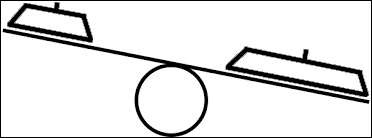
Here are the basics for Sweden: abortions are free, it’s the woman who decides, and up to and including the 18th week of pregnancy, a woman doesn’t have to say why or who or what or anything at all about her reasons for asking for an abortion. After that, there have to be reasons for not carrying to term, which have to be articulated to, or by, the National Board of Health and Welfare (socialstyrelsen). After 21 weeks and 6 days, the window for abortion is closed: After this date, a foetus is considered viable outside the womb. In very very few and drastic cases, there are abortions after this date. For those who don’t know, a pregnancy is about 40 weeks long.

Up until just now, the Sweden Democrats party has had a party platform advocating a 12 week limit for free and unquestioned abortions, instead of the current 18 week restriction. 12 weeks is, frankly, barely long enough to even think one might be pregnant, and to take a test to find out at home in one’s bathroom – let alone schedule a clinic visit.

After a slew of letters sent in to the party’s headquarters making a motion for a change, Jimmie Åkesson, Sweden Democrats’ party leader, announced that they will no longer have the 12-week limit in their party program. In his words: “We put together a group to look at this question, and they’ve come to the same conclusion: If the goal is to reduce the number of abortions, even down to the Nordic levels, it’s not laws there are going to get us there and definitely not discussions on when it’s legal to terminate a pregnancy.” “Not even with the current reach of medicine is a foetus viable outside the womb before 18 weeks, Åkesson said, so there’s no reason to change the 18 week ceiling” (DN.se/pregnancy). It is not a coincidence that Åkesson announced this at a meeting of female SD party members in Norrköping.

Is it the influx of women in their ranks that have made them go up a grade on the enlightenment scale? Or is it just a measure to increase their popularity outside of their faithful rank and file – making themselves more palatable, perhaps, to the greater Swedish population? It isn’t a bad position to have come to, by any means, and welcome. But with all political ideas that change quite drastically, it’s wise to question how deep the conviction goes before trusting it with one’s own body.

2 Oct. – boring, perhaps, but important

Vote equalisation?

Things come up. Dentist appointments, laundry, you have to take your pet to the vet, all of these things happen. They happen to parliament members too: Even when there’s a proposition being put to vote, sometimes a member of parliament can’t make it (even though it’s their job, for which they’re paid a lot of money, and for which they recently gave themselves a hefty raise in 2016).

Similar to the British parliament, the Swedish parliament has a system called vote equalisation – kvittningssystemet – which means that if a parliament member is absent from a vote, another party’s parliament member’s vote isn’t counted. This way, it is thought, the population’s preference expressed in the last election – represented by the number of parliament seats each party gets – is still properly represented: The parties still have the same weight when voting, relative to each other, even though a member of one of the parties (or heck, many members, even all of them) took the day off.

Sometimes, if how individual members vote is particularly important to one party or another, they can request (in advance) that the vote equalisation system not apply for that vote. One reason for doing this, is that the equalisation system creates a way for parliament members to express their personal opinions and avoid voting on an issue where they disagree with how their party is going to vote. If they’re not there, then they personally didn’t vote for, or against, something (just their party did). If another party sees this as likely to happen, for example, they can ask for the equalisation system to be adjourned for that vote.

One example of this was back in 2015. The Social Democratic party, in power then as now, scheduled a vote on requiring ID checks for people coming in to Sweden on trains, buses and ferries. Many Green party members were very opposed to this, but, they were also members of the government which was proposing it. What to do? One solution is to be sick that day. Or maybe their child is sick that day. Then, the thought goes, they haven’t really voted.

Seeing this opportunity to highlight the divisions in the Green party, and possibly the lameness of taking a powder for the day, the alliance parties (at that time consisting of the Moderate, Center, Liberal and Christian Democratic parties) asked for the vote equalisation system to not apply. This way, the thought went, the Green party members couldn’t be absent. They’d be put on the spot, and made to show their true colors. So awkward.

How did it end? All parliament members had to show up for the vote, doctor’s appointment or not. The Green party members who disagreed with their party still had to show up and vote. The government’s proposal passed, and no member of parliament died because they had to vote that day. What they did have to do, was decide to whom they had greater loyalty – their ideals or the party. So awkward. But also important.

Here’s the thing though. This system worked great (well, that depends on your view) when there were basically two blocks. If a vote on one side was away, a vote on the other side was taken away – tit for tat. The government has always had an opposition. But now, the previous center-right block, the previous alliance, is split. If a Center party member is out for the day, from where do the other votes get taken? Plus, and this is huge, where do the Sweden Democrats and their 17% of seats in parliament go? They aren’t a part of any block, and because of this, haven’t even been a part of the vote equalisation system at all.

In 2018, Anders Ygeman explained it like this: “Several times, they have voted one way in committee and another way in parliament. Sometimes, they’ve voted first for their own proposition, and then for another party’s. I have a hard time seeing how they can be a part of the vote equalisation system.” Jimmy Åkesson, The Sweden Democrats’ party leader, countered, saying that everyone basically knows how the parties are going to vote before the final vote is taken, so equaling isn’t a problem.

It wasn’t solved then, and it isn’t really solved now. Because there are no longer two distinct blocks, there have been some just slightly unusual votes because the vote equalisation system hasn’t worked. In one case, SvD writes, an Center party member was going to be absent so a Social Democratic vote was taken out. But for issues covered by the January Agreement, Center and Social Democrats vote the same way, they aren’t in opposition. For that vote, one side lost two votes while the opposition wasn’t affected at all. The vote result is skewed. Not so democratic.

On issues where the vote isn’t close, the system can survive even if the results don’t exactly reflect party representation. There’s one vote coming up in November, though – the budget – where every vote counts. The seven parties that are currently part of the vote equalisation system are discussing how to make it work. For reasons that seem good to someone, somewhere, the Sweden Democrats’ existence is still being ignored.

The vote equalisation system is supposed to make parliament decisions more democratic, but recent election results and the fraying of the two-block representation are making the system undemocratic. One result may be that presence at voting will be mandatory at all times – sickness, sniffly child, laundry or awkwardness be as they may.

15 sep. – pride needed more than ever

pic: sverigesradio.se

Sölvesborg, on the east coast of Blekinge, has decided, that in the future, they will not raise the gay pride flag on the local municipal building. Not even in August, which is unofficially pride month and when the marches generally begin. Not that there’s ever been a pride march in Sölvesborg – but there will be now.

Not coincidentally, Sölvesborg municipality is run by a coalition of parties – Moderates, Christian Democrats, Sweden Democrats as well as the local parties Sölvesborg- and Lister parties.

Since 2013, the pride flag was raised during the month of August, a precedent set by the then-ruling Social Democratic party. Current City Commissioner Louise Erixson of the Sweden Democrats says that the pride flag is a political symbol and is not an official part of the municipality’s flag policy. The pride flag was an exception to the flag policy, she says, and something that undermined flag policy tradition. Erixson notes that Sölvesborg raised the pride flag for Stockholm Pride, an organisation that has positioned itself in opposition to 30% of Sölveborgs’ voters when it excluded the Sweden Democrats from its party leader debates. “A municipality that raises the pride flag therefor positions itself, if indirectly, behind this kind of undemocratic behavior,” Erixson continued ().

But that isn’t the problem, Erixson stated. “It’s an example of a problem that can come up when a municipality, which should be neutral, breaks with traditional flagging rules.”

The Moderate Party’s spokesperson for HBTQ issues, Filippa Reinfeldt, opposed the change, calling it inappropriate. “Every municipality can decide for itself if it wants to raise the Swedish flag or the municipality coat-of-arms… But, regarding the pride flag, it’s not the Moderate Party’s position and is completely inappropriate. I see the pride flag as a symbol for freedom and the right to be and to love who you want ().

Another critic is Sophia Ahlin, Moderate Party member and chair for the nearby Karlskrona Pride. SVT Blekinge reports that a pride parade in Sölvesborg is now in the works – on Friday during Pride Week (). There’s never been a pride parade in Sölvesborg before, but one is clearly needed more than ever.

Sep. 14 – at least Social Democrats still no. 1

pic: svd.se/ny-svd-sifo-sd-far-hogsta-siffran-nagonsin

The Sweden Democrats are at a new high in the polls. At 20.2 % they are again the second most popular party in Sweden, with a 2% increase in support since the last poll. The increase is largely due to increased support in Stockholm. It is also said that SD gains when the other parties try to shut it out, like in the current all-party-minus-SD talks on how to meet the rise in violent crime ().

Just today’s headlines – “Man taken into custody after morning’s shooting” () and “Explosion in Lund – female student seriously injured” () – are examples of what voters are waking up to. Morning’s shooting? It makes you wonder what’s on the agenda for the afternoon. The student was injured in the explosion directed at the corner store below her on the first floor.

It’s a dangerous development when people don’t feel safe. It’s a dangerous development when what politicians do and what they describe isn’t matched by what people are experiencing. It’s easy to understand that people cast about for something untried, since what’s been tried isn’t addressing their concerns. The government, and the parties they’re working with, need to up their game. That at least the Social Democratic party is still no. 1 is not good enough.

2 sep. – you can’t come

pic: 123rf.com

Minister of Home Affairs Mikael Damberg responded positively yesterday to Moderate Party leader Ulf Kristersson’s top ten list of things he thinks should be done at the government level to combat rising crime (see yesterday’s post). It was time, Damberg opened, to gather round and talk. So far so good. But then, Damberg said that everyone was invited to the party – everyone except the party called the Sweden Democrats.

“Here we go again” commented former Christian Democratic party leader Göran Hägglund in response. “No political issue is important enough to be discussed on its own merits. Instead, the debate is about how to handle SD” he tweeted.

The Christian Democrats, now led by Ebba Busch Thor, were glad of the invite and the reason behind it, but rejected Damberg’s rejection. As did the Moderate Party somewhat later. Via Facebook, Kristersson wrote that one can’t say that you’re getting all the parties together on this issue, and then “exclude the representatives of over 17% of voters – voters who are just as vulnerable and worried about crime as everyone else in Sweden” (expressen.se).

But Damberg is sticking to his guns, so to speak. The Sweden Democrats, he says, have a different set of fundamental values (värdegrunder). They also have, he adds, a very “shallow explanation model” – read: the same explanation for all things. To what might Damberg so coquettishly be referring? Immigration. And yes, it must be said, that no matter how the Sweden Democrats frame something, the real meaning is usually that Sweden’s problems are due to people from other countries, and them being in this country.

The rising crime question is serious to many people though, and Damberg could do worse than allowing SD a chance to be the nazis that he basically thinks they are. But as a science-loving country, it can also be noted that the most wonderful cures can come from the nastiest poisons.

30 aug. – more upset politicians

pic: https://www.expressen.se/nyheter/rekordhogt-fortroende-for-akesson/

There have been many politicians speaking their outrage over the violent crimes that have made the papers recently – see yesterday’s post. But they’re not happy today either. Despite concerted efforts at ignoring, freezing out, shunning and generally speaking ill of the Sweden Democrats, the popularity of party leader Jimmie Åkesson continues unabated. The latest DN/Ipsos poll shows that the number of people who express a strong confidence in – nay, have faith in – Jimmie Åkesson, is at its highest level ever: 27%. ().

Somewhat comforting might be that 68% of respondents say they have no confidence in Jimmie Åkesson. But that is his lowest number ever. As Expressen notes, he now has fewer voters opposed to him than Isabella Lövin, the Green Party leader.

That has just got to hurt.

Stefan Löfven (S) remains at the top with a 40% trusted rating. He is followed by Ebba Busch Thor (KD) at 35% and Ulf Kristersson (M) at 31%. Jonas Sjöstedt (V) and Annie Lööf (C) are neck and neck at 30%. Jimmie comes next with his 27%, followed by the last three: Sabuni (L) at 20% and the two Green Party leaders Lövin and Bolund at 17% and 11% respectively.

Jenny Madestam at Expressen explains the phenomenon by reasoning that Åkesson is a leader with firm principles: “He’s a known quantity – you know where you have him.” Possibly, the razor that is the January Agreement between the left block and members of the right block has cut both ways. Löfven’s average numbers can reflect a lack of enthusiasm for giving in to a chunk of right-block demands, and Lööf’s numbers (down from 41% last September) a reflection of the glitter vest and pompoms she waves around for the Social Democrats.

On the other hand, these numbers can mean very little in the larger scheme of things. Everything can be explained, or explained away. The latter is more likely: As Dagens Nyheter notes, every single party leader has more voters that don’t have faith in them than voters that do (). If that doesn’t take some mental manipulation to handle, nothing does.

7 June – The Sweden Democrats’ new pals

sd.se

Jumping on Trump’s bandwagon, Jimmie Åkesson of the Sweden Democrats suggested cutting aid to countries that discriminate against HBTQ people. As Göran Eriksson of SvD notes, it is in many cases muslim and African countries that discriminate against homosexuals, so this fits right in with their generally xenophobic rhetoric. Later in his Almedalen speech, Åkesson quoted Sweden’s revered Wilhelm Moberg’s text called Endeavor (”Strävan”) which, in calling for Sweden to unite against forces trying to tear it apart, was written as a call for Sweden to stand up to Germany’s nazism in WWII. Raise your hand if you hear Moberg turning in his grave.