Let’s make a deal

So many factors. So much fear.
source: https://www.cnbc.com/crystal-ball/

It’s perhaps hard to imagine now, but back in the 30’s Sweden had the highest number of labor conflicts in Europe. It did not jibe well with “the people’s home” or folkhem concept that the social democratic prime minister Per Albin Hanson was trying to establish. In that home, everyone was to work together and look after each other. Labor conflicts were disrupting that effort. The government pressured the Swedish Trade Union Confederation and the Confederation of Swedish Enterprise to sit down at a hotel in Saltsjöbaden and get an agreement done to stop the disputes. It was the beginning of “the Swedish Way.”

The Saltsjöbaden Agreement, and the agreements that have been negotiated every few years since, regulate and set the norm for wages and work environment conditions across all sectors, from hospital workers to painters to welders. It takes months to hash out every time, and it’s never been easy. This year will likely be rough. The formal meetings between representatives of workers and employers won’t be until 2023, but the two sides are organizing even now.

First shots, fears and worries

The first shot over the bow was by the workers’ umbrella union, LO, just the other day. The fourteen different unions that make up LO have agreed to coordinate their demands and present a united front. In addition, they have agreed to recommend a cash raise for workers making less than 27,100 sek/month, and to ask for a percent raise for better paid workers.

In response, the employers’ unions claimed the usual – that business isn’t that great these days, and it will only get worse. The chorus is One, businesses can’t afford to raise anyone’s wages; Two, it would make inflation worse; Three, it might make them have to let people go.

These threats and fears aren’t just being raised by business though. The Swedish Fed is worried about a wage-price spiral, in which rising prices cause workers to demand higher wages, causing prices to rise, causing demands for higher wages, causing prices to rise… on and on in a worsening spiral. The Swedish National Debt Office (Riksgälden), the country’s financial manager, stated on Thursday that it, too, expects a pretty moribund economy next year, as well as higher joblessness.

Other events may also have an effect on negotiations over the next couple of months. One is the recent announcement that the government will retroactively reimburse some energy costs for households in energy areas 3 and 4. This will be money in the pocket for consumers, but it may also have a negative effect on inflation. In addition, the government has announced a gas tax abatement as well as measures to reduce the required amount of biofuel that is mixed in with regular gas. Although neither nor both of these will dramatically lessen the price at the pump, it may reduce the pressure on employers to raise wages.

Interest, inflation, and expectation

Eclipsing these developments is, of course, interest rates. To help get inflation down, the European Central Bank just raised its interest rate to 1.5%­­­. The hope and plan is that when money gets more expensive, people and businesses will save more. They’ll reduce consumption, demand will lessen, and prices will stop rising so fast.  Not any less important, this action will also hopefully reduce inflation expectations. Psychology is big here: if the ECB acts like it takes inflation seriously by raising rates, it gives the impression that it is steadfast in its aim to reduce inflation. This is presumed to calm business down so that they keep their prices stable and workers keep their wage demands in check. Cause and effect wrapped up in a neat package.

It never works out exactly this way, of course, and it takes time, and there are lots of critical voices along the way. This is the idea, though, and everybody hopes it works.

It isn’t really likely that an effect of these factors will be seen in time for the final round in the Swedish wage negotiations. But it sure would be nice if we were in a better place by then.

Checking the list

“The three most important things. The five challenges. The top ten…” The lists of problems and places where the government “must act” are multiplying and they cover a lot of different areas.

The number one

The biggest challenge for Kristersson will, perhaps, just be keeping his government together. As outlined in this previous blog post, the divisions between the Liberal party and the Sweden Democrats party are numerous and fundamental. Despite this – or because of this – the Liberal party was granted a whole five minister positions in the Kristersson government. This is hitting rather above their weight (they received only 4.7% of the popular vote in the election), but Kristersson cannot afford a revolt by Liberal party members. They are sorely needed to make up the right constellation’s majority in the parliament. Of course, the same goes for the Sweden Democrats. Kristersson can’t afford to lose them to the opposition either, and it’s a coin toss as to which of the two parties might bolt. Keeping them happy for the next several years is going to be incredibly challenging on several fronts.

Learning to play nice

As was to be expected, two elected representatives of SD have already caused controversy in the last week. Rebecka Fallenkvist made a splash with her completely inappropriate comments on Anne Frank’s sexuality, and Elsa Widding stated during a parliamentary session that there was no scientific basis for climate change. Rebecka Fallenkvist, by the way, is the same person that shouted “helg seger” on election night – an obvious Nazi reference that she wasn’t able to find a convincing excuse for.

The Liberal party, meanwhile, had trouble getting their heads around cooperating with the Sweden Democrats even before these latest mic drops. A not insignificant percentage is entirely opposed to the ongoing effort to fit in. Party leader Johan Pehrson’s new position as Minister for Labor Market and Integration is an effort to give the Liberal party a serious say in decisions regarding integration, a subject they have been interested in for a long time. For example, a language requirement for citizenship was something the Liberal party was in favor of already twenty years ago. It was later shot down as being culturally bigoted. Their upcoming national meeting in late November will likely be difficult and interesting, especially if certain Sweden Democrats keep airing their thoughts in public.

Kristersson has also another big group to keep happy. They have been fed visions of tax cuts, nuclear power and, in the here and now, compensation for high energy prices. This group will be even harder to satisfy.

Promises, promises…

Despite pre-election promises, there are very few that really believe tax cuts are possible anymore. Sweden’s economic challenges are well documented, also in this blog. An economic slump of unknown length looms large in basically all prognoses. This means saving pennies wherever they can be found, but at the same time spending to keep businesses in business and families from freezing and being hungry this winter. There is some money in the state bank – some say 20-30 billion kronor due to a Swedish praxis of saving a certain amount every business cycle – but spending it injudiciously will make inflation worse. It will be up to Elisabeth Svantesson, the new Minister of Finance from the Moderate party, to make that call.

For the moment, there are two dates to mark on the calendar. On November 8th, the budget is presented, and on November 15th, the state-owned Swedish power authority (Svenska Kraftnät) is due to present their ideas on where to find the wherewithal to compensate Swedish households for high electricity prices. Both of these things will illuminate the road that Kristersson’s government, and the rest of us, will be traveling, as well as on what problems and places they will be acting.

A Paradigm shift

Victory walk by party leaders Johan, Jimmie, Ulf and Ebba.
foto: Jessica Gow/TT.  https://tinyurl.com/ysdujr7w Tidningen Syre

A new Swedish government was announced Friday. The Moderate, Christian Democrat and Liberal parties will all steer the ship of state. Having said that, the presence of the Sweden Democrats was felt immediately. As expected, they will not be sitting in the government, but after an initial introduction of general policy directions by Prime Minister-in-waiting Ulf Kristersson, the microphone went first to the Sweden Democrats’ party leader, Jimmie Åkesson.

What followed was a long list of changes in migration, crime and punishment policy that SD, speaking together with the other three party leaders, expects to see to fruition. While not new, the different suggestions have probably never been heard strung together like that before. Åkesson called it a “paradigm shift,” and many would agree.

Safety and security first

The banner heading was “increased safety and security.” To that aim, Åkesson’s list included doubled sentences for crimes committed by gang members (like California’s STEP act), the end of all “crime rebates” (like the one which reduces the punishment of several crimes to only the sentence of the biggest crime), the institution of zones in which the police can body search someone (like in Denmark) on only a faint suspicion, some form of anonymous witnessing (also like in Denmark), and instituting a crown witness program (reduced sentences in exchange for information – like in Norway and the Netherlands). Sweden might also begin to out-source jails to other countries. For non-citizens, deportation might be on the table for a larger number of crimes.

The minimum

Regarding asylum rights, Åkesson was careful to state that the right to seek asylum would not be abridged. The rights and privileges granted to asylum seekers, however, were not going to exceed what European Union regulations stipulate. This meant, explained Åkesson, that the rules regarding asylum seekers and their ability to bring over family members would be stricter. Stronger identity documentation would also be demanded, and an investigation into if and how asylum seekers could be asked to fund part of their asylum costs (like they do in Denmark) is to be set in motion.

In addition, quota refugees (refugees who are relocated to third countries under the auspices of the UN) will be reduced from over 6000 to under 1000 – over 80%. Further, initial residency permits will be time-limited, not permanent, which has mostly been the case previously. Åkesson also talked about providing incentives for certain people to leave the country, especially, he said, those who haven’t integrated well. Finally, Swedish citizenship will be more difficult to obtain, requiring more time in the country, no criminal record and perhaps even “good behavior,” language proficiency and/or knowledge about Sweden – requirements that have not been asked for before.

Other problems

These pronouncements are all flags that the Sweden Democrats have waved for years. Many of them have also been waved by other parties to some degree. Many of them are already in place in other friendly countries. Not all of them can be instituted directly and several of them will land in committee for who knows how long (maybe forever). But in Sweden, many of them have also been called xenophobic, or worse, even by members of the parties now in the government (how that’s now going to work).

The new government is not all about these issues, though, nor even about how to handle the Sweden Democrats. Sweden’s problems are the worlds’ problems – rocketing inflation, the security situation with the war on Ukraine, the high cost of electricity, supply chain problems, the weak currency compared to the dollar, recession fears – plus a domestic and gang-related crime rate that’s never been seen before. All hands on deck will be needed.

What’s a chair?

The Swedish government and ice: Things we don’t know
source: https://tinyurl.com/bddyepfp

We know so little. We don’t know why the universe exists. We don’t know why we fall in love, or why prime numbers are so weird, or even why ice is slippery. We also don’t know who’s in charge of Sweden right now.

Ulf Kristersson’s right block won the election nearly a month ago, but they haven’t managed to actually field a winning team yet. Kristersson pops up like a human Ulf-in-the-box and says “nothing’s ready until it’s all ready” and then ducks back down again. Meanwhile, the Social Democratic party keeps holding press conferences on Nord Stream like the governing party they aren’t, really.

Who will sit in the government is a great unknown. We do know, however, that the Sweden Democrats will be chairing several heavy-weight committees: the justice, business, employment, and foreign affairs committees. These positions look important and eminently respectable – and therefor elevate the Sweden Democratic party several huge steps from its dirty, extremist history. The parliamentary system of government in Sweden, however, makes committee work slightly more visible than powerful.

The deets

In Sweden, elected members of parliament become members of one committee or another: Here the details and wording of motions and propositions are negotiated. There are 15 committees, plus one for the EU. In each committee there are 17 members seated proportionate to their respective strength in parliament.

The chair

The chair of each of these committees wields the gavel, but can largely only bang on the desk. The real work of passing budgets and laws in Sweden is done by the government. For example, it was not a problem for the last Social Democratic government that some committees were chaired by Moderates. The government got its will through committees with nary a bleat from the parties or the press.

The government sits on, and has the advantage of access to, enormous investigative and information resources (what fun would it be otherwise?). In many cases, and even now, we can assume, many questions have been worked out in advance. The members of the committees can be expected to bring them up and work together to get them done.

This isn’t to say that chairing a committee is only symbolic. Chairing a committee does have pluses, but as is so often the case, also more work. The chair arranges the agenda, arranges for guests to address the committee, meets and greets, is sometimes the only person in the committee to meet a source, and through all of this, gets training, practice, and insight. It’s valuable, in other words, but mostly indirectly advantageous. It’s the long game.

In addition, being the chair gets lots of visibility when reporters crowd around wondering what the committee is talking about. Being a chair but not in the government also handily allows them to not have to take the fall if the results don’t work out.  A win-win for the Sweden Democrats.

In tied cases, the chair of a committee will be the deciding vote. What party holds the chair will then very much decide what goes forward to parliament. But it is the parliament where the final decision on a budget or law’s final yea or nay is decided.

In Sweden’s parliament the right-led block has a majority now – but not a strong one. Lots of interesting things can happen but they’re not likely going to come from a committee chair position.

Where they will come from is just another thing we don’t know.

Pipes, pipedreams, and nightmares

map of undersea internet cables
source:https://energyindustryreview.com/analysis/submarine-cables-risks-and-security-threats/

Ulf Kristersson felt strangely AWOL as Magdalena Andersson commandeered the microphones after the attacks on the Nord Stream pipelines earlier this week. Fortunately for him, Andersson said she’d keep him in the loop. Where was he? He was busy asking for two more weeks to get his government together. No real sign, yet, on how that’s going.

Meanwhile, the pipeline attack has shaken things up. There have been many “I told you so”s from the experts involved from when the pipes were first laid down: Not only was Europe made vulnerable through gas-dependency, but the pipes themselves were unprotected. Now we know that a few divers with know-how and a half decent boat can get the sabotage job done.

Other vulnerabilities

Are other undersea facilities equally vulnerable? Why, yes. Although satellite-borne internet connectivity is growing, the vast majority of internet connections are through undersea cables similar in shape, size and assailability to Nord Stream pipelines. If we get grumpy waiting even a full second for a website to load, it’s easy to imagine how a bigger disruption would go down. If the other pipelines that are right now actively delivering oil to Europe for heating and cooking are hit, the situation would likely be near-on catastrophic. It is no surprise that one of the main daily newspapers here recently listed what preparedness items one should have on hand if our situation even just temporarily goes sideways.

As there were already no gas shipments being made through the pipelines, though, there was no particular spike in the already dangerously high electricity prices. This was a small silver lining. The EU meeting several weeks ago made no progress on a possible price cap, but the EU continues to try to find ways to bring in more oil, to ease its costs, or just bring in some money to hand out later.

If not one way, then another

Several options are on the table at the EU meeting today, SvD reports. These include a revenue limit for non-gas electricity producers (instead of limiting how much something can cost, like a price cap, it limits how much profit can be made), a “solidarity contribution” from coal-, oil-, or gas-based energy producers, and finally an appeal to reduce energy consumption in general by 10%. Arguments against these business measures are similar to the arguments against price-caps – namely that it reduces the incentive for producers to supply Europe with gas even while there is a huge shortage. In addition, a lot of exceptions to these measures will likely be needed to let them get passed. This will water down their effectiveness. Finally, the first measure listed here would even disincentivize the kind of renewable energy production that Europe actually wants to encourage. None of these measures will take place right away – these things often take months. They are certainly meant to help. But a threat of “solidarity fees” as one part calls it, or “taxes” as others might say, has a wet-blanket effect on hopes for the near term.

Muddling through

The EU is trying, but there is no detour that will take us past the coming winter. It isn’t looking good now. Worse is likely to come if the war in the Ukraine makes Putin more desperate. In the long run, everything is worse if Putin succeeds. But out of necessity comes innovation, and there are a lot of people working on these problems. Who knows from where an idea might come.

What’s a government?

You won. Now have fun.
Source: shutterstock https://tinyurl.com/5xw4r9d7

As we wait for the newly elected right block in Sweden to “get its government together,” many non-Swedish born people are wondering and worried about how this process works.

What is a government?

The government is the Prime Minister and the Ministers he/she/they appoint to the various departments. It’s not the members of parliament.
This is how it goes: The parliament is elected by the people; the block that commands the biggest percentage in the parliament gets to try to form a government; within that block it is decided who gets to be Prime Minister and who will sit in the government.

Didn’t he come in third?

Because the Moderate party leader Ulf Kristersson has the support of the majority in parliament – even though “he came in third” – he will be Prime Minister. He’s now figuring out who he wants to be Minister of Defense, Minister of Infrastructure, Minister of Justice, Minister of Energy, etc. It is this group of people who will be “the government.” It is here that the Sweden Democrats will not be sitting – they won’t be in the government. At least I don’t think so.

When this government proposes something, they can expect that their block members in parliament support them. When they need the support of SD to get something passed, the government will be dependent on them. If they don’t need the support from SD – if, by chance, an equally large number of parliamentarians agree with what the government is proposing – they won’t be dependent on SD. If, say, the government proposes something that the Social Democrats agree with and will vote for, they won’t need SD.

Can SD change the law so that – oh, for example, foreign nationals can get kicked out of the country for jaywalking? The answer to that is no, not alone. SD, like any other party sitting in parliament, would need to convince the majority of parliament to vote for its motion. Being a member of the ruling block gives access and know-how: These are advantageous tools but they don’t change the procedure.

The worry is that SD, having access and know-how and leverage, can influence the government and the laws it proposes (called propositions). This is a real peril: Self-censure is real. The lust for continued power is real. And compromise is necessary for any government.

Who is the “talman” and why do we care?

Currently, the different parties are in a twist over the position of talman (speaker). The talman is a non-political position and does not even vote. On the other hand, the talman is the highest position a person can be elected to and is officially only subordinate to the king. The talman is the face of the parliament, and leads its daily work. As a sop for not being in the government, SD thinks this would be a nice position to hold. It’s very public, and is a huge step from SD’s past pariah status.

That kind of recognition is simply too much for many members of parliament. Ergo, some parties of the left block have come out to say that they would accept, and vote in favor of, another Moderate party member to have that role. For the moment though, SD is not letting go.

For Kristersson, he’s not even actually Prime Minister yet but he has to deal with the realities of having accepted SD into the block. The fact is that the position of talman is not an important vote-bearing or proposition-making position. In that sense it would be an easy give to SD. But if the Social Democrats say they’ll accept a Moderate party member, then votes-wise Kristersson doesn’t need to give it to SD. He isn’t dependent on SD for this vote. This would be a good way of standing up to SD and not allowing it to dictate anything – while also alienating SD and jeopardizing future cooperation.

Harbinger, anyone?

A change in direction

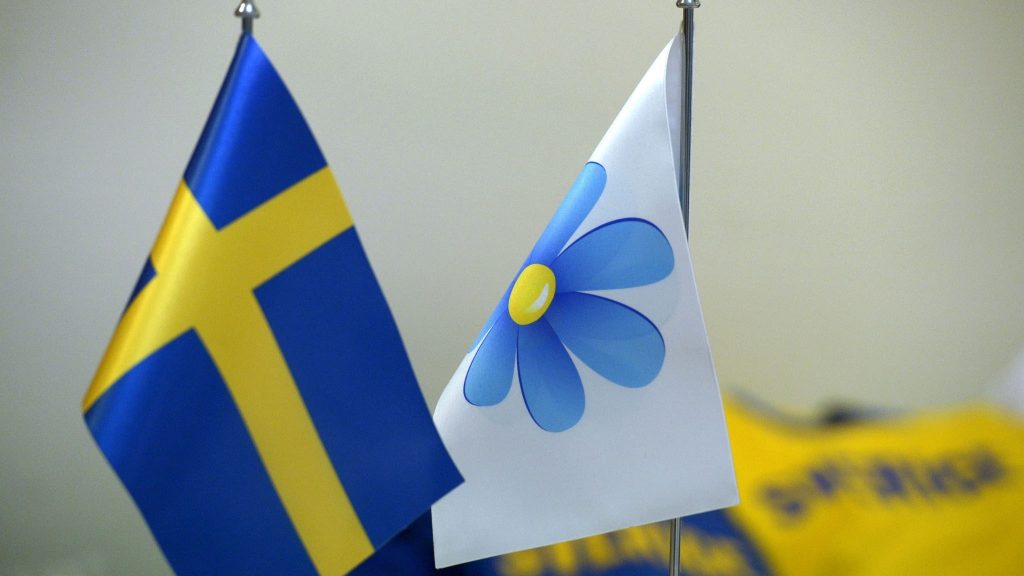
The Swedish flag and SD’s flag: And never the tvain?
source: https://sverigesradio.se/artikel/7612399

Sweden’s elections generally don’t garner international headlines, but on Monday morning earlier this week, Sweden woke up in a country in which the far-right political party, the Sweden Democrats, had won 20% of the popular vote making it the second largest party in Sweden. For some, this was horrifying and for others, around 20% at least, not so much.

Although huge changes are not likely, Sweden could see a change in political direction with the new right-leaning constellation. The areas on which the Moderate, Christian Democrat, Liberal and Sweden Democrat parties agree upon are several. These are:

More controversially, the Sweden Democrats want to:

get immigration down to the lowest level possible; make deportation a more common sentence for convicted criminals who don’t have Swedish citizenship; contribute less (perhaps very much less) than the 1% of GDP that Sweden spends on foreign aid; cut down on public service TV and radio funding; reduce the required amount of biofuel mixed in with gas and diesel, and even take down the pride flags that often adorn busses and public buildings.

All or some of these cause problems with their partners:

While the Christian Democrats and the Moderate party can absolutely get behind reducing immigration, they make a difference between asylum seekers and others seeking to come into the country. SD doesn’t differentiate so much – immigrants are basically all the same and mostly undesirable. The Christian Democrats don’t want to lessen foreign aid at all. The Liberals won’t go along with cuts in public service or a reduction in biofuel percentages, and will not support any government that gives SD a seat at their table. And finally, no other party wants to spend any energy legislating around pride flags or other HBTQ+ issue.

(The Sweden Democrats’ other pet issues, like increasing both unemployment payments and old age pensions, are shared only with the Left Party.)

The conservative Moderate party leader Ulf Kristersson will become Prime Minister and will most certainly have the Christian Democrats beside him. For its extremist, white-power history as well as its current controversies, SD will most likely not be given a ministerial post despite its numerical dominance. However, in deference to SD, it’s not probable that the Liberals will be given one either.

That leaves a government of two smaller parties dependent on two others, one of which is extremely polarizing. Norway, Finland and Denmark have all been in similar situations with extreme conservative parties in power. Until now, Sweden has been the hold out. In those countries, those parties came into power and then lost power. In Sweden, we’ll now see.

Anyone for a price cap?

The EU hopes the sky will NOT be the limit.
https://tinyurl.com/Proactive-Enery-Price-Cap

What do caps, controls, floors, and ceilings have in common? They are all attempts to keep the prices of goods from going above or below a set amount. Emperor Gaius Diocletian, back in the third century AD, was the first on record to try to set a maximum price, a price cap, on goods for his fellow Romans. He was in no way able to enforce his idea and everyone just ignored it. A bigger fiasco example is perhaps from Brazil, which during its period of crazy, extreme inflation tried to put a max price on foodstuffs: Farmers outside of the city actually hid their cows to avoid having to sell at the set price.

We may now see if the EU can do it better. Talks are set to begin Friday on the seriously acute energy cost crisis and its possible remedies at the EU level. The factors that need to be taken into account are many: The price of electricity in Europe still closely follows the price of gas even if the electricity source is different; Russia recently turned off its natural gas pipeline coming into Germany, Nord Stream 1, but Russian gas (natural and crude) is still coming into Europe because of previously signed contracts (good because there are some very gas-dependent EU countries); There are ongoing gas deliveries by cargo ship and pipelines through Turkey and Ukraine – and the price for it is crippling.

Will it work?

Setting a price cap for Russian oil and gas is the main thrust in Brussels. The price cap idea has been pretty widely ridiculed because caps so rarely work as intended (see hiding cows). However, some Foreign Policy magazine writers, among others, are coming out in favor of it. A price cap now, they argue, would mitigate the shock and the even worse heating costs that the upcoming February 2023 ban on Russian refined oil products will no doubt incur. A price cap would keep the oil flowing into global markets (though with less profits for Putin) keeping the rest of the world from freaking out and going into an economic tailspin.

The FP writers also believe that while gas hungry nations like China and India won’t officially join the price cap crowd, they’ll be happy using it to negotiate for an even lower price than what Russia’s currently offering them.

In addition, getting on the wrong side of both US wishes and EU sanctions can be costly for other countries. No one was thrilled about the anti-terrorism financing sanctions the US initiated after 9/11, but financial institutions around the world stepped up to meet them anyway. Smaller actors that try to sneak around import bans, or even neutral parts, will soon find their Russian-oil filled ships difficult to insure as most of the insurance companies are in the EU and follow the playbook.  All in all, the EU’s price caps may have holes, but not big holes.

Finally the elephant that everyone is talking about, inflation, will very likely be lessened if the price of oil and gas actually drops, either through price caps or something else. (Who knows, though. Economic correlations have been so wacky since covid.)

You blink first

Russia has threatened they’ll turn off the tap entirely rather than sell at a lower price, even though oil and gas exports are their major source of income. The writers, and many others, are counting on Russia blinking – on them taking the capped price that’s being offered. On them keeping the flow of gas moving. On them needing the revenue so badly they won’t do anything drastic.

It’s a really big game of chicken, one that is all about Ukraine. One side is betting Russia will sell gas at the capped rate because they need the money to fund the war they started, and the other side is betting that when Europe gets really cold, and really broke, they’ll crack on the sanctions. Who will give? As the Swedes say “those who live will see.”

PS. What will Sweden do to aid its citizens this winter? After the election on Sunday, we’ll find out.

No quick fix

transmission towers
Stormy skies on the electrical front
source: https://www.ft.com/content/a0c81387-ba59-44c7-a490-d879d103c2c0

It was cold out today. It will get colder as early fall turns to real fall and then to winter. Just how cold people will get is the question.

The electricity crisis is on everyone’s mind and there are no quick fixes. The immediate cause of electricity’s higher cost is of course Russia’s war in the Ukraine. However, there is one main underlying cause that has been years and years in the making and that is only now obvious to everyone: All our sources of energy are not enough to make up for Europe’s loss of Russian gas, or even meet our own needs reliably.

Khashayar Farmanbar, Minister for Energy and the one currently taking the government’s heat, only recently has admitted that closing down nuclear plants was perhaps a not-so-good idea. While the various political parties blame each other for the decision now, it was actually pretty untenable to support them at the time. There was little popular support, and the only thing anyone liked about them was that they were a terrific place on which to raise taxes. It simply wasn’t worth it to the companies running them to keep them going. Plus, the focus then, as now, was purely renewable power.

In addition, at that time, Sweden led the world in installing wind power turbines and on that front, the future looked rosy. Sweden is now way behind many other countries on new wind power installation (hello, municipal veto), and in fact, no new wind power turbine has been turned on in over nine years. Neither is wind power dependable – when it’s particularly cold it’s usually also particularly still.

Similarly, solar power is fine at a small scale and during sunny summer months. Otherwise, not so much.

Being a part of the EU’s power grid has also been blamed for Sweden’s problems, but it isn’t to blame. The electricity effect that the EU grid gives is bigger and more stable. But now with the war, all those countries that got their gas from Russia now need electricity from other sources, which strains the system’s capacity – a strain we haven’t yet begun to see on a large scale yet.

There is no particular energy source that we can scale up in the next few years except possibly burning more waste. Although the steelworks in the north are still burning coal, Sweden has basically stopped using coal for heating. No one wants to burn coal anyway (I’m sure some people would actually rather freeze). Burning waste is lousy with carbon dioxide of course, but there are carbon capture systems out there – imperfect, likely expensive, but available. It’s a pretty lousy short term solution but there are not a lot of options…

except paying tons of money of course. As someone once said, there isn’t a problem money can’t solve – and if there is, you just haven’t thrown enough money at it. Both the current government and the opposition have their plans to financially bail out the Swedish population when the cost of a kWh hits the fan. We’ll get to that next post.

Let there be light! and jobs and businesses!

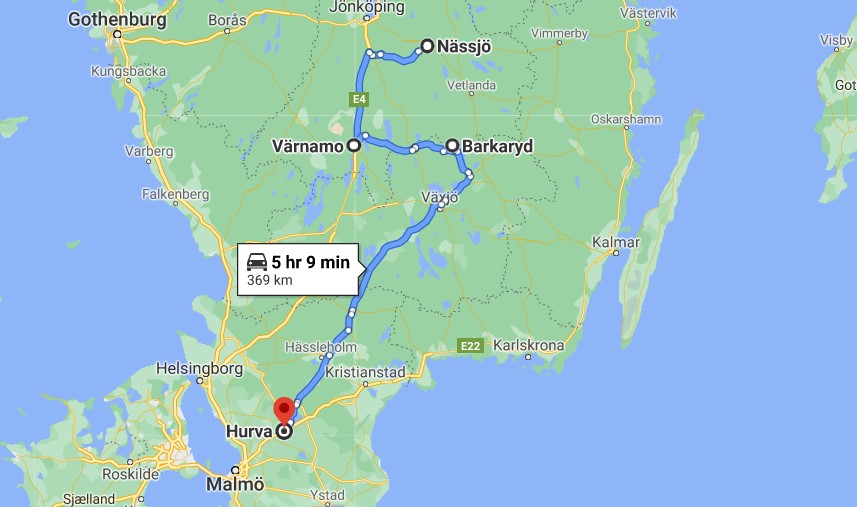
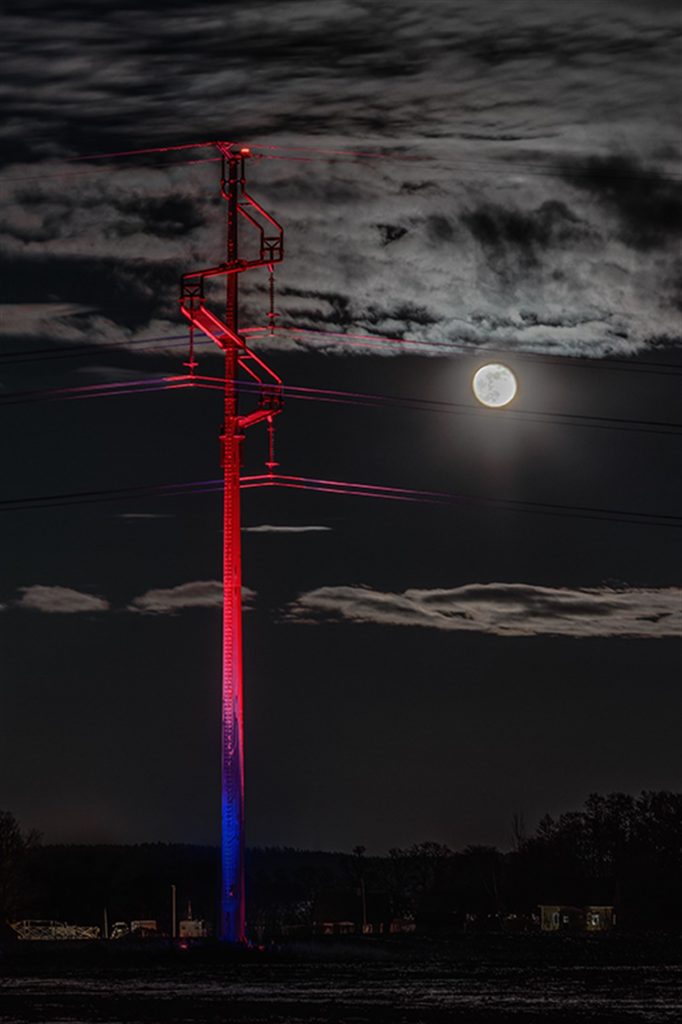
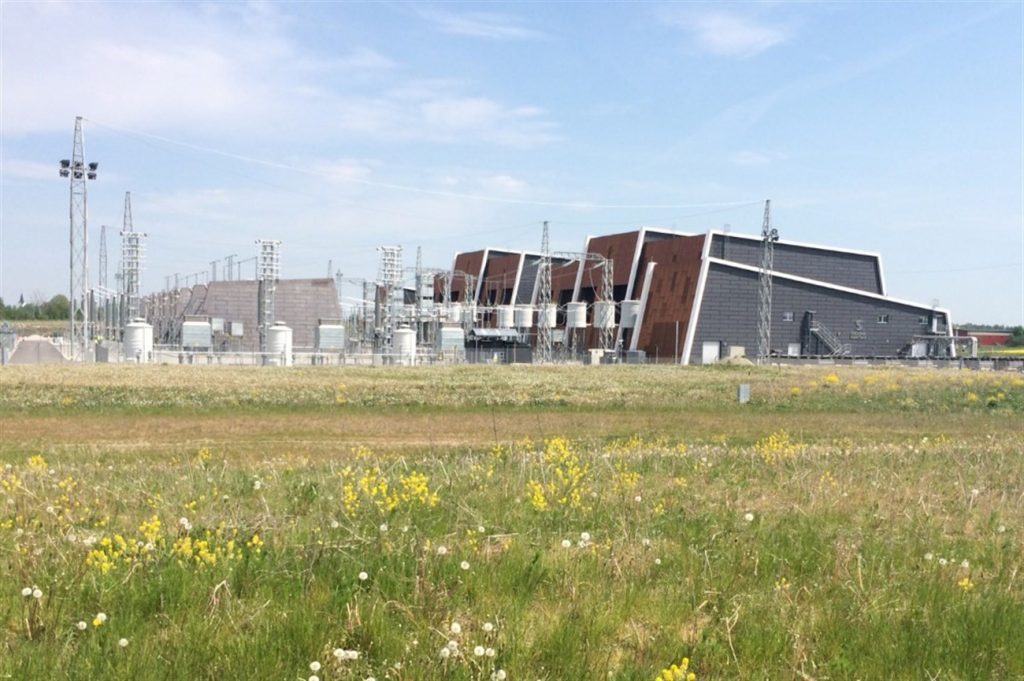
Two days ago, and with so little fanfare that I didn’t hear or read about it until today, a new electricity transmission cable was turned on. The Southwest Direct Electrical Current Link – SydVästlänkens likströmsförbindelse – is great news! Running underground to Barkaryd, and from Barkaryd to Hurva on poles, it greatly widens the electrical bottleneck that used to reduce electrical capacity in southern Sweden. The potential for new companies and new jobs is cause for rejoicing.

The bad news is that it cost seven billion kronor, and took six years longer to build than expected. As Naod Habtemichael at DN correctly notes, the process was “a horrifying example of the state building infrastructure.”

I’m thrilled about it finally happening (see the abundance of posts in this blog about Sweden’s electrical challenges) but, omg, it has to become faster and easier if everyone is going to plug in their cars.

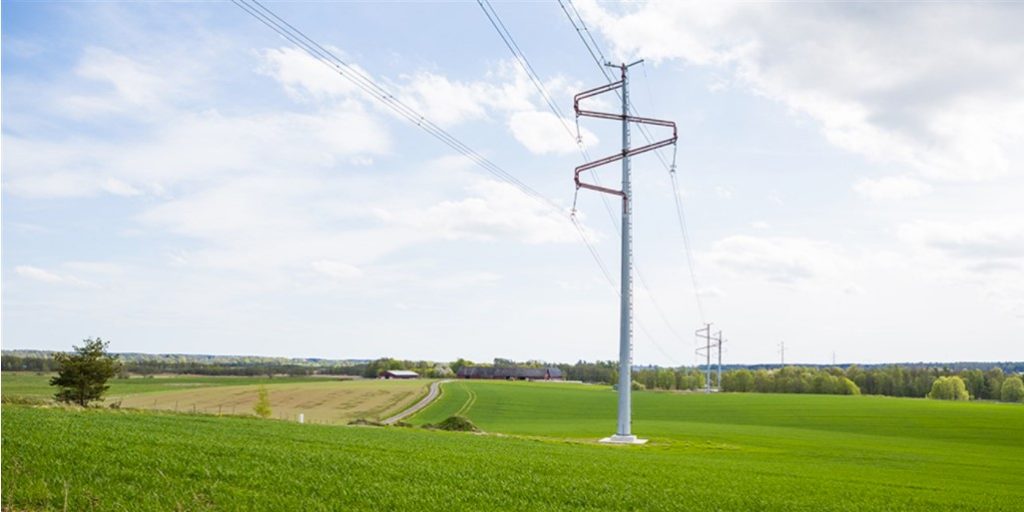
It is pretty though. Svenska Kraftnät – yes, that’s what they call themselves in English – brought in some pros to make the different elements in power transmission fit into the landscape. Below are pics from their website.

transmission poles by day…
and by night.
The power station at Hurva, designed to reflect the surrounding landscape.