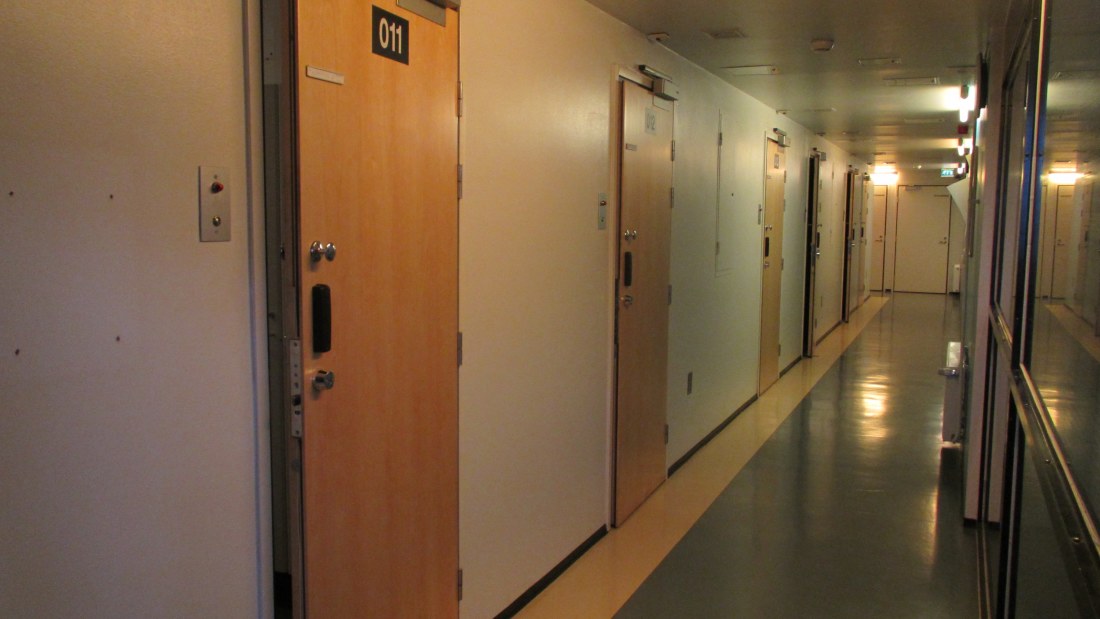
rest your eyes in Sweden’s national museum pic: nationalmuseum.se
Sweden’s national museum, in Stockholm, closed in mid March due to Covid. Earlier, they had closed certain installations and certain events, but remained open for individual visitors for as long as they could. Then it all came to an end.
But now there’s an end to the end. Although some rooms will be closed, and there will be a slew of signs saying what you can do, can’t do, or can do under certain conditions (if you absolutely must sneeze, for example, for heaven’s sake pull a Dracula and go nose to elbow!), you will be free to wander around and take your mind off things with the help of art.
pic: tidningen vi
Art – or Nobel festivity dresses. The regularly scheduled installation of Sara Danius’ Nobel dresses (and they were really fabulous creations) as well as an installation on Gustavsberg porcelain will also be open.
Zorn, detail (pic: barnebys)
Sadly, the “Zorn – a Swedish superstar” exhibit won’t open but has been put off until February of next year.
As of 2022, the music festival Melodifestivalen‘s fans can be assured that every song they hear has at least one female writer behind it. Sweden’s Television, SVT, that are the producers behind the show, have made it a requirement that there be at least one woman in the song-writing team, unless there is only one writer. If there’s only one writer of the song, then it’s acceptable that the writer is male.
“We get a lot of critique for the way it looks on the copyright side,” says Karin Gunnarsson, Melodifestivalen’s producer to Aftonbladet. “This is something we take seriously, and we want to see more female originators.”
Covid changes a lot of things. Even prison sentences. DN reports that the sentences being handed out after conviction are being shortened because of the isolation measures instituted at the prisons to keep Covid out.
Yesterday, a man convicted of selling large amounts of narcotics was given a 5-year sentence instead of the original 6-year sentence because of the pandemic. “I pressed for a lesser sentence… he isn’t allowed to have visitors. It’s very trying,” said defense lawyer Frida Wallin.
In another particularly serious narcotics case (synnerligen grovt narkotikamål) the number of days the suspect was held before being charged was counted in reducing the sentence the suspect eventually received. While he was being held, he wasn’t allowed visitors due to the risk of spreading Covid. In this case, the judge of appeal (hovrättsråd) explained, the later-convicted felon was under particular physical and mental strain during that time, which should be taken into account in sentencing, even if the restrictions themselves were proper.
“Since a court has in these cases made the call that [Covid] can affect sentencing, we can be pretty sure that there will be more sentencing of this kind,” reported lawyer Carl Mellberg. “We have to hope it’s a temporary situation and doesn’t go on for a long time.”
“It’s extremely tough not to be able to have visitors” said lawyer Frida Wallin. Ask any innocent inmate in Sweden’s old age homes.
people and restaurants trying to do a good thing pic: New York Times
Sometimes it’s difficult to do the right thing. Members of parliament, namely the Moderates, Christian Democrats and Sweden Democrats are pushing for extending tax-free benefits to include parking spaces near hospitals and the lunches that ordinary people and local restaurants are donating to hospital personnel. The Social Democrats are saying that’s harder to do than it looks.
Benefit tax, förmånsbeskattning, is a system in which a tax must be paid for any work benefits given to an employee. For example, perks might be having a car for work, or a parking place, or lunches when at work. Almost any compensation for doing work, in the form of money or anything else, is taxed: When it comes to work perks, the employee must pay income tax on whatever perk they get, and the employer pays the social fees on it. (Yes, there are official flat rate social security contributions for each perk – a lunch that is included in a work day has a flat rate tax of about 98 SEK.) Perks turn out to be not so perky.
Back to lunches. The parties above are arguing that hospital employees in these Covid times should be exempt from these taxes, times being what they are. But the government is putting the brakes on. It is apparently hard to give one small group an exemption from the rule. SvD writes that the government is going to lighten up on the benefit tax for parking, but that it is doing it for all occupations, not just hospital workers, because of this difficulty. For the moment, it is suggesting a 1000 SEK rebate on the lunch benefit tax, but the opposition parties think the government should go further.
The Committee on Finance will be meeting on Tuesday to hash it out.
artificial top speed will now be 180 kph pic: svd.se
The good news is that Volvo has started production on 2021 year’s car models. The Luqiao, China factory has started up, and the local factory out west in Torslanda is due to open in two weeks. The news making the headlines today in SvD is that the cars will have a built in speed limit of 180 km/hour (which is about 111 mph for imperial measurement fans).
The stated goal with the limit is to bring down the number of speed-related deaths of course. Which is OF COURSE all very good. 180 kmh is still way over what most people ever drive – the Swedish Transport Administration’s (trafikverket) numbers show that the vast majority of traffic-related deaths happen on roads with a 70-90 speed limit. Major freeways are the place traffic can even come close to breaking the speed limit so egregiously, and actually very few deaths occur on these roads. (Having said that, no death is an ok death. )
For Volvo cars spokesperson Malin Ekholm, the built in limit is all about making people aware of the importance of not speeding, particularly by that much. In good Swedish tradition, it’s all about making a point (signalvärde). FYI, the cars themselves have a top speed of between 220-250 kph, but in a new car you’ll have to take their word for it.
Volvo’s owners in China however are not putting the same limit on its other car make, Polestar. When asked if such a limit was in the works for the Polestar model, Brent Ellis, spokesperson for Polestar, said “no,” and that they had no plans to install such a thing later either.
Privacy laws between Tax Agency departments to be loosened pic: Christine Olsson/TT, Ali Lorstani/TT
One of the problems that Sweden has had regarding fighting fraud and other crime has been that the Swedish Tax Agency’s department of tax reporting (beskattningsverksamheten) was sealed from its other departments, such as the department for civil registry (folkbokföringsverksamheten). The one department wasn’t allowed to run a check with the other department that the information they had was accurate. For example, someone in charge of doling out housing benefits (bostadsbidrag) couldn’t check to see if the person seeking the subsidy was actually registered as living at the address they gave on the form, and if they had a right to the assistance.
The new rule also allows checking to see if the employment contract someone uses as a reason for being granted residency is actually backed by a legitimate company that employees people and pays taxes.
The separation between the departments were set up for reasons of personal integrity, but now “Things that weren’t possible eight years ago are possible today” said Minister of Finance Magdalena Andersson. ”This is particularly important in these Corona times,” said Andersson, ” because we’re using large amounts of tax payer’s money.”
Sweden’s Radio (SR.se) reports that the regulatory changes will take effect on June 1st.
There are a lot of billions going around these days. Over the last two months or so, the government has announced package after package to help citizens and businesses hang in there until the covid storm passes. The list is way too long to repeat here, but you can find it at the Swedish government site if you’re interested.
Meanwhile, what does it all add up to? Omni is reporting the state will be 400 billion (miljarder) kronor in the red by the end of the year. (In February of this year, the government expected the budget deficit to be 14 billion kronor. How times change. ) In all, SvD reports, the government is expected to have to borrow 212 billion kronor in government bonds this year and next. According to Riksgälden, the Swedish National Debt Office, this will be 31% of GDP (gross domestic product), up from 22% last year.
It could have been worse. Thanks to the good economic times over the last years, and because of the official government surplus objective, aka överskottsmålet, that forced the government to save for a rainy day (read more about this here), Sweden has a good buffer and good credit.
Still. Ouch. This is a huge hole that the 11% unemployment that the Debt Office is projecting for 2021 is not going to help.
First, people were talking about a V-shaped recovery or an L-shaped recovery, and now everyone’s hoping for at best a swoosh-shaped recovery à la Nike. Time to strap on some sneakers, because it’s going to be a ride.
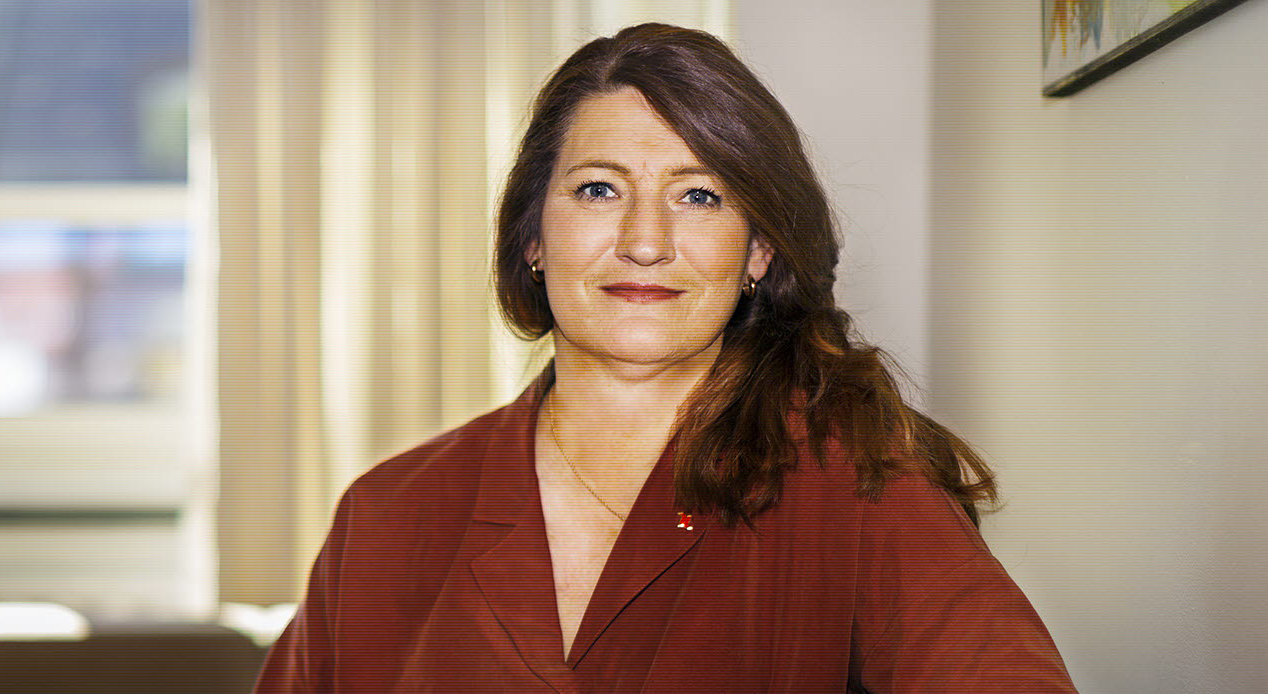
Susanna Gideonsson – likely the next LO president pic: arbetet.se
It won’t be formalized until the middle of June, but all signs point to Susanna Gideonsson becoming the new president of the Swedish Trade Union Confederation, better known in Sweden as LO, Landsorganisationen i Sverige.
Gideonsson is currently the president of Handels, the union for commercial employees. Handels’ members work mainly in retail, but are also hair stylists, florists and office staff: It’s the third largest union in Sweden.
Gideonsson will be taking over in a very sensitive time. Because of Corona, the negotiations between LO and Svensk Näringsliv (Confederation of Swedish Enterprise, aka employers) have been put off until the fall. These negotiations largely set how much wages will rise for blue collar workers over the next year or more. Other issues that were also supposed to be negotiated by now, that are now put off until the fall, are rules regarding under what conditions people can be hired and fired (anställningsskyddsregler), how much help a worker can get regarding on-the-job continued education, and what help they can get when they must find another job (omställningssystemet ) and finally conditions regarding unemployment insurance (arbetslöshetsförsäkringssystemet) that may or may not replace the existing state-run unemployment system (see LOs website for more info on these questions).
These are hefty issues, that affect millions of Swedes. Who leads the negotiations is therefore of key importance. Before Corona, there were only fears of a slight dampening of the economy. Then Corona hit us and things have been turned up and down with temporary (we hope) lay-offs (permitteringar), and collapsing businesses. The economy doesn’t look to get better for years, especially the personal economies that allow people to go out for dinner, and travel. The closer we get to the next election, the less the government is going to want to cut down on its citizen subsidies … but eventually, how high Sweden’s debt compared to its BNP is going to be acceptable (nearing 50% even now) is going to become a serious concern. All of this does not favor LOs bargaining position, at all. If Gideonsson becomes the new president, she’ll have her work cut out for her.
Inflation has been low all over the world for a long time now, even before Corona hit. The 2% inflation target that Stefan Ingves and Co. over at the Swedish Fed has been trying to hit for a few years has been maddeningly elusive. Unfortunately, it just got worse. The three-syllable word has been uttered – deflation.
Deflation is what it’s called when prices actually go down. This April, the KPIF measure was at -0.4% ( omni.se/ekonomi ). KPIF is the consumer price index, plus fixed interest loans. (KPI alone measures the goods and services that people use, including house loans; KPIF adds in loans with fixed interest.) Although no one’s loans are costing less, enough is costing less (mainly energy costs) that there’s some worry about it at Riksbanken. Deflation would be bad: lower prices actually lead to consumers spending less which makes factories produce less leading to layoffs leading to less demand and even lower prices. Deflation means circling the drain.
It’s not that bad yet – inflation was at 1% if fixed rate loans weren’t taken into account – but even 1% isn’t good. We actually want higher prices, although somewhere other than at ICA and Coop , perhaps.