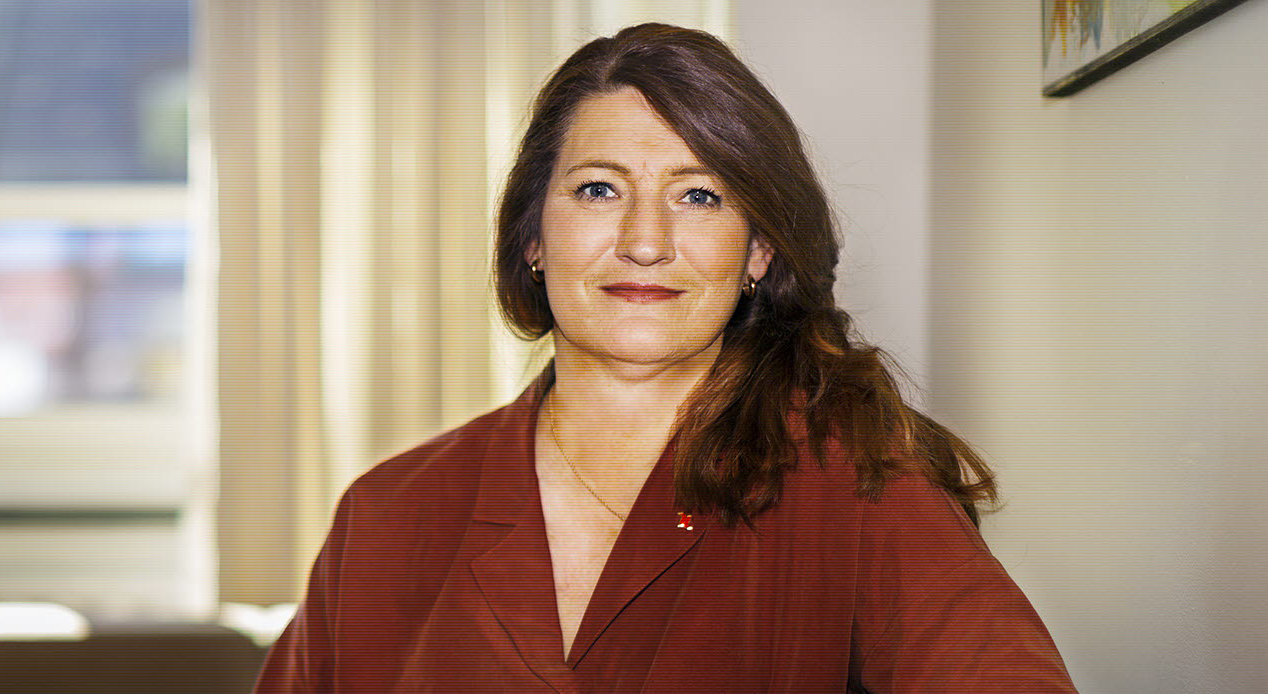
Gideonsson gets a majority to become new LO boss

Susanna Gideonsson – likely the next LO president
pic: arbetet.se

It won’t be formalized until the middle of June, but all signs point to Susanna Gideonsson becoming the new president of the Swedish Trade Union Confederation, better known in Sweden as LO, Landsorganisationen i Sverige.

Gideonsson is currently the president of Handels, the union for commercial employees. Handels’ members work mainly in retail, but are also hair stylists, florists and office staff: It’s the third largest union in Sweden.

Gideonsson will be taking over in a very sensitive time. Because of Corona, the negotiations between LO and Svensk Näringsliv (Confederation of Swedish Enterprise, aka employers) have been put off until the fall. These negotiations largely set how much wages will rise for blue collar workers over the next year or more. Other issues that were also supposed to be negotiated by now, that are now put off until the fall, are rules regarding under what conditions people can be hired and fired (anställningsskyddsregler), how much help a worker can get regarding on-the-job continued education, and what help they can get when they must find another job (omställningssystemet ) and finally conditions regarding unemployment insurance (arbetslöshetsförsäkringssystemet) that may or may not replace the existing state-run unemployment system (see LOs website for more info on these questions).

These are hefty issues, that affect millions of Swedes. Who leads the negotiations is therefore of key importance. Before Corona, there were only fears of a slight dampening of the economy. Then Corona hit us and things have been turned up and down with temporary (we hope) lay-offs (permitteringar), and collapsing businesses. The economy doesn’t look to get better for years, especially the personal economies that allow people to go out for dinner, and travel. The closer we get to the next election, the less the government is going to want to cut down on its citizen subsidies … but eventually, how high Sweden’s debt compared to its BNP is going to be acceptable (nearing 50% even now) is going to become a serious concern. All of this does not favor LOs bargaining position, at all. If Gideonsson becomes the new president, she’ll have her work cut out for her.

4 Nov. – first shot across the bow from Industri union

2020 negotiations begin, for painters and others
pic: måleriföretagen.se

Let the negotiations begin. The Industry Union (Industrifacket) came out today with a demand for a 3% salary increase on a one year contract on behalf of their union members. The response? “Where has the union been this fall?” wondered Peter Hidesten, executive director for Industry Employers, and pointed to the economic downturn underway in the steel and forest industries (DN.se/avtal).

The bid was the opening shot in the yearly negotiation process (avtalsrörelse) between employers and employees across the country. Industrifacket negotiates for 400,000 Swedish workers, a conglomeration of several different workers’ associations – IF Metall, GS, Livs, Unionen and Sveriges Ingenjörs – textile workers’ union, factory workers’ union, forest workers’ union, food industry workers’ union, “unionen” the white collar trade union workers and Sweden’s Engineers.

Peter Hidesten called the bid “completely unrealistic” considering the economic situation. “Instead, he added, it’s time to shift down on salary increases.” However, Marie Nilsson, chair of the metal workers’ union IF Metall, disagreed: “We believe that the raise corresponds well with a responsible salary increase. We’ve contributed to the strengthening industry’s competitiveness over the past few years, so it should be manageable.”

Industrifacket is the first out in the larger negotiation process that is fairly unique to Sweden. The yearly negotiations between employers and worker representatives has been key in preventing massive labor unrest for decades. Traditionally, what Industrifacket gets from the employers’ organization sets the number, or mark (industrimärket), for what other unions can negotiate for. This year, however, the Kommunal union decided not to be a part of Industrifacket’s bargaining, and will handle their own negotiations.

Kommunal, the Swedish Municipal Workers’ Union, speaks for over 500,000 employees at all levels – teachers, nurses, care workers, county administrative workers and more. They chose to not join the Industrifacket side of the table because Industri wouldn’t go along with asking for a higher salary increase for Kommunal members who work in the health, care, and school sectors.

Splitting the employee side of the negotiation force shocked a lot of people, and many thought Kommunal splitting off significantly weakened the employee-side’s bargaining position. Chairperson for Kommunal, Tobias Baudin, stated that he thought they’d do well by negotiating for themselves. “We’re big, strong, and pretty pissed off (Aftonbladet.se/avtal). Also the paper industry workers’ union Pappers, with 13,500 members, pulled out from the employee side, believing that they, too, would be better off negotiating for themselves.

In total, about 2.8 million workers are affected by negotiations that make up the 2020 bargaining period (ekonomifakta.se/avtal). The real negotiations begin soon after the new year.
