Napkin sketches and thought bans

a nuclear story that ends in dancing

Yes, then no, then don’t even think about it, then yes again.
image source: https://www.youtube.com/watch?v=mIs3OhnLPDM

Nuclear power in Sweden is a jagged graph between opinion and economy. With the backdrop of the current energy crisis, the government has opened for the possibility of allowing more than ten nuclear reactors, even in places other than the current sites. This is only the latest move in a decades long nuclear story.

Sweden began its nuclear journey soon after the end of WWII. By 1986, there were 12 commercial nuclear reactors in the country. However, the accident at Three Mile Island in 1979 affected opinion, and a referendum was held on the future of nuclear power in Sweden a year later.

Not if but when

The question on the ballot was not if nuclear power had a place in Sweden’s energy mix. The three options differed in how quickly the nuclear power plants were going to be dismantled. The second option won: nuclear power was to be phased out “as fast as possible, given the need for electrical power to maintain employment and welfare” (Vattenfall). Consequently, in 1980, parliament legislated that no new nuclear power plants be allowed. In addition, the existing ones would be dismantled by 2010 (thirty years and political eons hence).

The thought ban

That wasn’t enough, though. In the wake of Chernobyl in 1984, it also became criminal (and punishable by jail time) to “prepare construction drawings, calculate costs, order equipment or take other such preparatory measures with the aim of building a nuclear power reactor within the country.” Not even a napkin sketch, in other words.

This was generally referred to as the nuclear “thought ban” and there was opposition. Still, it took 20 years before the Persson government proposed it be taken away. In its proposition, they wrote that the so-called “prohibition of thought clause” gave “unwanted associations in a democratic context.” Nuclear research and development was “both permitted and desired.”

Nuclear gyrations

Two reactors in Barsebäck were shut down by 2005, but already in 1997 parliament had changed its mind and voted to abandon the 2010 deadline. Then in 2016, the government parties as well as the opposition agreed that even new nuclear reactors could be built (maximum ten), though only at existing nuclear locations.

It has been back-and-forth on nuclear power for decades. Now, how many power plants, and in what places, may be revised again. For some, spontaneous dancing is called for. Doing just that will soon even be legal.

Kick off your Sunday shoes

Since 1956 it has been illegal to cut footloose in private spaces without getting permission from the police in advance. Dancing is often drunken, after all, and definitely disorderly. At least in theory, under the current law, a pub owner has to break up any spontaneous dancing by guests or else they can be considered to have organized the dancing, and be fined.

As late as 2016, a commission established that getting permission for dancing was perhaps not absolutely necessary – but not requiring permission wasn’t exactly risk-free either. An event’s number of attendees, their potential drunkenness, and the reason for the event were risk factors that still needed to be considered in granting dance permission. The law remained.  

Not anymore. The government proposes to scrap the law (almost) entirely. Instead of being required to get formal permission to allow dancing, you should, as a rule, just let the police department know that there may be dancing. Expect some wild craziness starting July 1st.  

You do you!

say the courts (sort of)

People will do what they want to do. What can you do.
source: https://tinyurl.com/dy8ky79b Myrtle Beach vacations

It has been a busy week for Swedish courts, with many cases being covered in the news. Rulings this week on Cementa, hijab, and union membership have (believe it or not) something in common, namely rulings on behalf of the beleaguered part.

Cementa – the movie

Cementa has been covered in this blog earlier (here). But hang on to your hats, here’s a refresher: Cementa has been mining limestone on Gotland for a hundred years. Limestone is needed to make cement, and Cementa produces most of the cement Sweden uses for building. When Cementa applied to extend its mining license, the first court said “Sure.” Several environmental organizations appealed the decision, and the appeals court then ruled against Cementa.

At this point, the then-Social Democratic government stepped in. Without Cementa, it was argued, construction in Sweden would stop and mass lay-offs would result. With unanimous support from parliament, they passed a law that essentially granted just Cementa a temporary license to continue mining. This caused an uproar immediately – could the government even do that? Environmental organizations protested the government circumventing the court in that way. On Thursday this week, the highest administrative court in Sweden came back and said what the government did was legal. 

For some, the special law that was passed to extend Cementa’s license was welcome, necessary and even commonsensical. The administrative high court’s decision has now upheld the government’s ability to do what it did. For others, both the government’s action then, and the high court’s decision now, is a weakening of the power of the courts.

If this isn’t fascinating enough (if you’re nerdy), though, wait a few days when the temporary license extension runs out. On December 13th, Cementa’s new application to continue mining will be accepted or denied. Cementa part V: the New Application.

Go ahead, express yourself

Meanwhile in Skåne, another case of acceptance was on the docket. Staffanstorp municipality voted to forbid girls in elementary school from wearing a hijab or other head covering while in school. Parliament took up and rejected such a prohibition years ago, but Staffanstorp persisted in the administrative court. The prohibition was rejected in the first instance, and has now been rejected also at the highest instance, although not for the same reason.

At the district court level, the court disallowed Staffanstorp’s prohibition on a freedom of religion basis. The highest administrative court, however, rejected the prohibition on a freedom of expression basis instead. Clothing is an expression of religious belonging, the court said: Restricting the clothing that someone wants to wear affects the individual and their freedom to express themselves. A restriction is therefore not allowed.

Free time and work time

Neither is the Transport Workers’ Union allowed a restriction; in this case to its membership. This case began in 2018, when a regular member of the union was elected to represent the Sweden Democrats party at the municipal level. He was swiftly kicked out of the union for being an active member of a party that, according to the union, was not compatible with their organization’s statutes stipulating people’s equal value. Mats Fredlund sued the union, arguing that the union existed for its members and their work environment, and not for judging what its members did in their free time. The district court agreed, but the Transport Workers’ Union appealed. Now it has lost again. The court of appeals ruled that booting out Fredlund was abridging his right to freedom of association.

In each of these cases, the higher court ruled on behalf of the part that wanted to do what it wanted to do, and not for the part that wanted to restrict that action. This, for a country whose smallest party in parliament is the Liberal party.

Weather worries

weather – it’s not just the climate, anymore
source: https://tinyurl.com/498tcbxc digital worksheets

The news on the electricity front remains bad. Despite some hopes earlier in November that the worst was over, prices over the last few days have been record-breaking. The reason for this is the weather, and that we’re largely dependent on it. Cold, windless days, ice building on turbine blades, and slush-infused rivers have all contributed to apex prices.

The Europe-wide factors that can mitigate this dependency, however, have also faced problems. The restart of nuclear power plant Ringhals 4, that was set for the 31st of January, will now be delayed an additional three weeks according to the latest press release. In addition, it was recently announced that Oskarshamn nuclear reactor 3, which stands for 8% of Sweden’s total energy production, will be offline for needed repairs between the 9th and 18th of December. Half of France’s 56 nuclear reactors are currently offline and being repaired as well: Recent war-inspired inspections showed signs of wear and tear that needed patching up. Finally, Finland’s newish nuclear reactor Olkiluoto is many millions of dollars late and has yet to even start producing electricity.

slush – even hydropower doesn’t like it

There are also other temporary factors that are increasing the current prices, namely ice formation. In the deep regions of Norrland, ice is starting to form on the rivers that supply water turbines. Currently, the rivers are streams of sub-zero slush that can pile up and clog the water intakes. Water power companies cut down on their intake to prevent the buildup which can otherwise wreck infrastructure and/or stop production entirely. In time, when the ice is a nice, stable surface for the rest of the season, waterpower production can increase again.

Unfortunately, electricity taxes will also increase. Thanks to inflation, and because the electricity tax is linked to the rate of inflation, electricity tax will rise 9% starting January 1st. (There’s no escaping this either – air travel taxes will be going up for the same reason come 2023.)

There is, maybe, some light in the tunnel. Water magazines in Norway and Sweden are full again after the fall rains, helping stabilize energy reserves. Gas reserves in Europe are apparently full. The rivers will freeze over. There will be wind, sometimes. Atoms will be split, again (especially if France fulfills its plan to build six new reactors starting 2028). And of the 55 billion kronor Sweden’s Power Net (Kraftnät) has collected via so-called “bottleneck fees,” 18 billion will be doled out to 4.4 million Swedish households in the lower half of Sweden in February. Unless something unforeseen happens, as Ebba Busch, Minister for Energy, Business and Industry, put it. And that is, precisely, the problem. Something always happens. Not least, weather.

1766 to the present

Hats, caps, and freedom of the press

All the news you need to know?
source: Stanford digital https://tinyurl.com/2xej2hb7

Back in 1766, while American colonists were grumbling over the British proclivity for passing laws that abridged their freedom, a similar kind of protest was forming over the Atlantic. In Sweden, three political groupings were having it out – the hats (hattar), the caps (mössor), and the king.

Brimmed and unbrimmed

The king had a weak position during this period, and the real power had been held by the hats – hats with brims – for some time. Two lost wars and a shaky economic situation later, a change came. In 1765, many members of the caps group – the unbrimmed hats – were voted in.

With them came many changes: Censorship was largely abolished; a closer relationship with Britain, as opposed to France, was espoused; the public could access government papers and print as much of it as they wanted (classified documents exempted); and any official who denied such access could be punished. Freedom of the press was born, and even the seeds of the Swedish principle of public access, as well as the Fundamental Law of Freedom of Expression, were sown.

Change

With such a history, it’s no wonder that changing the laws for freedom of the press and freedom of expression has caused an uproar. Changing any part of Sweden’s four fundamental laws requires two parliamentary votes, one on either side of an election. Changes to these laws are meant to be difficult. Yet, such a change has now occurred.

A few days ago, a second vote inserted a clause in Sweden’s fundamental law that criminalizes disclosure of classified information that damages Sweden’s relationship with foreign powers or organizations. The new law’s detractors fear that a journalist can now be charged if, say, they see some misconduct by another state’s or organization’s representative and report on it, thereby damaging Sweden’s relationship with that country or organization.

The new law’s defenders, including the Moderate, Social Democratic, Center, Christian Democrat and Sweden Democrat parties, point to the so-called safety valve. This says that it will not be illegal to disclose damaging information if it’s “justifiable.” What constitutes “justifiable” is not specified, however.

See something say something

A worry is that journalists may in the future decide not to investigate or publish a story if they risk serious jail time. In its coverage of the new law, the newspaper DN listed several instances in which Swedish journalists have irritated other countries – stories that might not have been reported on if the new law had been in place at the time. These examples included information regarding a formation of an EU military unit, the behavior of EU soldiers on missions abroad, on Sweden’s efforts to sell its jet fighter Gripen to Switzerland, and on the conditions facing Swedish soldiers in Mali.

Back in the 1770s, the caps’ changes were short-lived. Only a few years later, King Gustav III disbanded parliament and eroded the press’ freedom until there was nothing left. His son Gustav IV reestablished official censure. However, this didn’t last either – freedom of the press, and by extension of expression, was back in the fundamental law by 1809. Some freedoms are irrepressible.

Where did the money end up?

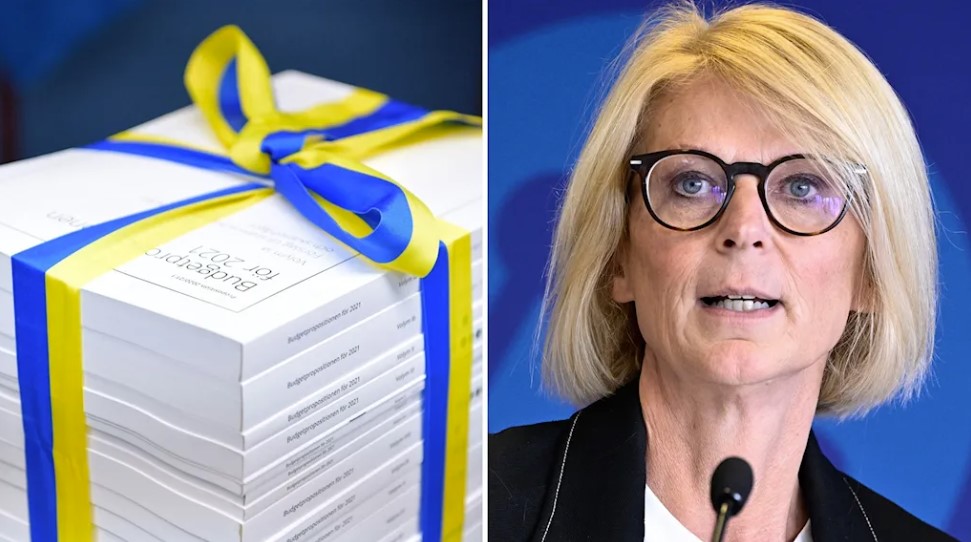
Told you it would have a ribbon. The budget and Svantesson
Sveriges Radio http://www.tinyurl.com/msf6994t Foto: Jessica Gow/TT och Claudio Bresciani/TT

Deceit. Disappointment. Restraint. They sound like tag lines from the latest season of “the Crown,” but they’re actually reactions to the budget upon its release last Tuesday. As soon as the nearly 3000-page document was made available at 8am Tuesday morning, a number of parties, organizations and interest groups made their opinions on it public.

Accusations of deceit were actually the loudest from the Social Democrats. What seemed to be upsetting was that the Kristersson government didn’t announce any big tax cuts or help with coming electricity bills the way they had promised pre-election. It’s natural that the opposition complains, but actually complaining on behalf of the voters who elected the current government was a turnaround. The lesser amount to international aid and even the lesser number of UN quota refugees went by without particular Social Democratic comment (though the Liberals had difficulty with it). It lends some credence to the suspicion that the Social Democrats, in reality, have few problems with the right coalition’s budget.

No. Not happy.

On the other hand, however, many members of the right coalition’s parties were not at all pleased with what Minister of Finance Elisabeth Svantesson presented. Their displeasure was not so much about the lack of broad tax cuts, but what they considered a weak pro-work stance and too many expensive gives. Unemployment compensation remains at the high pandemic-era level (a demand from SD but more the opposition’s idea), and while labor immigration will be more restricted, there were no new economic incentives for those jobs to be filled with Swedish workers. An employee who has to drive to work will have continued compensation, and the price of diesel and gas will sink only marginally. None of these things, it is charged, change the employment dynamic.

Cars and Caravaggio

What was very dynamic was the rush to car dealerships all over the country following the government’s surprise declaration that the electric car rebate would be ending almost immediately. There was not the same rush to state museums following the government’s surprise declaration ending free admission, though. The former means paying up to seventy thousand kronor more, the latter perhaps 100 kronor.

How much for the tree?

Harder to price is the budget’s effect on the environment. As the Tidö Agreement laid out, the Ministry for the environment is now combined with the Ministry for energy, business and industry. Depending on one’s leaning, the consolidation is either a natural development as climate and business are interrelated, or a serious deprioritization. As it turns out, the budget showed a plan to cut the allocation for “General environmental protection and nature conservation” in half by 2025. The tax on plastic bags is still in place, but it’s doubtful that’s any comfort to anyone.

Not moving on the generally hated plastic bag tax is perhaps part of the restraint Svantesson has talked about. Tax cuts have been avoided not to increase inflation. The biggest increased outlays were defense, energy cost compensation, and lower prices at the pump, all of which were no surprise by the time the budget was formally presented, and are already priced in by banks and international agencies. The budget caused no tumultuous waves (see the United Kingdom). So far, the paradigm shift the new government declared following the Tidö Agreement doesn’t seem to have materialized.

Government plans revealed

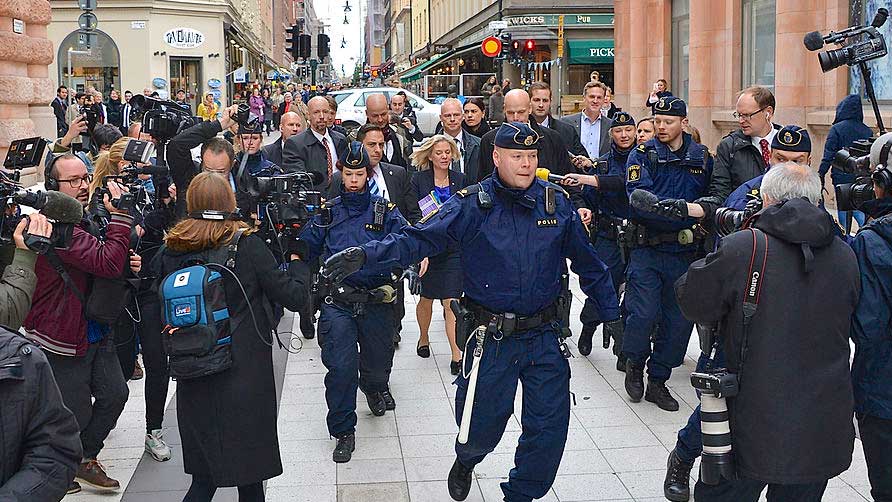
Not a perp walk. A budget walk. It’s a long 400 meters for the previous Minister of Finance.
source: Etuna news https://tinyurl.com/54zuc8hw

November 8th is Budget Day! For those who are interested in all things political, this is exciting – but it’s also kind of a spectacle. The 400 meter long Budget Walk, or budgetpromenaden, is its own Wikipedia entry. It’s that good. 

The stack of A4 paper that the budget is written on, wrapped up in a blue and yellow ribbon  and carried by the Minister of Finance while being mobbed by journalists and tv cameras, is actually the representation of a government’s idea for the country. The budget is a tool the government has to make its political ideas real – it shows how much money the government is planning to spend on the 27 different expenditure areas it comprises. These areas are, for example, items like financial support for students, industry and trade, energy, the EU, and financial security for the elderly. What items’ budgets get changed will reflect how the government realizes its priorities. 

The budget’s Top Three

The largest government outlay in Sweden always goes to the local, municipal governments. Most of this amount falls under the Swedish equalization principle. This effort guarantees local governments an equal financial ability to provide services to their inhabitants – regardless of tax base, population size, or other structural difference. To further income equality, for example, the richest fifteen municipalities pay a percentage of their local tax income to the government. That amount is then distributed to the remaining 275 other municipalities. 

”Health care, medical care and social services” is the second largest outlay in the budget, and ”financial security for those with illnesses and disabilities” is third. The full list can be seen on the government.se website here. 

The majority of the allocations to the different  expenditure areas don’t change more than incrementally. Most of the budget is basic services, which are not that controversial. However, there are a few budget items that may change significantly this year – the defense, international development cooperation, and police budgets. 

Guns and roads

Currently, the defense budget is around 71 billion kronor, which is about the same amount budgeted for communications (roads and trains and the like). By 2025, the defense budget is expected to go up 55 percent, to 110 billion kronor. The government has said it hopes to get Swedish defense spending up to 2% of GDP (meeting Nato expectations) by 2026. With prices skyrocketing, though, who knows how much materiel this will actually buy.

The amount budgeted for International development and humanitarian aid will go in the opposite direction. Instead of 1% of GDP, the government has flagged for a figure around 0.88% of GDP. Sweden’s aid competitor Norway also just abandoned the 1% of GDP goal for a 0.75% goal. With Russia out of the picture, however, Norway has been raking in money hand over fist by supplying oil to the world: Its 0.75% will be a huge amount. Sweden’s 0.88% will still remain a world-leading number, though. 

Finally, the Minister of Justice Gunnar Strömmer announced that the police will receive a bigger allowance, a raise of 1.4 billion kronor. In budget terms, though, this is again somewhat of an incremental increase. 

But we thought you were going to help

What happens with election promises is still a question. Perhaps most memorable were the promises regarding help with coming electricity bills and cheap gas prices, particularly diesel. These supports would likely come out of the budget surplus, which is thought to be around 30 billion. With the dismal economic forecast, though, including raging inflation, the government will have to be careful if it’s going to help, and not hurt. Besides, that ten kronor per litre gas price was a flag that SD flew, and they’re not officially in the government. 

The budget walk on November 8th will no doubt be televised per usual, and there will be a lot of people swarming around the Minister of Finance. But the real attention will be on that beribboned stack of paper she’ll be holding. 

A Paradigm shift

Victory walk by party leaders Johan, Jimmie, Ulf and Ebba.
foto: Jessica Gow/TT.  https://tinyurl.com/ysdujr7w Tidningen Syre

A new Swedish government was announced Friday. The Moderate, Christian Democrat and Liberal parties will all steer the ship of state. Having said that, the presence of the Sweden Democrats was felt immediately. As expected, they will not be sitting in the government, but after an initial introduction of general policy directions by Prime Minister-in-waiting Ulf Kristersson, the microphone went first to the Sweden Democrats’ party leader, Jimmie Åkesson.

What followed was a long list of changes in migration, crime and punishment policy that SD, speaking together with the other three party leaders, expects to see to fruition. While not new, the different suggestions have probably never been heard strung together like that before. Åkesson called it a “paradigm shift,” and many would agree.

Safety and security first

The banner heading was “increased safety and security.” To that aim, Åkesson’s list included doubled sentences for crimes committed by gang members (like California’s STEP act), the end of all “crime rebates” (like the one which reduces the punishment of several crimes to only the sentence of the biggest crime), the institution of zones in which the police can body search someone (like in Denmark) on only a faint suspicion, some form of anonymous witnessing (also like in Denmark), and instituting a crown witness program (reduced sentences in exchange for information – like in Norway and the Netherlands). Sweden might also begin to out-source jails to other countries. For non-citizens, deportation might be on the table for a larger number of crimes.

The minimum

Regarding asylum rights, Åkesson was careful to state that the right to seek asylum would not be abridged. The rights and privileges granted to asylum seekers, however, were not going to exceed what European Union regulations stipulate. This meant, explained Åkesson, that the rules regarding asylum seekers and their ability to bring over family members would be stricter. Stronger identity documentation would also be demanded, and an investigation into if and how asylum seekers could be asked to fund part of their asylum costs (like they do in Denmark) is to be set in motion.

In addition, quota refugees (refugees who are relocated to third countries under the auspices of the UN) will be reduced from over 6000 to under 1000 – over 80%. Further, initial residency permits will be time-limited, not permanent, which has mostly been the case previously. Åkesson also talked about providing incentives for certain people to leave the country, especially, he said, those who haven’t integrated well. Finally, Swedish citizenship will be more difficult to obtain, requiring more time in the country, no criminal record and perhaps even “good behavior,” language proficiency and/or knowledge about Sweden – requirements that have not been asked for before.

Other problems

These pronouncements are all flags that the Sweden Democrats have waved for years. Many of them have also been waved by other parties to some degree. Many of them are already in place in other friendly countries. Not all of them can be instituted directly and several of them will land in committee for who knows how long (maybe forever). But in Sweden, many of them have also been called xenophobic, or worse, even by members of the parties now in the government (how that’s now going to work).

The new government is not all about these issues, though, nor even about how to handle the Sweden Democrats. Sweden’s problems are the worlds’ problems – rocketing inflation, the security situation with the war on Ukraine, the high cost of electricity, supply chain problems, the weak currency compared to the dollar, recession fears – plus a domestic and gang-related crime rate that’s never been seen before. All hands on deck will be needed.

What’s a chair?

The Swedish government and ice: Things we don’t know
source: https://tinyurl.com/bddyepfp

We know so little. We don’t know why the universe exists. We don’t know why we fall in love, or why prime numbers are so weird, or even why ice is slippery. We also don’t know who’s in charge of Sweden right now.

Ulf Kristersson’s right block won the election nearly a month ago, but they haven’t managed to actually field a winning team yet. Kristersson pops up like a human Ulf-in-the-box and says “nothing’s ready until it’s all ready” and then ducks back down again. Meanwhile, the Social Democratic party keeps holding press conferences on Nord Stream like the governing party they aren’t, really.

Who will sit in the government is a great unknown. We do know, however, that the Sweden Democrats will be chairing several heavy-weight committees: the justice, business, employment, and foreign affairs committees. These positions look important and eminently respectable – and therefor elevate the Sweden Democratic party several huge steps from its dirty, extremist history. The parliamentary system of government in Sweden, however, makes committee work slightly more visible than powerful.

The deets

In Sweden, elected members of parliament become members of one committee or another: Here the details and wording of motions and propositions are negotiated. There are 15 committees, plus one for the EU. In each committee there are 17 members seated proportionate to their respective strength in parliament.

The chair

The chair of each of these committees wields the gavel, but can largely only bang on the desk. The real work of passing budgets and laws in Sweden is done by the government. For example, it was not a problem for the last Social Democratic government that some committees were chaired by Moderates. The government got its will through committees with nary a bleat from the parties or the press.

The government sits on, and has the advantage of access to, enormous investigative and information resources (what fun would it be otherwise?). In many cases, and even now, we can assume, many questions have been worked out in advance. The members of the committees can be expected to bring them up and work together to get them done.

This isn’t to say that chairing a committee is only symbolic. Chairing a committee does have pluses, but as is so often the case, also more work. The chair arranges the agenda, arranges for guests to address the committee, meets and greets, is sometimes the only person in the committee to meet a source, and through all of this, gets training, practice, and insight. It’s valuable, in other words, but mostly indirectly advantageous. It’s the long game.

In addition, being the chair gets lots of visibility when reporters crowd around wondering what the committee is talking about. Being a chair but not in the government also handily allows them to not have to take the fall if the results don’t work out.  A win-win for the Sweden Democrats.

In tied cases, the chair of a committee will be the deciding vote. What party holds the chair will then very much decide what goes forward to parliament. But it is the parliament where the final decision on a budget or law’s final yea or nay is decided.

In Sweden’s parliament the right-led block has a majority now – but not a strong one. Lots of interesting things can happen but they’re not likely going to come from a committee chair position.

Where they will come from is just another thing we don’t know.

What’s a government?

You won. Now have fun.
Source: shutterstock https://tinyurl.com/5xw4r9d7

As we wait for the newly elected right block in Sweden to “get its government together,” many non-Swedish born people are wondering and worried about how this process works.

What is a government?

The government is the Prime Minister and the Ministers he/she/they appoint to the various departments. It’s not the members of parliament.
This is how it goes: The parliament is elected by the people; the block that commands the biggest percentage in the parliament gets to try to form a government; within that block it is decided who gets to be Prime Minister and who will sit in the government.

Didn’t he come in third?

Because the Moderate party leader Ulf Kristersson has the support of the majority in parliament – even though “he came in third” – he will be Prime Minister. He’s now figuring out who he wants to be Minister of Defense, Minister of Infrastructure, Minister of Justice, Minister of Energy, etc. It is this group of people who will be “the government.” It is here that the Sweden Democrats will not be sitting – they won’t be in the government. At least I don’t think so.

When this government proposes something, they can expect that their block members in parliament support them. When they need the support of SD to get something passed, the government will be dependent on them. If they don’t need the support from SD – if, by chance, an equally large number of parliamentarians agree with what the government is proposing – they won’t be dependent on SD. If, say, the government proposes something that the Social Democrats agree with and will vote for, they won’t need SD.

Can SD change the law so that – oh, for example, foreign nationals can get kicked out of the country for jaywalking? The answer to that is no, not alone. SD, like any other party sitting in parliament, would need to convince the majority of parliament to vote for its motion. Being a member of the ruling block gives access and know-how: These are advantageous tools but they don’t change the procedure.

The worry is that SD, having access and know-how and leverage, can influence the government and the laws it proposes (called propositions). This is a real peril: Self-censure is real. The lust for continued power is real. And compromise is necessary for any government.

Who is the “talman” and why do we care?

Currently, the different parties are in a twist over the position of talman (speaker). The talman is a non-political position and does not even vote. On the other hand, the talman is the highest position a person can be elected to and is officially only subordinate to the king. The talman is the face of the parliament, and leads its daily work. As a sop for not being in the government, SD thinks this would be a nice position to hold. It’s very public, and is a huge step from SD’s past pariah status.

That kind of recognition is simply too much for many members of parliament. Ergo, some parties of the left block have come out to say that they would accept, and vote in favor of, another Moderate party member to have that role. For the moment though, SD is not letting go.

For Kristersson, he’s not even actually Prime Minister yet but he has to deal with the realities of having accepted SD into the block. The fact is that the position of talman is not an important vote-bearing or proposition-making position. In that sense it would be an easy give to SD. But if the Social Democrats say they’ll accept a Moderate party member, then votes-wise Kristersson doesn’t need to give it to SD. He isn’t dependent on SD for this vote. This would be a good way of standing up to SD and not allowing it to dictate anything – while also alienating SD and jeopardizing future cooperation.

Harbinger, anyone?

A change in direction

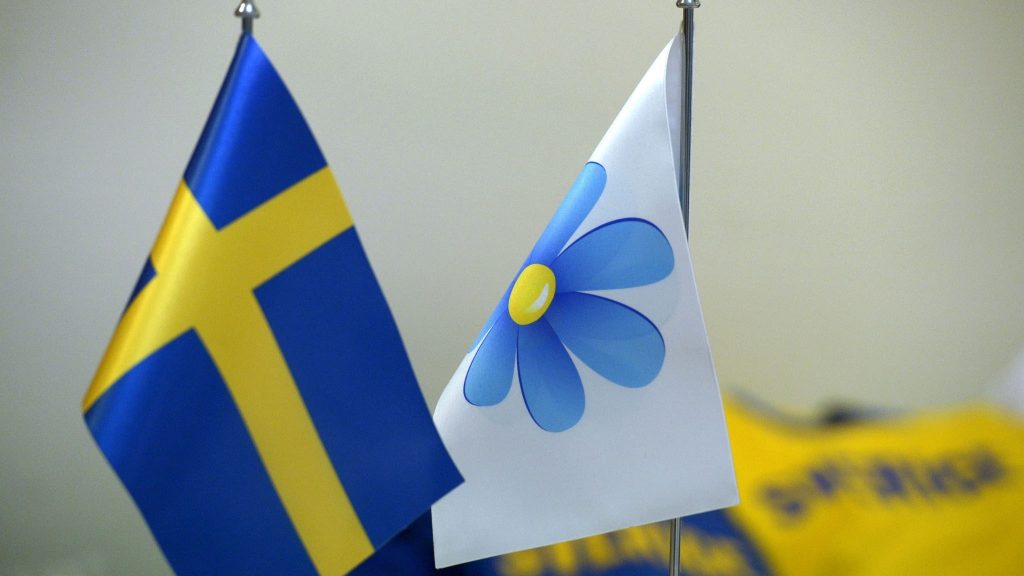
The Swedish flag and SD’s flag: And never the tvain?
source: https://sverigesradio.se/artikel/7612399

Sweden’s elections generally don’t garner international headlines, but on Monday morning earlier this week, Sweden woke up in a country in which the far-right political party, the Sweden Democrats, had won 20% of the popular vote making it the second largest party in Sweden. For some, this was horrifying and for others, around 20% at least, not so much.

Although huge changes are not likely, Sweden could see a change in political direction with the new right-leaning constellation. The areas on which the Moderate, Christian Democrat, Liberal and Sweden Democrat parties agree upon are several. These are:

More controversially, the Sweden Democrats want to:

get immigration down to the lowest level possible; make deportation a more common sentence for convicted criminals who don’t have Swedish citizenship; contribute less (perhaps very much less) than the 1% of GDP that Sweden spends on foreign aid; cut down on public service TV and radio funding; reduce the required amount of biofuel mixed in with gas and diesel, and even take down the pride flags that often adorn busses and public buildings.

All or some of these cause problems with their partners:

While the Christian Democrats and the Moderate party can absolutely get behind reducing immigration, they make a difference between asylum seekers and others seeking to come into the country. SD doesn’t differentiate so much – immigrants are basically all the same and mostly undesirable. The Christian Democrats don’t want to lessen foreign aid at all. The Liberals won’t go along with cuts in public service or a reduction in biofuel percentages, and will not support any government that gives SD a seat at their table. And finally, no other party wants to spend any energy legislating around pride flags or other HBTQ+ issue.

(The Sweden Democrats’ other pet issues, like increasing both unemployment payments and old age pensions, are shared only with the Left Party.)

The conservative Moderate party leader Ulf Kristersson will become Prime Minister and will most certainly have the Christian Democrats beside him. For its extremist, white-power history as well as its current controversies, SD will most likely not be given a ministerial post despite its numerical dominance. However, in deference to SD, it’s not probable that the Liberals will be given one either.

That leaves a government of two smaller parties dependent on two others, one of which is extremely polarizing. Norway, Finland and Denmark have all been in similar situations with extreme conservative parties in power. Until now, Sweden has been the hold out. In those countries, those parties came into power and then lost power. In Sweden, we’ll now see.