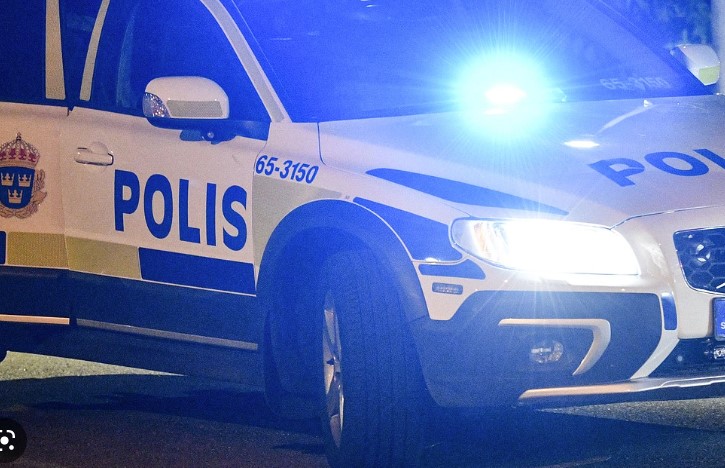
Plastic bag politics

Plastic bags – not as simple as they look
image source: www.varldenidag.se https://tinyurl.com/ydtk2a8t

The tax on plastic bags was, at first, a relatively obscure item listed in the January Agreement (2019) between the Social Democratic, Green, Center, and Liberal parties. But it did not remain obscure. Instead, a heated debate on the pros and cons of plastic grocery bags took place. The tax’s enaction was both celebrated and hated. Now, it might be going away again.

Good or bad?

In the debate, many argued that the grocery bags sold at the checkout counter were basically always reused as trash bags. Others argued that Sweden didn’t have the problem that the tax was supposed to address – plastic bags blowing around and polluting the seas, oceans, streets and forests. Numbers telling consumers how many times reusable bags needed to be used until they “made up for their manufacture” added to the debate. Whether for the environment, or for the income, the tax went into effect in June of 2000.

The tax had an immediate impact on consumption. When grocery bags began to cost seven kronor or more, sales of plastic bags to pack groceries in dropped over 80%. On the other hand, according to Wikipedia, sales of paper bags in grocery stores went up about 70%. Nine of ten Swedes said they were now bringing their own bags to the store. Sales of plastic bag rolls went up 75%.

Regardless of how much it did or did not do for the environment, the tax effectively put a damper on the sale of plastic bags at checkout – and the expected tax windfall. Expressen reported that in 2020, at least, the state received nearly two billion kronor less than what it had expected to take in. SVT reports, however, that the tax drew in more than twice as much last year – meaning that more people bought bags last year than had previously.

Not so fast

The Sweden Democratic party has now gone out and stated not only that the plastic bag tax was never effective, but that it will go away in the new year. Minister for Climate and the Environment Romina Pourmokhtari, of the Liberal party, was quick to counter. The plastic bag tax will only be evaluated, she said. A decision will only be taken “during the fall budget negotiations.”

Sweden’s climate goals are already a friction point between the government and its support party, the Sweden Democrats. The plastic bag tax might seem unimportant in the larger scheme of things, but it symbolizes the conflict well.

Books, Nato, and opinion polls

These kinds of images are not going away
image: Reuters.com https://tinyurl.com/3h6mjk8s

It’s not often a Swedish administrative law makes international, political news. But when a Stockholm court decided that the police did not have a legal leg to stand on when they denied permission to burn the Koran at two different demonstrations, it did not go unnoticed.

Burning books part II

An administrative court is where a conflict between a state agency and a private person (or business) is decided. In this case, both a private person and an association calling itself “Apallarkerna,” appealed the police’s decision to not allow either of them to burn a Koran in public. The private person wanted to burn a Koran in front of the Iraqi embassy to protest Islam in general. The association thought (perhaps not incorrectly) that burning a Koran in front of Türkiye’s embassy, à la Paludan, was a good way of preventing Sweden from joining Nato.

The police denied both demonstration applications on the grounds that their actions would threaten national security (see this post). However, the court found that according to the way the law is written, national security is not a legal reason for denying permission to hold such a demonstration.

Sweden’s Nato application

This will not do anything to further endear Sweden to Türkiye. In a recent meeting at Nato headquarters in Brussels, Türkiye’s foreign minister even drew a parallel between the court’s decision and Nazi Germany. “The Nazis started by burning books, then they attacked religious gathering places, and then they gathered people in camps and burned them to achieve their ultimate goals. That’s the way these things start” he is reported to have said.

Should it be illegal?

If (or more likely, when) a burning next takes place, Türkiye may not be the only who is seriously upset. A recent DN/Ipsos poll found that 51% of Swedes think that it ought to be illegal to burn holy books like the Koran or the Bible.

In an interview with SvD, former prime minister Carl Bildt said that he was not sure if burning a book was actually a protected right, but that it was complicated. “It is quite obvious that it is not freedom of expression to burn down a mosque. But burning a book, is it freedom of expression? Leave it to the lawyers to draw boundaries, but it is reasonable to think that somewhere there is a limit to what you can burn as part of freedom of expression.”

Others are not so sure it is time to change Sweden’s laws. “Only a few months ago we were proud that we allowed book burning – it was proof of our freedom of expression” Antje Jackelén, Swedish archbishop emeritus, commented. “Then along comes Erdogan, and our Nato negotiations break down, and suddenly we think completely differently. It’s a little meager.”

In the same poll, support for a ban on publishing images that denigrate religious symbols, or a ban on ridiculing religious scriptures in a text, was just under 30%. It is unknown what support there is for a ban on other actions, like putting a glass of wine down on a religious book or otherwise not showing respect. Those actions may or may not go unnoticed in the future.

Sex, blackmail, and legitimate interest

No name. no picture. Nothing to see here.
source: https://wjlta.com/2012/07/20/anonymity-for-the-world-to-see-blurring-faces-in-youtube-videos/

Headlines recently have been about the Moderate member of parliament who was blackmailed for 65,000 kronor. He apparently spent the night with two women, after which he paid one of them 5000 kronor. The other took pictures of the evening, presumably awkward ones, and demanded payment for not making them public. He paid, but then reported the whole thing to Säpo, the Swedish Security Services. She is now suspected of blackmail, and he of buying sexual favors.

Juicy! Who was it? How high up was he? Why is Säpo involved? Inquiring minds want to know, and we could find out. But most media outlets are careful with details.  General Swedish media praxis for publishing the name and picture of criminals, suspected criminals and other people-in-the-news is to not publish them. The reasons are based on ethical grounds and defamation laws.

Negative effects                         

The member of parliament is purported to have said he didn’t buy any sexual services at all. He was only helping her out with rent and taxi fare. Almost no one is going to believe that. Trying such an old canard may even show him in a more unflattering light. This is precisely one of the reasons the daily newspapers and SVT are not going public with name and picture. As SVT explains, publishing his name and picture would likely affect his life negatively. It may also negatively affect the lives of the person’s family and friends. Ergo, no name and no picture.

There are exceptions to this rule. If there is a very large and irrefutable public interest, for instance, information can be made public. And/or if the crime is particularly heinous. When Sweden’s foreign minister Anna Lindh was shockingly and tragically murdered in 2003, it was only after her murderer admitted the deed that his name and picture was published. Even then, Aftonbladet felt it was necessary to publicly explain why they chose to identify him so clearly.

The truth is no defense

Obviously, just a handsy member of parliament doesn’t make that cut for most media. But another reason to not publish a name or picture is Sweden’s defamation laws. This has been taken up in a previous post, but in short, publicly making (or posting) a true but negative statement about someone can make you guilty of defamation in the eyes of the court. Truth is no defense, and the fine can be heavy.

In the future, decisions to publish could become more, or less, restrictive. The outcome of one current case may push us in either one of those directions.

Name + picture = shot?

Over the last years, the police have begun to use names and pictures to help find suspects. It must be deemed necessary to further the investigation, and is preceded by legal discussion.

This case begins with a shooting in Uppsala in January. A 25-year-old was arrested, in absentia since he’d already fled the country, for shooting at an apartment where family members of the gang leader “the Kurdish fox” were living. The TV program Efterlyst asked for and received permission to show the name and picture of the 25-year-old. Later that same evening, the 25-year-old’s father was shot and killed.

The father’s family filed a police complaint against the prosecutor who allowed the name and picture’s publication. They claim that by allowing their release, the prosecutor showed a criminal lack of regard for the safety of gang members’ families.

The case has not yet come up in court, and it perhaps never will. Still, it may have some aftershocks not just for the police but for media and the public. Politicians caught with their pants down will likely never end, but how much we’ll know and for how long we’ll hear about it is up to how we define legitimate and irrefutable public interest.

Whatever happened with…

A mixed-topic post with updates on four topics written about previously
image source: https://www.thespruceeats.com

Several previous topics in this blog have made the news again. Here are updates on: Archer; Botkyrka; the lay judge (nämndeman) system; and, of course, inflation and food prices.

Say I’m in a meeting

Public pressure pushed Minister of Finance Elizabeth Svantesson to call a meeting with the dominant grocery chains ICA, Coop, and Axfood (Willy’s and Hemköp). On the agenda? To discuss how to keep food prices down, and to make sure that no one is price gouging.

No actual meeting has been reported as of yet. It also remains unclear what pressure Svantesson can, and would be willing, to apply. Like during covid, the government is most likely to only “recommend” and then let everyone decide for themselves what they want to do. In France, an agreement between the finance minister and Carrefours ended with an agreement to freeze prices on daily goods (see this post). But Carrefours is leaving it up to their individual grocers to actually implement any freeze.

The government may be playing a waiting game. Many expect inflation to come down this year without any particular intervention in market prices. One prognosis has inflation at 4.8% at the end of the year, and back to normal (around 2%) by 2025. The reasons for this optimism are assumptions that the current lower prices for both energy and raw materials will continue, and that central banks will continue to raise interest rates.

Sadly, lower inflation does not mean lower prices for food, or anything else, really. It means only that prices will not rise so fast.

Back in Botkyrka

Meanwhile in Botkyrka, the Social Democratic party has acted. The rumor was that new members have been recruited solely in order to secure their votes on a particular measure. (For a quick review of the Botkyrka conflict, see this post.) To be an official Social Democrat, party secretary Baudin stated, you have to be 15 years old and share the party’s social democratic values – but membership isn’t automatic. Baudin upheld the decision to deny 98 party membership applications on the ground that their reasons for membership did not ring true.

Not just a phone call

The recruitment and application process to become a lay judge was under fire even more this week.  As became clear in the Snippa sentence, contact between a political party and a lay judge is not always as distant as it should be (see this post). In the aftermath, there have been many calls to overhaul the recruitment system, even from a former minister of justice. The damage may be deep. Just the thought that they might receive a phone call from a sponsoring party can already have lay judges checking their opinions.   

At least two reports (2002 and 2013) suggesting it would be good for at least some lay judges not be beholden to a party for their position have been ignored. Chances that these new calls will be heeded are low.

Archer deliveries

Ukraine’s call for more firepower will be soon answered, at least from Sweden’s end. Minister for Defense Pål Jonson announced this week that 8 Archers and even 10 Leopard tanks are ready to be sent over. For security reasons, details are sketchy. To learn more about the Archer system, as well as the other items Sweden is sending, see this post.

The price of eggs

Finally, the price of eggs is relevant. And up 30%.
source: https://food.unl.edu/article/cracking-date-code-egg-cartons

Been To Norway recently? Swedes are taking trips across the border to take advantage of Norway’s lower food prices. The traffic used to be in the completely opposite direction. Calls for the government to do something about the price of food in Sweden are increasing. Unfortunately, nothing about this situation is easily solved.

Reasons behind the rollercoaster

Taking a trip to the grocery store has become an emotional rollercoaster – shock, consternation, maybe anger, and resignation. We have to eat, after all. Bloomberg and Eurostat show that food prices in Sweden this January were 20% higher than January last year. Covid, China’s extended lockdown, Russia’s war against Ukraine, inter alia, are all reasons for inflation and higher food prices. Another reason for the food price increase is the strong dollar and the weak krona.

The US economy is, to many, surprisingly strong (low unemployment and a 2.9% GDP increase in 2022). Interest rates are high and will likely rise more. Other countries put their money in US dollars because they can count on getting it back, and more. Sweden has only recently raised interest rates, GDP prospects are the worst in Europe according to the EU, and the earmarks of a housing bubble has global investors looking elsewhere. Simply put, Sweden isn’t attractive right now and the weak krona is a reflection of that.

Greedflation and other complaints

Consumers’ complaints about high food prices have not led to changes. The governor of the Swedish central bank, Erik Thedéen, responded by telling consumers to buy only the cheapest products so they don’t increase inflation. Sweden’s Minister of Finance Elizabeth Svantesson told consumers to look for the cheapest goods at the cheapest stores. Charges of “greedflation” – that food stores were raising prices beyond what was necessary – led the Swedish Competition Authority to investigate. Although they found no evidence of wrong doing at the end of last year, they are now going to look again to make sure. Finally, Left party leader Nooshi Dadgostar has called for setting a price cap on certain basic goods.

Svantesson immediately put the kibosh on Nooshi’s idea, saying that determining prices was not the government’s strong suit.  Other countries’ governments, however, have approached the topic somewhat differently.

Other countries

In France, food prices have risen about 14.5% over the last year. The food giant Carrefours recently announced a “very good agreement” with Minister of Economy Bruno La Maire. The understanding is that Carrefours will freeze the current price on 100 basic foods and products like detergent, diapers, yoghurt, eggs, bread and cereal.

Government-imposed price caps on twenty food staples in Hungary have been in place since last fall. Shortages of these items (milk consumption is apparently up 81%) has since forced the Minister of Agriculture to exhort Hungarians to buy only what they need and not to hoard the price-fixed items when they find them.

30% is how much the price of olive oil has risen in Spain. The government is facing internal pressure to lower some food staples’ prices by 14%. That, and/or raise taxes on supermarket chains to finance other inflation measures. The Spanish government has raised the minimum wage 8% this year alone.

The goal

The Swedish government is so far avoiding making any changes that they think might increase inflation. Together with supporting Ukraine and joining Nato, bringing down inflation is the country’s overriding goal. Less than two years ago, the goal was to raise inflation – to go in the opposite direction, in other words. Kind of like the traffic between Norway and Sweden.

Down there in Swedish

When the court decides what “lady bits” mean.

See the film.
source: https://www.svtplay.se/snoppen-och-snippan

About twenty five years ago, an employee at RFSU (the National Association for Sexual Information) was tired of there being no female counterpart for that casual, everyday Swedish word for the male sexual reproductive organ – snopp. In a stroke of linguistic genius, the word snippa was launched – a cute, casual, neutral, non-technical, easy-to-use word with no actual sexual connotation.

The words snopp and snippa are now part of the general vocabulary, and can be found in all dictionaries. Snopp and Snippa even have their own song. They’re particularly useful when working for and with children. A recent decision by the Swedish Court of Appeals, however, has drawn the definition of snippa into the spotlight.

What’s a snippa?

In June, 2021, a man was found guilty of raping a ten-year-old girl. He appealed the decision, and the Court of Appeals this week freed him on all charges. The reason was that the girl had not been clear enough when she said that the man had reached into her underwear and put his finger up in her snippa.

The court wasn’t sure what exactly that meant, and looked up the word snippa in the Swedish Academy’s Dictionary (SAOB). There it defines the word snippa as the external female genital organs – not the internal cervix or vagina. Ergo, there had been no penetration. Ergo, no rape. The man was freed. And now there’s an uproar.

The definition of a crime

Many find it alarming that the court needed to look up a word in the dictionary. Many find it equally alarming that a single dictionary entry was behind the definitive decision on a person’s guilt in a major crime.

Using the SOAB was the correct choice. It is the official Swedish dictionary. Had the court looked at the Swedish Academy’s List of Words (SAOL), which is a more colloquial dictionary, they would have found that snippa meant all the female reproductive organs and not just the externals. They could also have asked any grade school student, parent, or teacher what snippa meant. It is unclear why they didn’t simply pose more questions, particularly when the nature of the crime was so reprehensible and when there was no doubt that some crime had been perpetrated.

Further questions

It is also unclear why the prosecutor left out the lesser crime of sexual molestation of a child. If that charge been included, the court could not have freed the man from all charges. The prosecutor has explained that the court, in pre-trial consultations, strongly inferred that including the lesser charge was “a stretch” alternately “a bit steep” and that is why she left it out. No one really knows what went on here. It is both incomprehensible and possibly another sort of crime.

In a further twist, two of the lay judges that presided over the case have since resigned. This was met with approval by the district chair of the Social Democratic party. To be a lay judge in Sweden you must be nominated by a political party. Upon receiving a lay judgeship, you are supposed to lay your political leanings aside. For some, it is perhaps natural that a political party here takes an interest in the workings and results of the judicial branch. For others, it is a strange overreach.

The pressure is on for the case to be taken all the way to the Supreme Court. We’ll know in the next couple weeks if that is going to happen. Perhaps there we’ll find out the definition of a word that half of Sweden lives with every day, and that puts a man behind bars for abusing.

On friendly favoritism

and worse

Spotlight on the Swedish police
image source: Johan Nilsson, TT / www.arbetaren.se

Nepotism comes from the Latin word for nephew, “nepos.” Already in the 1650s, the word nepotism was used to describe granting favors to favorites – in particular, granting high offices to family members. It was first used to refer to the papal habit of appointing “nephews” (or illegitimate sons) to high positions in the church.

Nepotism has other family members. Cronyism, discrimination, bias, and plain old favoritism are other names for giving unwarranted preferential treatment. A beloved child has many names, as the Swedish saying goes. Nepotism’s offshoots only show how common it is perceived to be.

Calling all units

Nepotism and suspicions of nepotism are crippling for any organization. They are even worse when they concern the highest positions in an organization. Especially an organization founded on a mission to uphold the rule of law.

The death of Stockholm’s Chief of Police Mats Löfving was the tragic end to a case of perceived nepotism. Löfving was relieved from his post pending the results of an investigation into his promoting his subordinate colleague and girlfriend to a high position in the police. He was also suspected of influencing the salary she was paid, of giving her the right to bear a service weapon, and lying about his relationship in the first place. The day after the investigation’s results were made public, absolving him from some transgressions but raising the possibility of others, Löfving was found dead in his Norrköping apartment.

Just helping out a friend

While cases of outright nepotism or discrimination are rare, cases of “friendly favoritism” or vänskapskorruption are considered common in Sweden. A study from Transparency International in 2021 found that nearly a third of respondents believed that the level of corruption has increased over the last five years. Twenty percent of Swedish respondents added that they themselves have availed themselves of personal contacts to skip a queue or otherwise get access to a service. No one can deny that personal contacts are key to finding, and getting, a job.

Friendly favoritism or outright nepotism in law enforcement, however, is particularly grievous. Not only is public trust undermined, but the morale and motivation of an already understaffed and pressed police force crumbles. As late as May, 2022, a questionnaire conducted by the Police Union found that four of ten police were actively looking for another job. This, in the midst of almost daily shootings and bombings, is a catastrophe.

A glimmer

Tragically and ironically, it was Löfving who in 2020 first broke the silence and went public on just how widespread clans’ criminal activities actually were in the Stockholm area. It caused a furor, but it also opened a lot of eyes. His death might do the same.  

Finland first?

Sweden got lucky with neighbors
image source: By JayCoop derived from BlankMap-World.svg, CC BY-SA 4.0, https://tinyurl.com/kuemt6ey

Sweden’s application for Nato membership has stalled. At the high level Munich Security Conference this weekend, even Nato chairman Stoltenburg seemed to imply that it was certainly possible that Finland would get full Nato member status before Sweden.

Sweden’s road to Nato has been rocky from the start. After Paludan’s Koran-burning stunt, a time-out was called but diplomatic back-and-forths have continued.

Post-Paludan and the freedom of expression

Since Paludan, the police have twice denied permission to burn the Koran publicly. The first they denied was a Paludan copycat. The second was similar, but in front of Iraq’s embassy. The denials have opened a whole debate on Sweden’s freedom of expression.

The police denied permission to burn the Koran in front of the embassies on the grounds that it would cause allvarliga störningar av den nationella säkerheten. They worried that the demonstration would disturb or perhaps weaken national security.

National security

National security is not officially a reason to deny permission to demonstrate. It’s not in the lawbooks. Instead, permission to demonstrate can be denied only if it seriously disturbs the order or safety of the public at the demonstration. Permission can also be denied if there was a serious disturbance or danger to those present at a similar, previous event.

Paludan’s similar, previous event caused no disturbance to those few who were present. These two recent denials are therefore a wider interpretation of the law than has been seen for decades.

These decisions have not, however, been recognized by Türkiye to be the deviations from the norm that they are. Nato chair Stoltenberg was glad that more Koran demonstrations were averted (as were many people). Still, Türkiye’s foreign minister stated at the same meeting that Sweden has not done enough to stop PKK or YPG activities. Furthermore, Türkiye considers Koran burnings a hate crime.

Hate speech?

In Sweden, Koran burning alone is not equated with hate speech against a specific group of people. Burning a Koran has not been regarded as speech in the same way as actually speaking, writing, drawing, or even wearing certain clothing has been regarded as speech. One legal opinion states that while the Koran is written and therefore speech, the physical act of burning is neither speech nor illegal. Freedom of expression is a point of pride in Sweden, and a lot is required to shift that sentiment.

Awkward, but not bad news

With these divergent views on fundamental legal definitions, it may be a longer road to Swedish Nato membership than anyone thought. It will be awkward and uncomfortable if Finland becomes a Nato member while Sweden remains outside, but it’s not a dead end.

While efforts are stalled for the moment, Türkiye’s acceptance of Finland is not necessarily bad news for Sweden. It means that Türkiye is not running Russia’s errands, that it is not opposed to Nato’s expansion, and that it recognizes the worth of additional countries in this region to Nato. Its acceptance of Finland shows that it is not unsusceptible to pressure. In addition, Türkiye has said it realizes that it is not anti-Muslim or anti-Türkiye sentiment driving some extremist actions, but anti-Nato sentiment.

Erdogan still has an election to get through and the situation between Sweden and Türkiye is fluid. The hope is that if Finland indeed gets in before Sweden, they will continue to push for Sweden’s inclusion from the inside.

Last week in Sweden

Know your voters.
image: https://tcf.org/content/commentary/does-voting-matter/

We don’t know yet what exactly happened at the Social Democratic party meeting in the Stockholm suburb of Botkyrka last week, but it could be worrying. Organized crime and city hall is not a combination we want to see.

It’s your money

As SVT reported recently, income from gang- and clan-run welfare fraud is even larger than their income from drug dealing. Welfare fraud is about systematically faking the numbers when applying for subsistence allowance, assistant allowance, housing allowance and association subsidies. Welfare fraud is about using state monies for personal gain.

10-20 billion kronor a year

No one knows how much money is paid out for services not due and never rendered. The Swedish National Financial Management Authority and the National Audit Office estimated several years ago, however, that the number was somewhere between 10-20 billion kronor paid out every year.

One of the services that municipalities support are the after-school and youth clubs that are sprinkled heavily throughout Sweden. These clubs were largely created to give kids a place to go to avoid getting into drugs or being recruited into gangs. These clubs are heavily subsidized by local municipalities, and are often run by associations.

One such association is ABF, the Workers’ Education Union. ABF is not a Social Democratic association, but it was co-founded by the Social Democratic party, and is closely associated with them. ABF Botkyrka runs many different courses, study circles and clubs, including several after-school, young adult centers. The current uproar about ABF, the Social Democratic party, and fears for democracy began over a year ago.

ABF = gangs??

The Botkyrka municipality, in which the Social Democratic party is the biggest and which holds the board chairmanship, began to hear rumors – too many rumors – that the local, subsidized ABF organization had ties to local gangs. In mid-February 2022 (a year ago now), the municipality’s board voted to freeze their payments to all of Botkyrka ABF’s after-school and young adult programs. The risk was too great, it was said, and the programs had to be shut down immediately. Soon afterwards, the municipality commissioned a formal investigation on the economy and activities of Botkyrka ABF.

The report they received back was alarming. Knives and drugs, youth wearing bullet-proof vests, youth with criminal records in responsible positions, gang ties, and dubious book-keeping were the headlines. ABF protested and made efforts to meet the accusations, but the funds remained frozen.

Has there been a coup?

Since then, it’s been reported, ABF members of the Social Democratic party have invited ABF supporters to join the party. It is these new Social Democratic party members, it is suspected, who tipped the scales at the internal meeting of the Botkyrka Social Democratic party this February and voted to oust the party chairman Ebba Östlin. Ebba Östlin was a prominent advocate of shutting down ABF’s after-school and youth centers.

Several questions are now raised. Was this a coup organized by the ABF to ensure their funding would be reinstated? Was this an abuse of the democratic process? Is the Social Democratic party in Botkyrka now in the hands of a criminal element that could use the voting process for financial gain? Or was Östlin only voted out because she was unpopular? The national Social Democratic party has said it will investigate.

Country-city-country

A face we’ll be seeing a lot of.
Image source: https://www.centerpartiet.se/partiledarvalet/muharrem-demirok

All politics is local, it’s said. But even local politics can have national and even international angles. So it is with the election of the new Swedish Center Party leader, Muharrem Demirok. Outside of the Center party in Linköping, no one had really heard of him. All eyes are on him now, though, and not only on his Turkish citizenship but also on the fact that Center party has traditionally been a rural-based party and Demirok is a Stockholm suburbs baby.

Demirok was born in Sweden in 1976 of a Swedish mother and Turkish father. Swedish citizenship was a possibility via his mother, but dual Swedish and Turkish citizenship was not. Muharrem’s parents gave him Turkish citizenship. When he was 21, Demirok applied for and received Swedish citizenship.

The rules for citizenship are as complex as human relations are complex, and the rules change over time as well. Only in 2001 did Sweden allow dual (actually, multi) citizenship. Demirok applied for Swedish citizenship in 1997. However, since dual citizenship was allowed in Turkey, it was not a problem for Turkey that Demirok became Swedish. In its turn, Sweden probably never specifically asked that Demirok renounce his Turkish citizenship, or check that he had. Sweden at that time was already considering loosening the single citizenship rule that had been in place since 1963. It’s unclear, but having both might not have seemed to matter. Now though, Demirok has said he is formally renouncing Turkish citizenship, in response to real or imagined national security concerns evinced by Center party members and others.

Besides citizenship, a matter that concerns party members is to what degree the Center party is losing is rural voter base. The Center party has always been “the farmer’s party,” with deep roots outside of city centers. Even as late as 2017, the Center party campaigned (among other things) for increasing the number of horses in the countryside – “for every ten horses a new job is created!”.

In his first long speech as Center party leader, Demirok invoked the countryside several times, claiming “all of Sweden must live.” One of the reasons that Demirok is now party leader, though, is that his predecessor Annie Lööf led a rather unsuccessful election campaign. Many of the voters she and the Center party lost were those rural voters. Demirok will have his work cut out for him to win them back.