The corona commission

Mats Melin new Swedish corona commission
New corona commission leader Mats Melin introduces himself while appropriately distancing himself from party politicians
pic: SvD Ari Luostarinen

After the first suggestions regarding the directives and staffing of the coming corona commission were rejected by a majority of parliament, the government has now put a plan together for the corona commission. In a press conference this afternoon, DN reports, the government announced that lawyer and legal consultant Mats Melin will head up the commission, and that the commission will be comprised of six or seven other, as yet unnamed, persons.

When the idea of a commission was first floated, the governing Social Democratic party’s suggestion was not to publish any results until after the next election. “We want to remind everyone that what we hear from the municipalities and regions is that they’re a little tired of reporting, and that they need to focus on dealing with the virus. I don’t want to have a situation in which we put yet another burden on them” was the word then from Prime Minister Löfven. In addition, it was said, the staffing of the commission would largely be made up of people with specific party affiliations.

The response from the majority in parliament was along the lines of “nice try,” and the government has since been forced to back away from both suggestions. Which is good since, as DN reported a couple weeks ago, the government has a poor track record when it comes to corona-related transparency. Emails have a way of being erased, DN wrote, and meeting notes have a way of being classified as “working material” and are thus not part of the official (and public) record. This can still happen in the future, but at least the grossest risks might be avoided by more strongly separating the commission from party politicians.

The corona commission that will be formed sometime in the near future must now be staffed by people who have the trust from all the different parties in parliament. “I think it’s extremely important that those who are chosen have the trust of all parties, and that they can’t be suspected of favoring one party’s interests over another’s” said Left party leader Jonas Sjöstedt to SvD. In a remarkable constellation, the Sweden Democrats, Christian Democrats, and the Center, Liberal and Moderate parties are all united on this. (No word from the Green party but one must assume that they’re somewhere behind the Social Democrats.)

The plan is that Sweden’s elder care during the corona crisis will be the focus of the first part of the investigation, with a report due to be presented in the fall. A more in depth report will come in the fall of 2021, and then on February 28th, 2022, the final results of the commission’s findings will be presented. “I’m looking forward to seeing the results” said Löfven.

Another important date is the next election: September 11, 2022.

To stay or to go – the Green party is wavering

Isabella Lövin and Per Bolund Miljöpartiet
An unhappy couple left out in the cold
pic: miljöpartiet.se

The Green party is in crisis discussions regarding staying or leaving the government, Expressen reported today. By the end of August, the government wants to have a new migration policy, one that has broad support from all the parties, done and dusted. To this end, the Social Democrats have had long and intensive discussions with the Moderate party in particular, something the Green party doesn’t appreciate at all as they and the Moderates have largely diametrical thoughts on the immigration topic. Last Friday, the discussions were particularly comprehensive – but the Green party was left out on the doorstep.

At the moment, the Social Democrats, the Moderates and the Christian Democrats are agreed, DN reports, on some sort of asylum “max number”. Even the Center party and Liberals haven’t expressed outright opposition to the concept. These three or more parties, if they come to an agreement, would get a majority in parliament. The Sweden Democrats would likely go along though, which would make a pretty much unassailable majority, even if they say they consider the proposal “way too lame” (alldeles för mesigt).

On the other hand, however, the Green party and the Left party are indignant going on outraged. “The Social Democrats are slamming the door in both our faces by negotiating with the Moderates. There is another majority here, one that the government is actually based on. Still, they turn to the Moderates. It’s refugees who will pay the price” said Left party board member Christina Höj Larsen. “It is completely unique that the government negotiates with the opposition and not its own partner” said a Green party member to Expressen. “Are all the questions we’re not agreed on to be decided with the Moderates in the future?”

When the Social Democrats first put more restrictive policies in place after the wave of immigration threatened municipality stability back in 2015, the Green party still didn’t leave the government – to the dismay and anger from a large part of their following. They will be risking that anger again if their “partner” the Social Democrats run them over again on the same question.

One thing that might make a more restrictive immigration policy more palatable, however, is if the government says no to Preem’s expansion plan (see “Preem gets a pass” here). If not, though, losing on two issues close to their heart, if that’s what happens – and when they’re supposed to be a deciding partner – might prove to be too much to swallow.

law interpretation erases school information

Skolverket takes away school choice information
school choice blindfolded by law interpretation
pic: melbournechildpsychology.com

Swedish schools have come under a lot of critique over the last twenty years when school results have been lower, sometimes much lower, than was hoped. One of the tools parents and authorities have used to judge the performance of a school has been to check the statistics for each school. In a decision that came out today, the Swedish National Agency for Education must now make those statistics unavailable.

The statistics that have been available include how many students the school had, what percentage of the school’s teachers were certified and what percentage of the school’s students qualified for further studies. Apparently, there was a judgement earlier that came to the conclusion that these numbers were business secrets. This was not only because each student brings with them a certain amount of money, but also because school results are something the independent schools use to attract students. These statistics gave clues to the school’s economic stability. Therefore, the reasoning went, this was privileged information. Although this was originally only meant in regards to Swedish independent schools (friskolor), education agency head of analysis Eva Durhan announced that schools needed to have a level playing field and that it wouldn’t be fair that only public schools’ information would be available for scrutiny.

The upshot is that schools won’t be able to be compared in the school guide, making an educated choice of what school to attend more of a guessing game. Even the School Inspection Board won’t have any statistics to work with.

No one is particularly happy with this, reports SvD, and the national education agency is trying to find a workaround in order to supply both parents and students – but also government agencies – with this information. “Of course, we need to keep track of how things are going for our different schools” said Minister for Education Anna Ekström for DN: “We also need to know which children go to which schools so that they can pay the right resources to the schools. It is important that authorities can fulfill their tasks and that researchers and the general public have access to the information.”

“We understand that the National Agency for Education has to do what it has to do. But everyone agrees that another way has to be found. It is neither in our interests, nor in the interests of the independent schools, that parents can’t compare education institutions, says Per-Arne Andersson at the Swedish Association of Local Authorities and Regions (SKR).

Unfortunately, even with the best of intentions this will take a while. The government has asked both Statistics Sweden (SCB), and the National Agency for Education (Skolverket,) to find ways to resolve the situation. But, as Moderate party education spokesperson Kristina Axén Ohlin writes, the parliamentary education commission (utbildningsutskottet) wasn’t told anything. “We could have pushed through an initiative and forced a change in the law” she said. “The education agency will have a proposal in September but after that it will take at least six months. No state allowance or grade results will be seen during 2021.”

One possibility is that schools can voluntarily publish this information. Barring that, school information will be hard to come by.

Ringhals 1 nuclear power station restarts

Ringhals 1 to be started up to secure electricity supply
pic: wikipedia.se

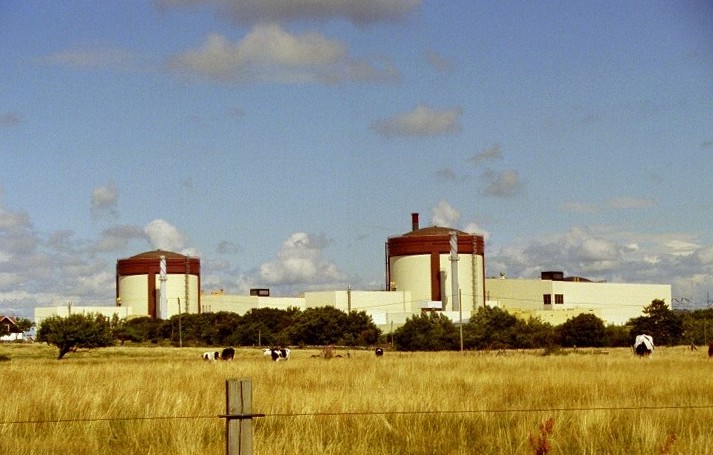
Electricity – it’s cost, where it comes from, who produces it and where – is a heated and complicated subject. The topic has been touched upon in this blog earlier (here, here, here and even here), but it’s time for an update because nuclear power plant Ringhals 1 is being started up.

Ringhals 1 closed in April per usual, and wasn’t expected to be started up ever again due to regulations enacted in the wake of the Fukushima disaster. (Ringhals 2 was closed last year.) Although many people were pleased by this decision, businesses and government officials have been more concerned. A stable and powerful electricity grid is considered by most people a requirement for a responsible running of the country. When Pågen bakery decided not to open a plant in Malmö last year, due to the fact that the city couldn’t guarantee a steady supply of power, people became alarmed.

Anders Ygeman is often all over the airwaves saying Sweden produces more energy than it uses. Although that may indeed be the case over the course of a year, it doesn’t mean that everyone (like hospitals, factories, houses in the dead of winter…) gets their energy needs met when they need them. A few recent headlines paint another picture: A few here, for reference:

It doesn’t look good. But back to Ringhals 1. It was closed, it was likely to stay closed until the end of the year, and then start the long dismantling process. But a press release from Vattenfall, and a notice from the Swedish power net (Kraftnät) on June 18th said something else, namely that they’re starting up Ringhals 1 and have a contract to run it to at least September 15th. “…the electricity grid needs a significant proportion of planned electricity generation that does not fluctuate with rain or wind” said Torbjörn Wahlsborg, Senior executive vice president at Vattenfall. “[…] we are happy to be able to make an extra effort for grid stability.”

So is everyone else that requires electricity.

Home away from home, or not

home services may be denied for summer guests
pic: senioradvice.com

In another ripple in the wake of Covid, several municipalities have petitioned the government to be able to deny summer residents (people moving to the summer houses for the summer months, for example) the home services they’re granted in their home municipalities. Many parliamentarians understood and agreed with the municipalities, and on the 3rd of June a majority said that the government must temporarily change the law and allow municipalities to deny services. But yesterday, the government said no, the municipalities must provide these services by law. This has caused consternation and anger on the part of these municipalities. Some have now said they’re ready to go their own way and ignore the law.

Home services cover a lot of things. Municipal employees are sent out to homes to help elderly, sick and/or injured with things like cleaning, shopping, getting dressed, taking a shower, making the bed, cooking food, accompaniment on shopping rounds or just helping with a walk, and more. What clients can get help with depends on their needs – there isn’t a ready-made list. Furthermore, different municipalities can grant different help: One municipality can say that a client can get help with their shopping four days a week while another might say something different. One municipality can grant 10 hours of help a week without being any more specific about what tasks the person is to get help with. It’s not free – there’s a price list for each activity and the prices can vary per place. However, it’s subsidized, and the monthly maximum price, for the user, is currently just over 2000 SEK.

This is not the real cost of the services though, and the municipalities say they can’t afford it. When people who normally receive services in their home municipality move for the summer, the summer municipality takes over the responsibility for them, including the manpower and the cost.

Lena Hallengren, Minister for Health and Social Affairs, explained the no by saying changing the law was just too complicated a thing to accomplish in a short time: It can’t be done in a wave of the hand, but needs a thorough inquiry and an impact analysis (DN.se).

Not good enough, say several municipalities. “We’re going to continue saying no” said Orust town councilor Catherina Bråkenhielm, DN reports. “We’re holding the line and denying home services for the time being” said town councilor Mats Abrahamsson.

Not even the Swedish Association of Local Authorities and Regions (SKR) is happy with the government: The muncipalities “don’t want to say no to summer guests, but they don’t have the staffing. They’re also worried about a higher local infection rate now when the government has lightened up on restrictions,” noted Gregor Bengtsson, coordinator for elderly care at SKR. There are about 60 who are saying no, Bengtsson says.

The consequences of the municipalities’ actions are at this moment still unclear. Bengtsson says the they might be investigated by the Swedish Health and Social Care Inspectorate (Inspectionen för vård och omsorg, IVO) and that some have been reported to the Office of the Parliamentary Ombudsman (justitieombudsmannen, JO). More immediate effects, though, are going to be felt by the elderly or ill, who have been granted assistance in their home area, and who are asking for it – as allowed by law – also when they enjoy the summer away from home as well.

Skål for state-owned businesses

Absolut midsommar – keeping health care funded
pic: absolut.com

Is Sweden a socialist country?! Although even through the 80’s it was still a thing, the idea that the Swedish state owned more businesses than not has pretty much been put to rest by this time. Still, there are several huge businesses that are owned or partly owned by the state, who has proven to be, at best, only a so-so business partner. SvD‘s Torbjörn Isacson went through part of the list today, with Telia’s recent sale of its Turkish business as a starting point.

Sweden owns 39.5% of Telia. The next biggest owner of Telia is Blackrock, which owns 3.1%. It’s safe to say Sweden’s ownership is the big one. Although it’s a controlling interest, the state doesn’t control Telia. Telia has a board like any other public company, who does the day to day work (for more about Telia see this blog post). However when Telia loses value or does bad business decisions it’s the state that takes a major hit as any huge shareholder would. Also when Telia does a good deal and makes money the state makes money. In this case, this means Swedish taxpayers.

That’s why Telia’s recent sale of its holdings in the Turkish company Turkcell must make the news. Not only did Telia and its shareholders take a huge, huge loss because the board’s idea was a disaster, Telia sold its holding to a buyer whose CEO is Turkey’s authoritarian leader Recep Tayyip Erdogan. As shareholders, Sweden’s taxpayers should be in the know – but in reality taxpayers have perhaps even less power than an average shareholder since the Swedish state must resign its active partner role to prevent a truly socialist state of affairs (see China for comparison).

Still, that doesn’t mean that the state ignores its business holdings entirely. Just recently, SvD reports, the parliamentary committee on enterprise (näringslivsutskottet) called on the three top state-owned businesses – Vattenfall, Jernhusen and Swedavia – to answer some questions on business practices like annual dividends, and handling the corona epidemic.

Vattenfall has been a leading money-loser. If it’s not one thing, it’s the other: too much snow, too little sun, too little snow, too much sun – and we won’t even bring up wind – they’re all reasons why Vattenfall needs to raise prices on Swedish energy consumers. Then there are other issues like nuclear power and electricity infrastructure that the state of Sweden is directly responsible for but again, must somehow disengage from their effects on its own business, Vattenfall, which, again, is somehow the reason Vattenfall must raise it’s prices on Swedish energy consumers. But it isn’t only Sweden where Vattenfall has its business. Vattenfall has business all over the world and the current record-low cost of electricity is again a reason that Vattenfall is losing money.

Jernhusen owns buildings and other real estate all along the Swedish railroad network and also has dealings inside Norway. Swedavia runs the airports. Both of these were taking losses even before Covid pulled the rug out from under them. And then, of course, we have SAS of which Sweden and Denmark each own just under 15%.

Another 100% state-owned, and Covid-hit business like all others, is Svenska Spel where the lack of sports and the closing of casinos has been financially disastrous. One would think that the state would be happy about less gambling, but it’s uncomfortable when it’s also making money for the state. We all know PostNord, which is 70% owned by the Swedish state and 30% owned by Denmark (note: for some reason, however, voting power is split 50/50). It has the impossible task of trying to be profitable while being prevented from raising prices or laying off workers, or even quitting the business entirely, by its own owners.

To make matters worse, it was in the 100% state owned LKAB (Luossavaara-Kiirunavaara AB) mines in Gällivare that a cluster of Covid virus has recently exploded. But even before that a number of questions regarding work practices were piling up.

Corona makes life more difficult for basically everybody, and misbehaving companies are common. Plus, some essential services should be guaranteed by the state, even if they’re not profitable. But as a general rule, should states be in the business of making money? Oh. Wait. We can’t forgot the good news – Systembolaget! A sure money-winner in Covid times and not. Swedes will have to keep drinking to keep the money rolling in – good thing it’s Midsommar.

Preem gets a pass

Another hinder for Preem’s expansion bites the dust
pic: Preem.se

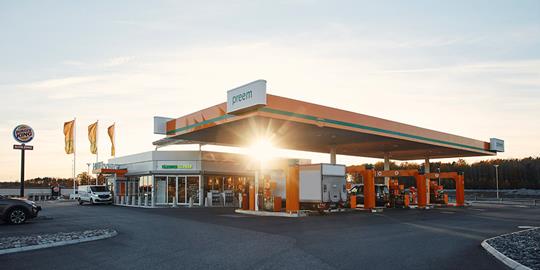
Last August, in this post, it was discussed how the government was going to be the deciding party regarding whether or not Preem, Sweden’s largest fuel company, would be allowed to build an even bigger oil refinery on the west coast – and oh, by the way, become Sweden’s biggest – numero uno by far – source of CO2 emissions. For a refresher on this issue, check out the post.

Meanwhile, since that decision in August, Preem made some changes to its bid, reducing the size of its expansion and by that, the amount of CO2 emissions. According to DN, today’s ruling by the Land and environmental court (mark- och miljööverdomstolen) said two important things that strengthen Preem’s argument to build:

  • the climate policy framework that parliament agreed upon in 2017 serves as a guideline for climate policy, yes – but it has no legal weight in granting or not granting permits in single operational cases, and
  • the so-called stopping rule in the Swedish Environmental Code (miljöbalken) cannot be applied to carbon dioxide emissions from an activity already covered by the EU emissions trading system.

Having said this, the ball is now firmly in the government’s court. The court has said that there is no previous ruling, or law, or agreement that prevents Preem’s expansion. It will be completely up to the government to say yes or no to Preem.

Of course the Green party will be opposed, and they are officially a part of the government. But the real decision-making rests with the Social Democrats and it could be a tougher call there. Preem’s expansion means Swedish jobs at a time when Swedish jobs are really needed. And, if Preem doesn’t refine this oil, the argument goes, someone else will – and that someone is not going to be nearly so clean about it as Preem would be. On the other hand, the environment. And, if someone else refines the oil then at least it isn’t in (or on) Sweden’s hands.

One option for the government is to drag out the decision for so long that Preem and/or Sweden loses interest. Or the government can hope that something else happens that makes the question go away (though be careful what you wish for). Perhaps taking a page from Tegnell’s playbook could be a way to go – make a decision and stand by it regardless of whether it’s the right thing to do or not.

When a covid vaccine becomes available

Who gets the vaccine?
pic: verywellhealth.com

Yesterday afternoon, Reuters reported that Astrazeneca had signed a 400 million dollar contract to supply “european countries” with 400 million doses of an eventual vaccine. However, not all countries were actually in on the deal, and it’s unclear what the arrangement means for Sweden.

The contract is for a vaccine called AZD1222, developed at Oxford, that isn’t at all fully developed and tested yet, but is expected to be perhaps ready for delivery at the end of the year. Germany, France, Italy and the Netherlands are the countersigning parties, in a constellation called “Europe’s Inclusive Vaccine Alliance”. In another contract, Astrazeneca has another deal for 1.7 millions doses with the US, the UK and India.

SVT reports that, so far, Sweden has no similar deal. Minister for Health and Social Affairs Lena Hallengren, however, came out yesterday to say that Sweden is in intensive negotiations with Astrazeneca and other vaccine developers. As for the deal that the other European countries have made, it is still unclear as to if these countries were out for themselves or whether the deal they signed is meant to help all or any other European countries. When asked specifically whether Sweden was any kind of partner to this, Hallengren said that the signing countries should come out and say what the story is: “The ambition is to see to it that other EU countries are a part of it, but speed has been needed.”

It was only at the end of May that Sweden came around to the realization that maybe a vaccine deal might be a good thing. The strategy they put together consists of a “continued international cooperation” and the nomination of a vaccine coordinator (!) with a mandate to see that Sweden’s needs are taken care of. The Public Health Agency of Sweden (Folkhälsomyndigheten) has been given the responsibility to prioritize the vaccine’s distribution when it becomes available.

Seeing, perhaps, that these measures are likely ineffectual (bordering on pathetic) the government announced Sunday that it has upped the stakes a bit. From originally only granting a limit of 350 million kronor for “preparedness investments” (bereddskapsinvestering), the Public Health Agency has now been given permission to loan up to 2 billion kronor. “When a vaccine becomes available, the means to procure it must also be available” said Minister Hallengren.

This may mean that Sweden has come to understand that Sweden’s municipalities do not, and have not had, the muscle or the weight to bid against other countries when trying to purchase supplies: Sweden’s system of decentralization has meant that every municipality has had responsibility to get its own supplies. It was only lately realized that the municipality of Västerås doesn’t quite have the purchasing power that buying for the entire country of say, Austria has. To give a heavy purse to the Public Health Agency to swing with for Sweden, if it’s not too late, will help.

Furthermore, any vaccine doses that are procured shall be evenly distributed around the country: “it makes no difference where you live” proclaimed Hallengren. Sadly, it has been all too apparent in the case of Sweden’s elder care, that when supplies are limited, a reckoning of your importance is indeed taken into account.


EU summit and budget coming right up

many factors at play between Sweden and the EU budget
pic: wired.com

The EU’s Corona crisis support package/recovery plan/budget is still being negotiated, and quite rightfully so. It’s a huge number that is being thrown around – 1.85 billion euro, or 2000 million dollars. (The United State’s bailout package is way more – 2 trillion dollars aka two million million dollars.)

Sweden has been one of the “frugal four” – countries that want the aid package to countries who have been hardest hit by covid to be in the form of a loan instead of a gift, but it looks like that position is weakening.

Sweden’s EU commissioner Ylva Johansson says that Sweden’s position is short-sighted. “The lessons learned from the finance crisis [in 2008/9] is that we acted way too slowly” Johansson said in Sweden’s Radio Saturday interview program: “If we don’t implement a big recovery, we’re going to have the worst crisis that the EU has ever experienced. Way, way worse than than the finance crisis.”

However, the package’s main financing comes from loaning money with all of the EU countries as guarantors. This would be a first, and is likely also precedent-setting, and allows the EU to act – even more – as a single, overarching government sitting far away from Sweden. The Swedish government’s critique of the plan, Sweden’s radio reports in another article, is that the budget is too big, there is too much money in the fund, the funds should be loaned out and not given out, and it should be a fairly short term loan at that. The way in which the money is spread out is not popular in Sweden either: “A lot of money goes to countries that aren’t even hard hit by corona” remarked Minister for Finance Magdalena Andersson, “and that seems a little strange.”

The Left party, never a fan of EU in the first place, is more virulently opposed to the plan. In a debate article in Aftonbladet a few days ago, party leader Jonas Sjöstedt and EU parliamentarian Malin Björk write that the recovery fund increases EU’s power over Sweden dramatically. Money that could have gone to climate investments and welfare in Sweden now goes to “Orbán’s oligarchies and Brussels’ bureaucrats.”

On the other side of the equation is the Liberal party who have always been very EU-friendly. Both of them, officially or unofficially, are supporting parties for the reigning Social Democrats. The Left party has way more votes and is an ally of old, while the Liberal party has always been on the right, before former party leader Björklund’s children pushed them into the center-left camp. The Social Democrats are getting it from both sides, and the EU is pushing as well, in the form of EU commissioner Johansson.

The next EU summit (via video this year) is – per usual – during Midsommar. Sweden was never able to persuade the EU to change the date, even by a day, to accommodate the single biggest holiday in Sweden, so it’s kind of unlikely (sadly) Sweden will have a deciding voice in the EU budget.

Operation Rimfrost is over, with mixed results

Special operation Rimfrost leaving the scene
pic: Izabelle Nordfjell/TT

Operation Rimfrost is officially over tomorrow. Rimfrost was the name given to the special police operation last fall after the particularly spectacular shooting death of a woman holding a baby on the street in Malmö last year. The outrage that followed was such that all resources were going to be gathered together for a particular period of intense police presence and law enforcement.

Rimfrost was called, in official Swedish terms, a särskild händelse, which allowed for increased police authority to arrest, charge and hold suspects. As written about in this post, hopes were that more criminals would be taken off the street and that there would be with far fewer shootings as a result. The results would be seen in six months, it was said.

Sadly, six months have now gone by and nationally, shootings have only increased. In official-speak, SvD reports, Rimfrost “had an effect but did not reach the target.” The effect spoken of is in the Malmö and Uppsala region, where shootings and explosions have actually decreased. The number of shootings in the last two years (from well before Rimfrost started, however), has been cut in half. Even the number of explosions has been slightly reduced. The number of shootings and explosions, however, has only increased outside Malmö and Uppsala, making the the total numbers go up. One of the features of these special operations is that police officers can easily be moved to one area from another, reducing forces in one area to increase them in another. The increase in crime outside focus areas has perhaps been the result.

Another result of the Rimfrost operation has been, alas, to see how criminal activity is truly focused in exposed areas. “Crimes are committed more often in those areas that are classified as vulnerable. Crimes are committed up to eight times more often in these areas than outside these areas” said Mats Löfving, chief of the National operations division (Noa): “For criminality to go down […] it is absolutely necessary to fortify security in these areas.” However, as Stefan Hector – chief of national command for Rimfrost – noted, Rimfrost was more meant to break the development of a pattern in shooting and explosions rather than to cure social ills.

Minister for the Interior, Mikael Damberg, said that he “had hoped for fewer shootings” but said he would not call the operation a failure: “The police have become much more aggressive. I see that as a success.”