On friendly favoritism

and worse

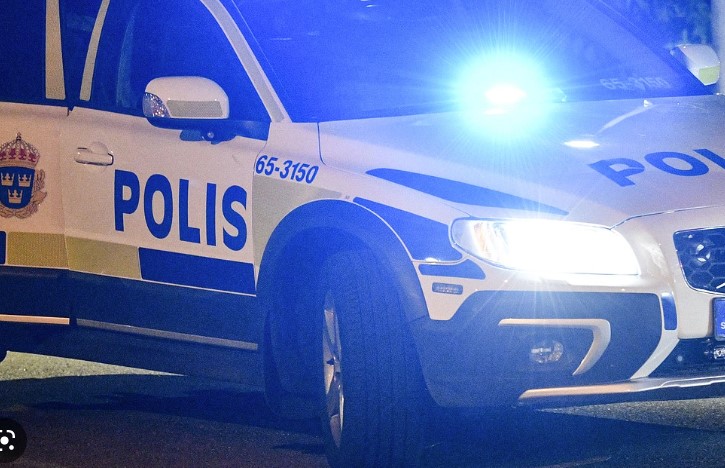
Spotlight on the Swedish police
image source: Johan Nilsson, TT / www.arbetaren.se

Nepotism comes from the Latin word for nephew, “nepos.” Already in the 1650s, the word nepotism was used to describe granting favors to favorites – in particular, granting high offices to family members. It was first used to refer to the papal habit of appointing “nephews” (or illegitimate sons) to high positions in the church.

Nepotism has other family members. Cronyism, discrimination, bias, and plain old favoritism are other names for giving unwarranted preferential treatment. A beloved child has many names, as the Swedish saying goes. Nepotism’s offshoots only show how common it is perceived to be.

Calling all units

Nepotism and suspicions of nepotism are crippling for any organization. They are even worse when they concern the highest positions in an organization. Especially an organization founded on a mission to uphold the rule of law.

The death of Stockholm’s Chief of Police Mats Löfving was the tragic end to a case of perceived nepotism. Löfving was relieved from his post pending the results of an investigation into his promoting his subordinate colleague and girlfriend to a high position in the police. He was also suspected of influencing the salary she was paid, of giving her the right to bear a service weapon, and lying about his relationship in the first place. The day after the investigation’s results were made public, absolving him from some transgressions but raising the possibility of others, Löfving was found dead in his Norrköping apartment.

Just helping out a friend

While cases of outright nepotism or discrimination are rare, cases of “friendly favoritism” or vänskapskorruption are considered common in Sweden. A study from Transparency International in 2021 found that nearly a third of respondents believed that the level of corruption has increased over the last five years. Twenty percent of Swedish respondents added that they themselves have availed themselves of personal contacts to skip a queue or otherwise get access to a service. No one can deny that personal contacts are key to finding, and getting, a job.

Friendly favoritism or outright nepotism in law enforcement, however, is particularly grievous. Not only is public trust undermined, but the morale and motivation of an already understaffed and pressed police force crumbles. As late as May, 2022, a questionnaire conducted by the Police Union found that four of ten police were actively looking for another job. This, in the midst of almost daily shootings and bombings, is a catastrophe.

A glimmer

Tragically and ironically, it was Löfving who in 2020 first broke the silence and went public on just how widespread clans’ criminal activities actually were in the Stockholm area. It caused a furor, but it also opened a lot of eyes. His death might do the same.  

Finland first?

Sweden got lucky with neighbors
image source: By JayCoop derived from BlankMap-World.svg, CC BY-SA 4.0, https://tinyurl.com/kuemt6ey

Sweden’s application for Nato membership has stalled. At the high level Munich Security Conference this weekend, even Nato chairman Stoltenburg seemed to imply that it was certainly possible that Finland would get full Nato member status before Sweden.

Sweden’s road to Nato has been rocky from the start. After Paludan’s Koran-burning stunt, a time-out was called but diplomatic back-and-forths have continued.

Post-Paludan and the freedom of expression

Since Paludan, the police have twice denied permission to burn the Koran publicly. The first they denied was a Paludan copycat. The second was similar, but in front of Iraq’s embassy. The denials have opened a whole debate on Sweden’s freedom of expression.

The police denied permission to burn the Koran in front of the embassies on the grounds that it would cause allvarliga störningar av den nationella säkerheten. They worried that the demonstration would disturb or perhaps weaken national security.

National security

National security is not officially a reason to deny permission to demonstrate. It’s not in the lawbooks. Instead, permission to demonstrate can be denied only if it seriously disturbs the order or safety of the public at the demonstration. Permission can also be denied if there was a serious disturbance or danger to those present at a similar, previous event.

Paludan’s similar, previous event caused no disturbance to those few who were present. These two recent denials are therefore a wider interpretation of the law than has been seen for decades.

These decisions have not, however, been recognized by Türkiye to be the deviations from the norm that they are. Nato chair Stoltenberg was glad that more Koran demonstrations were averted (as were many people). Still, Türkiye’s foreign minister stated at the same meeting that Sweden has not done enough to stop PKK or YPG activities. Furthermore, Türkiye considers Koran burnings a hate crime.

Hate speech?

In Sweden, Koran burning alone is not equated with hate speech against a specific group of people. Burning a Koran has not been regarded as speech in the same way as actually speaking, writing, drawing, or even wearing certain clothing has been regarded as speech. One legal opinion states that while the Koran is written and therefore speech, the physical act of burning is neither speech nor illegal. Freedom of expression is a point of pride in Sweden, and a lot is required to shift that sentiment.

Awkward, but not bad news

With these divergent views on fundamental legal definitions, it may be a longer road to Swedish Nato membership than anyone thought. It will be awkward and uncomfortable if Finland becomes a Nato member while Sweden remains outside, but it’s not a dead end.

While efforts are stalled for the moment, Türkiye’s acceptance of Finland is not necessarily bad news for Sweden. It means that Türkiye is not running Russia’s errands, that it is not opposed to Nato’s expansion, and that it recognizes the worth of additional countries in this region to Nato. Its acceptance of Finland shows that it is not unsusceptible to pressure. In addition, Türkiye has said it realizes that it is not anti-Muslim or anti-Türkiye sentiment driving some extremist actions, but anti-Nato sentiment.

Erdogan still has an election to get through and the situation between Sweden and Türkiye is fluid. The hope is that if Finland indeed gets in before Sweden, they will continue to push for Sweden’s inclusion from the inside.

Last week in Sweden

Know your voters.
image: https://tcf.org/content/commentary/does-voting-matter/

We don’t know yet what exactly happened at the Social Democratic party meeting in the Stockholm suburb of Botkyrka last week, but it could be worrying. Organized crime and city hall is not a combination we want to see.

It’s your money

As SVT reported recently, income from gang- and clan-run welfare fraud is even larger than their income from drug dealing. Welfare fraud is about systematically faking the numbers when applying for subsistence allowance, assistant allowance, housing allowance and association subsidies. Welfare fraud is about using state monies for personal gain.

10-20 billion kronor a year

No one knows how much money is paid out for services not due and never rendered. The Swedish National Financial Management Authority and the National Audit Office estimated several years ago, however, that the number was somewhere between 10-20 billion kronor paid out every year.

One of the services that municipalities support are the after-school and youth clubs that are sprinkled heavily throughout Sweden. These clubs were largely created to give kids a place to go to avoid getting into drugs or being recruited into gangs. These clubs are heavily subsidized by local municipalities, and are often run by associations.

One such association is ABF, the Workers’ Education Union. ABF is not a Social Democratic association, but it was co-founded by the Social Democratic party, and is closely associated with them. ABF Botkyrka runs many different courses, study circles and clubs, including several after-school, young adult centers. The current uproar about ABF, the Social Democratic party, and fears for democracy began over a year ago.

ABF = gangs??

The Botkyrka municipality, in which the Social Democratic party is the biggest and which holds the board chairmanship, began to hear rumors – too many rumors – that the local, subsidized ABF organization had ties to local gangs. In mid-February 2022 (a year ago now), the municipality’s board voted to freeze their payments to all of Botkyrka ABF’s after-school and young adult programs. The risk was too great, it was said, and the programs had to be shut down immediately. Soon afterwards, the municipality commissioned a formal investigation on the economy and activities of Botkyrka ABF.

The report they received back was alarming. Knives and drugs, youth wearing bullet-proof vests, youth with criminal records in responsible positions, gang ties, and dubious book-keeping were the headlines. ABF protested and made efforts to meet the accusations, but the funds remained frozen.

Has there been a coup?

Since then, it’s been reported, ABF members of the Social Democratic party have invited ABF supporters to join the party. It is these new Social Democratic party members, it is suspected, who tipped the scales at the internal meeting of the Botkyrka Social Democratic party this February and voted to oust the party chairman Ebba Östlin. Ebba Östlin was a prominent advocate of shutting down ABF’s after-school and youth centers.

Several questions are now raised. Was this a coup organized by the ABF to ensure their funding would be reinstated? Was this an abuse of the democratic process? Is the Social Democratic party in Botkyrka now in the hands of a criminal element that could use the voting process for financial gain? Or was Östlin only voted out because she was unpopular? The national Social Democratic party has said it will investigate.

Country-city-country

A face we’ll be seeing a lot of.
Image source: https://www.centerpartiet.se/partiledarvalet/muharrem-demirok

All politics is local, it’s said. But even local politics can have national and even international angles. So it is with the election of the new Swedish Center Party leader, Muharrem Demirok. Outside of the Center party in Linköping, no one had really heard of him. All eyes are on him now, though, and not only on his Turkish citizenship but also on the fact that Center party has traditionally been a rural-based party and Demirok is a Stockholm suburbs baby.

Demirok was born in Sweden in 1976 of a Swedish mother and Turkish father. Swedish citizenship was a possibility via his mother, but dual Swedish and Turkish citizenship was not. Muharrem’s parents gave him Turkish citizenship. When he was 21, Demirok applied for and received Swedish citizenship.

The rules for citizenship are as complex as human relations are complex, and the rules change over time as well. Only in 2001 did Sweden allow dual (actually, multi) citizenship. Demirok applied for Swedish citizenship in 1997. However, since dual citizenship was allowed in Turkey, it was not a problem for Turkey that Demirok became Swedish. In its turn, Sweden probably never specifically asked that Demirok renounce his Turkish citizenship, or check that he had. Sweden at that time was already considering loosening the single citizenship rule that had been in place since 1963. It’s unclear, but having both might not have seemed to matter. Now though, Demirok has said he is formally renouncing Turkish citizenship, in response to real or imagined national security concerns evinced by Center party members and others.

Besides citizenship, a matter that concerns party members is to what degree the Center party is losing is rural voter base. The Center party has always been “the farmer’s party,” with deep roots outside of city centers. Even as late as 2017, the Center party campaigned (among other things) for increasing the number of horses in the countryside – “for every ten horses a new job is created!”.

In his first long speech as Center party leader, Demirok invoked the countryside several times, claiming “all of Sweden must live.” One of the reasons that Demirok is now party leader, though, is that his predecessor Annie Lööf led a rather unsuccessful election campaign. Many of the voters she and the Center party lost were those rural voters. Demirok will have his work cut out for him to win them back.