
image source: sverigesradio.se https://tinyurl.com/46e5w4mk
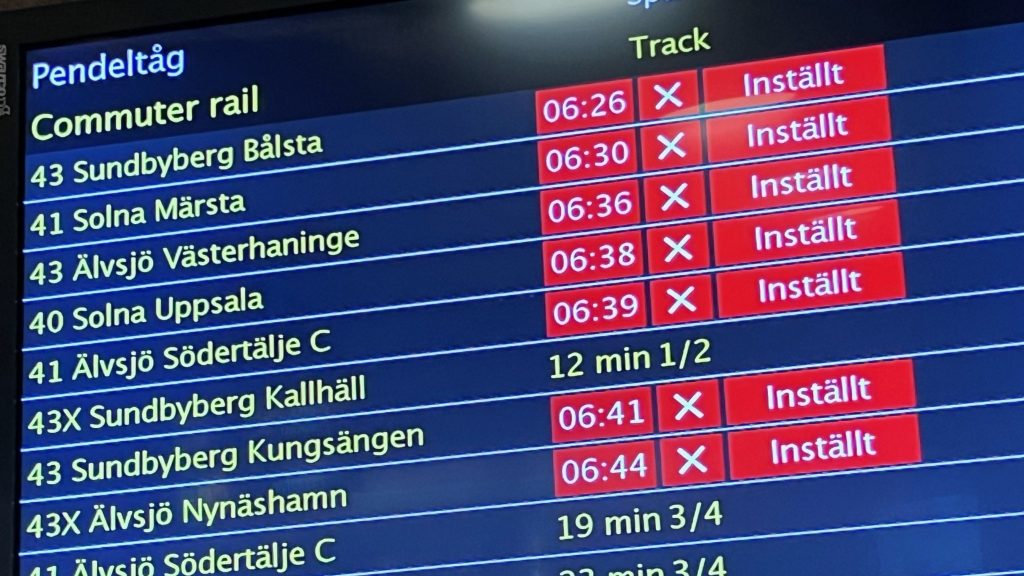
Thousands of Stockholm commuters this week were inconvenienced by striking train conductors. The strike by 20-30% of commuter train conductors in Stockholm resulted in many canceled and delayed rides. It did not result in any change in the staffing plans that the conductors struck to prevent.
“The Swedish model”
Strikes are rare in Sweden, especially since the 1990s. Up through the 1930s, however, there were many. The government at the time finally stepped in and told both employers and employees to sit down and work it out. Which they did.
The outcome of the negotiations, the Saltsjöbaden Agreement of 1938 (updated), was groundbreaking. In it, it was decided that the employer had the right to distribute work as they saw fit. Employees, on the other hand, were free to join a union. The government was to stay out of it. The employers and employees would arbitrate workplace issues themselves through collective agreements.
When these signed, collective agreements were in place, an obligation to maintain peace in the workplace (fredsplikt) was also understood. In other words, strikes would not be allowed as long as there was a collective agreement.
Breaking the law
This is what the striking train conductors broke in their so called “wild strike.” There is a collective agreement in place, but they struck anyway and disrupted the workplace peace. The strike is considered illegal, even by the union.
The train conductors knew this even as they considered their cause important enough to risk being sued and even dismissed. So far, however, Stockholm Region’s decision to replace train attendants with cameras, alarms, and other technology stands. Conductors will likely be the sole employee on commuter trains in the future.