1 March Anti-vaxxer to speak in Göteborg

no shots needed
pic: thedailybeast.com

Backa Folkets Hus outside of Göteborg has raised a lot of hackles by allowing an organization to hire the venue to hear a talk about the danger of vaccinations.

“The People’s House and Parks” (Folkets Hus & Parker) is a country-wide organization that administers 520 “Folkets Hus” venues. These venues can be hired by organizations and associations that are members of Folkets Hus & Parker for meetings, talks, educational courses, exhibitions and more. One of these member associations has rented the space to hear an anti-vaxxer speak.

According to Peter Andersson, administrator of the Backa Folkets Hus space, the only requirement for people wanting to rent the space is that they don’t go over time and that they clean it properly afterwards. Regarding this particular speaker, Andersson responded to DN “We live in a democracy, don’t we? Just because you learn certain things in school doesn’t mean that they’re correct.”

The woman who is to speak, an editor for a website that is critical to vaccinations (and who isn’t named in the article), describes the meeting as one in which she will be bringing up the “grim reality” of inoculations. The media, she claims, are influenced by the propaganda spouted by pharmaceutical companies, DN reports. The media don’t report on the side effects of shots: By only describing vaccinations as humanity’s salvation they’re just “playing into the hands of the pharmaceutical industry” (springer industrins ärenden).

Although there are no specific regulations, local Folkets Hus associations are encouraged to not have racist or other exclusionary speakers or organizations as members. The chair for the national association, Calle Nathanson, says that although the event sounds like fake news propagation, they are not about to forbid it: “No, we don’t do things like that. It would be like not allowing freedom of speech.”

The talk is scheduled for late March.

29 feb. Refugees look to move

refugees starting walking at the Turkish border
pic: NYTimes

Turkey’s President Recep Tayyip Erdogan announced today that he was going to open the border and allow the million-strong refugee population to leave Turkey, presumably for Europe. The 6 billion euros the European Union budgeted for paying off Turkey to not do exactly that is apparently already spent.

SvD writes that according to Doctors Without Borders, Turkey is currently harboring 3.6 million refugees, of which 365,000 come from countries other than Syria. Both Greece and Bulgaria share a border with Turkey, and there are Greek islands reachable by even a overweight and leaky rubber boat.

Minister for Justice and Migration, Morgan Johansson, seems unperturbed. In a comment, Johansson wrote that “We judge the risk for a new refugee crisis like the one in 2015 to be quite different this year. The situation in the EU and in Sweden is different. Sweden has another set of laws and it is harder for people to pass through Europe today. There are now many controls at the borders, and even in Sweden we have internal border controls that were put in place in 2015. The Swedish Migration Agency (Migrationsverket) has an expanded preparedness responsibility, and the government is in close contact with them.”

Moderate party leader Ulf Kristersson was more practical, calling for immediate aid to Bulgaria and Greece for help in strengthening their border control. “There will be big consequences if Turkey decides to renege on the (EU-Turkey) agreement” he said. “We know that Sweden and a few other countries are the most vulnerable if there isn’t a functioning border, as a lot of people come here.”

Before money is sent to Bulgaria and Greece though, a more likely scenario is sending another multi-billion cheque to Turkey for their continued help in penning in refugees. Keeping an army in Syria is expensive, after all, which is what the EU’s cheque will help fund.

26 Jan. – travel advisory issued

today came the warning
pic: spirit.com

Sweden today went out with a travel advisory regarding the Wuhan area in China, where the Corona virus has its epicentrum: “One should refrain from traveling in the Hubei region if it is not absolutely necessary.” Earlier today, both Denmark and Norway went out with similar advisories, DN reports.

Japan has arranged to evacuate 430 of its citizens out from the Wuhan area via a specially chartered plane, and France and Russia are currently negotiating for the evacuation of their citizens, SvD writes.

How worried should we be? Anders Tegnell, epidemiologist at the Public Health Agency of Sweden (Folkhälsomyndigheten), says his understanding of the situation has now changed a bit. “In the beginning, I was feeling more secure. But now the picture has changed a little.” “Just now,” he added, “we’re in an early stage of infection, and it is restricted to a relatively limited area. And the Chinese have apparently the possibility to reduce travel enormously. This should reduce the rate it spreads. But sooner or later someone will slip through.”

Hospitals’ scenarios assume that someone will come in after a trip to China, feeling ill, DN notes. At this point, they will run some tests to see if they are infected with the virus. This will take 5 or 6 hours since the sample has to be taken by car or by plane to the Health Agency’s lab in Solna. If the results are positive, they’ll be isolated because of contagion, and the staff must wear protective clothing when in contact with the patient. China has said the number of infections is now just over 2000.

Dick Harrison, resident historian at SvD, is on record saying that the chances for any recurrence of the Black Death are minimal. So that’s good news.

25 Jan. – Corona virus affects Swedish companies in China

the virus close up
pic: cnn.com

The Corona virus hasn’t hit Sweden (likely it will, maybe it’s won’t), but it has hit Swedish businesses in China. H&M, Ikea, Ericsson, Volvo, Scania, Alfa Laval, Assa Abloy (also Finnish), Sandvik, SKF, Atlas Copco, AstraZeneca and Elektrolux are the big ones, that between them have tens of thousands of employees.

H&M and Ikea have closed their stores in the Wuhan area (where the virus is centered, for the moment at least), reports SvD, and are letting their employees stay at home with full salary. H&M has nine boutiques in the Wuhan area and tens of thousands of employees in China. Volvo has no presence of its own in Wuhan, but is stopping all trips to the area, which can affect resellers, according to DN. So far, none of the companies have told DN that they know of any employees being infected. Many employees are also off for the Chinese new year celebrations.

Not Swedish news exactly, but the Wuhan hospital is now overwhelmed with patients and they’ve begun sending people home: The Chinese authorities have already started building two new hospitals nearby – one is due to be able to begin taking patients in the beginning of February. Problematic, yes, but fun comparison – Ny Karolinska hospital in Solna took 8 years from the first spade hitting the dirt to full operation.

France has confirmed the first case of the Corona virus in Europe – one in Paris and one in the Bordeaux region. Both persons had been to China recently. French authorities are asking people that have been to China and think they might have the virus to not go to the emergency room.

In China itself, there are nearly one thousand confirmed cases. There could be many more even as this post is being written.

23 Jan. – Sameby is granted exclusive rights

good for hunting and fishing
pic: southlapland.com

The Girjas herding cooperative (Girjas sameby) was today granted the exclusive rights to small game hunting and fishing within their borders. Although the state of Sweden still formally owns the land, the state is no longer able to sell hunting and fishing licences – that right belongs solely to the cooperative members, if they so choose or not.

The case went all the way to the highest court, after mixed verdicts at the lower levels. The supreme court based their decision on the historical circumstances and rights due to their having lived and worked on the land since time “immemorial” (urminnes hävd).

Minister for Rural Affairs Jennie Nilsson commented that the ruling today will likely have consequences for not just hunting and fishing, but also for other Sami communities and for Sami who are not living in Sami communities. Others are worried, though, that this will sow seeds of huge discontent in those who also live in these areas but who are not Sami. Although most legal experts say this was the only correct verdict considering the four binding conventions Sweden has signed and that provide far-reaching rights for indigenous Sami people – it was not taken well by everyone, DN reports. Twitter wasn’t polite – or even decent – in many instances.

Stay tuned for more reports of conflict.

20 Jan. – the Swedish postal service gets a no

going the way of the phone booth?
pic: Hallandsposten.se

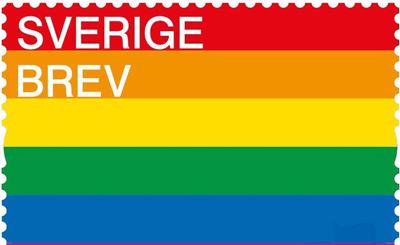
Minister for the Interior Anders Ygeman said no today to Postnord’s request to have three days, not two, in which to get domestic mail from one part of Sweden to another, DN reports. The Swedish postal service is in crisis mode – see this post.

Formal approval from the government is still needed, but Postnord has already received permission from the the Post and Telecom Authority (Post- och Telestyrelsen) to deliver mail to people’s residences only every other day (instead of every day). However, this won’t be helpful unless it is also allowed to take three days to move the letter to where it can be delivered. This second part got a cold no.

What Postnord did get, was the promise of a formal inquiry – slated to take 18 months to complete. “A postal service inquiry is needed to see if this is the best way” Ygeman said. “I have to attend to what is best for citizens and the needs of customers.”

As their mail delivery service is used less and less, Postnord is expected to be billions of kronor in the red in only a few years.

18 Jan. – Postnord on the rocks

what will stamp collectors do?
pic: sydsvenskan.se

DN revealed a secret report today, that showed Postnord to be on the brink of bankruptcy (konkurs). Postnord is the second largest employee in Sweden with 20,000 employees. Plus, it mostly (though not always) delivers mail to your door on a regular basis. And it has cute stamps you can stick on things.

On the negative side, it doesn’t work well (understatement alert) and it’s fairly expensive. Not expensive enough, though, apparently.

Over a year ago, in December 2018, the Danish and Swedish governments ordered an analysis from McKinsey & Company on the postal service’s future. DN asked for a copy, and got a 140 page report – largely blacked out in text-camouflaging ink. DN then got inside information from people in the know.

Since 2000, the Danish mail delivery service has decreased 90%. In Sweden, digitalization has taken a little longer, but the prognosis is bad here too. Just over the last three years, DN reports, the service has gone 2.99 million kronor in the red. Most of the this is due to the dire situation in Denmark, it is said.

The Post and Telecom Authority (Post- och Telestyrelsen), which is the agency responsible for the service (tillsynsmyndigheten), forecasts that the volume of mail in Sweden will be halved within the next few years. This service is where Postnord makes its money.

Denmark and Sweden jointly own Postnord. Sweden owns just under 60%, and Denmark the rest. (For some incomprehensible reason, though, they have equal votes on the board.) Each country’s postal service merged to form Postnord in 2009. It didn’t help.

The postal service may not be a profitable company, but it still has a mandate for society: It is hard to imagine a country with no postal service at all. Therefor the alternatives aren’t many: increase the prices drastically, or cover its losses with a massive state subsidy.

Annemarie Gardshol, executive director of Postnord (vd) refused to comment on the report to SVT, but said that the societal duty they have today must be changed, or it needs to be subsidized. “If the state wants to maintain the current level of service, a subsidy may be needed – but we’re not there today.”

DN reports that Postnord had almost 3 billion kronor in its bank account as of the end of September, 2019. Included in that is stock holdings of 2 billion. If that goes down to half, a liquidation balance is reached – which is the first step to declaring bankruptcy.

We need to start thinking about what the mail means to us.

17 Jan. – where’d you get that prescription?

a happy customer with a filled prescription
pic: apoteket.se

Apoteket AB announced today that it had bought a substantial share in Doctor24, one of the online doctor services that have become so popular over the last few years. Popular because you can actually talk to a doctor from the comfort of your home and not sit in hard chairs getting coughed on by strangers for hours on end – only to be told to take a few aspirin and go home. Sadly, there is no comparison between healthcare centers (vårdcentraler) they way they’re set up now, and your phone.

What makes this news is that Apoteket AB is state-owned. The same state that is trying to limit, tax, tar, feather and drive out of town online doctor services because they are said to drive up healthcare costs by encouraging unnecessary doctor visits. They are too easy to use, it seems.

Ibrahim Baylan, Minister for Business, Industry and Innovation and responsible for questions regarding state-owned businesses, passed on commenting more than saying that Apotek AB makes its own decisions: “It’s the company’s board that is responsible for the operation of the company. The decision to invest in Doctor24 is an operative decision that has been made by Apotek’s board” Baylan told SvD.

Anna Starbrink, healthcare councilperson for Stockholm, is seeing red. In an comment to SvD, she said “When we go to an Apotek now, we’re encouraged to turn to Doctor24 to renew our prescriptions. And then the bill for 500 kronor goes to taxpayers.”

“We’re supposed to prioritize the patients with greatest need, and here we have to pay online doctors for something that is already part of the regular care system. It fuels an unnecessary extra cost” she added.

But Tobias Perdahl, chief medical officer at Doctor24 put his finger on the problem. “She’s basically right” he said. “This should be easily covered by the regular care system. But it’s common that it takes days or weeks to renew a prescription. A patient without a prescription is a big problem.”

Anna Starbrink is looking to start a larger debate, SvD reports. ” We don’t accept that a healthcare provider owns a pharmacy – and the question is whether or not a pharmacy should be allowed to own a healthcare provider. What the effect will be is an important question and needs to be looked at.”

(PS. Apotek AB should not be confused with the other private Apotek chains like Apotek Hjärta, Apotek Lejon, etc.)

16 Jan. – apartment queue at record high – again

get in line – you’re behind 676,000 people
pic: dreamstime.com

It’s not really new, but SvD published the latest figures – a new record – on the Stockholm apartment queue today. Over the last year, 40,000 new names were added to the list – bringing the number of people in line to get a rental apartment to a nosebleed high of 676,000 people. It’s almost twice the number of the people already living in Stockholm’s inner city limits.

The Stockholm apartment queue is an institution: you sign up, you pay a yearly fee, and sometime – around fifteen-twenty years down the line if you want an apartment in downtown Stockholm – you’ll be given an apartment. Not for free! No, you still have to pay rent and all. It’s just that you’ll have a chance to get an honest-to-God apartment in Stockholm without any hassle. All you need is patience and 200 kronor a year to keep your place in line (bostadskö).

There are faster ways to get an apartment, but it’s a tradeoff in time and money. There are also different queues, for example if you’re a senior citizen (over 65) there’s another queue, and it’s even a little shorter – the average waiting time is 10 years. If you have special needs, there’s another queue. For students, there’s an average wait time of 5 years.

According to this older article, about 12,000 apartments are announced out every year but they’re not always snapped up. Stories abound of apartments to let, with announcements sent out to hundreds of people, that nobody then accepted (see one story here). The system’s inflexibility also means that someone suddenly in need of a place to live due to health or divorce and the like, can be completely out of luck.

It has become something entirely different than the what it was set up to be back in the 40’s. These days, there are tens of thousands of people that are in the queue “just in case” and who already have an apartment. Martin Lindvall, public policy chief at the property owners association Fastighetsägarna, told SvD that the queue functioned a bit like an insurance policy: “Those first in line” he said, “are those who are already well established.”

However, 676,000 people paying 200 kronor a year brings in 135 million kronor to the city, which is not to be sneezed at. We can only hope that some of that money goes to people for whom the queue was supposed to help.