
img src: TV4 http://tinyurl.com/ycyvx6wz
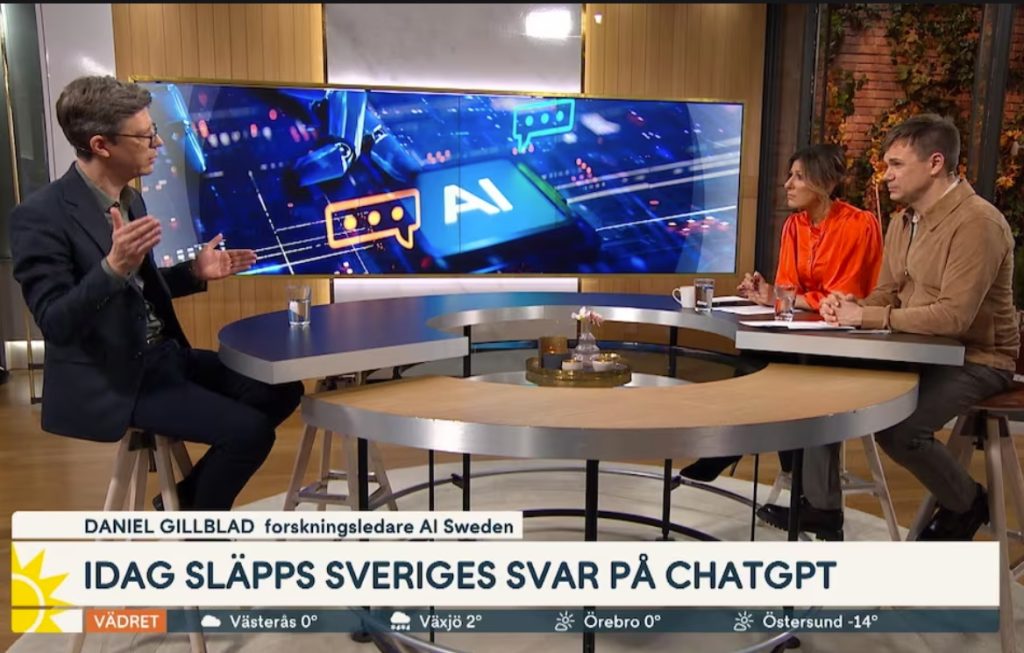
GPT-SW3 was released just over a month ago, with the twin goals of digital sovereignty and digital assistance. SW3 is based on the same technical model as Open AI’s chat gpt, but was trained on Swedish material written in Swedish. This newer model was fed not just Flashback threads (see this previous post), but also Diva research publications, 1177, and the Swedish literature bank.
You can not ask SW3 to help you on your next work presentation, though. It is not yet that kind of finished product. So far, it’s a model that an organization must build a product or an app to use. It is as if you license a motor after which you need to build a car to put it into.
The development of GPT-SW3 has had two aims, to start. One aim is digital sovereignty. This means developing the domestic competence to collect, manage, use, and safely store the nation’s own data. Digital sovereignty means not having to farm out these services to other actors.
Not everyone believes that a digital silo is safest or best, however. An “eggs in one basket” scenario is envisioned. It’s also expensive, in both hardware and energy. On the other hand, it keeps expertise in the country.
A second aim is to use the model to create a digital assistant for the public sector. Part of the training material for this assistant is the data that the civil service already uses and has created in the field.
Minister for Public Administration, Erik Slottner, foresees that the 100 million kronor project will increase efficiency and improve organization. And save kronor in the billions.