Mother tongue language instruction

help or hindrance?

Mother tongue teaching under fire again
img src: NBC News http://tinyurl.com/hjvjcf6j

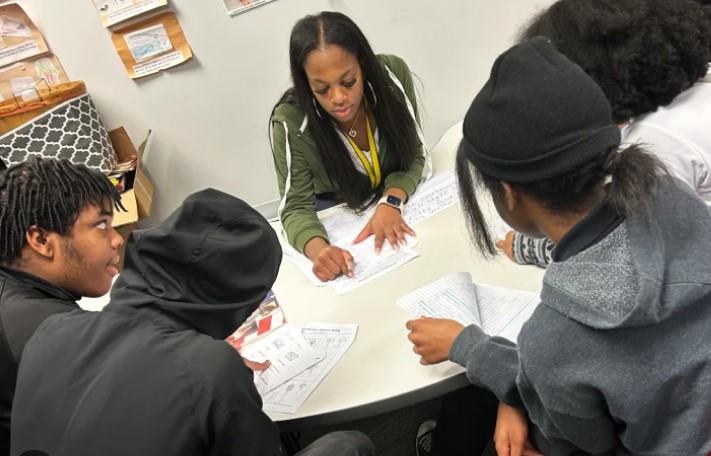
In a press release last week, the government and the Sweden Democrats (SD) announced another inquiry. This time, the government wants to find out how mother tongue language instruction helps or hinders students. More specifically, they want to find out how the weekly hour of home language instruction affects students’ integration into Swedish society. They also will look at these students’ Swedish language acquisition, and their overall study success.

The rules surrounding home language instruction have changed since its inception in the 1970s. From first being voluntary, it is now a right. School children in Sweden have a right to instruction in the language the child speaks at home for one hour a week, outside of regular school hours.

Due partly to questions regarding the subject’s validity, the regulations around home language have increased as well. The syllabus for home language instruction is found in the National Agency for Education’s curriculum. The subject has a list of knowledge requirements and grading criteria like any other subject. In addition, there is an explicit teacher credential with grade specification for just mother tongue language teachers.

The increased regulation has coincided with the number of investigations into the subject. In its press release, the government states that there is a dearth of information about possible effects of home language classes. There have however, been a number of investigations in the past. The latest was in 2019, which found that students who took mother tongue classes achieved better academic results that those who were eligible for classes but didn’t sign up for them.

For whatever reasons, this government may find other results.
GPT-SW3 and digital sovereignty

GPT SW3: keeping data safe at home
img src: TV4  http://tinyurl.com/ycyvx6wz

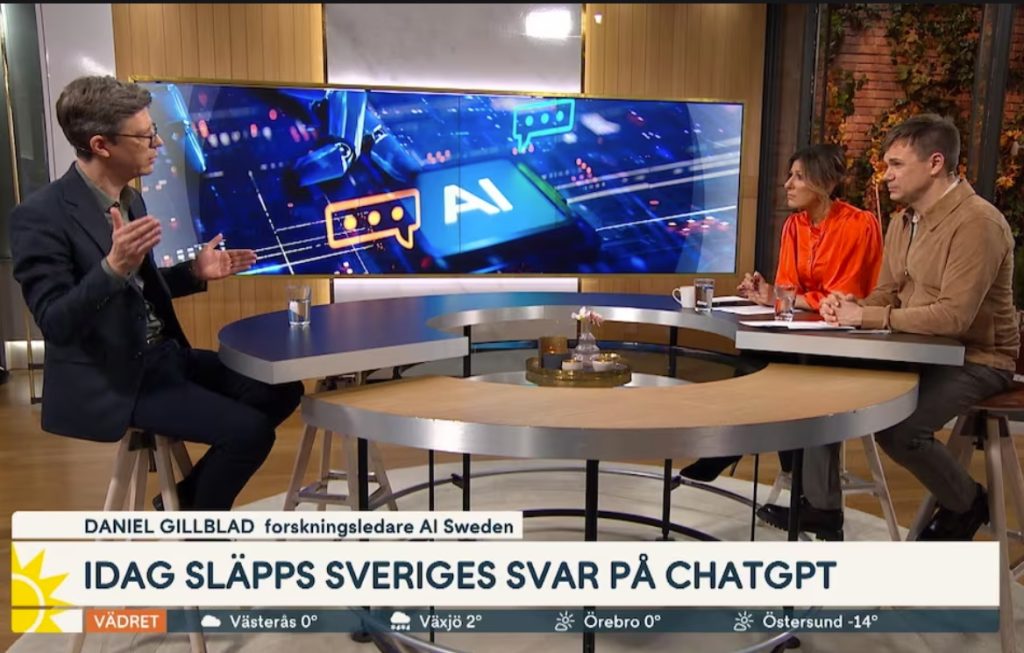
GPT-SW3 was released just over a month ago, with the twin goals of digital sovereignty and digital assistance. SW3 is based on the same technical model as Open AI’s chat gpt, but was trained on Swedish material written in Swedish. This newer model was fed not just Flashback threads (see this previous post), but also Diva research publications, 1177, and the Swedish literature bank.  

You can not ask SW3 to help you on your next work presentation, though. It is not yet that kind of finished product. So far, it’s a model that an organization must build a product or an app to use. It is as if you license a motor after which you need to build a car to put it into. 

The development of GPT-SW3 has had two aims, to start. One aim is digital sovereignty. This means developing the domestic competence to collect, manage, use, and safely store the nation’s own data. Digital sovereignty means not having to farm out these services to other actors.

Not everyone believes that a digital silo is safest or best, however. An “eggs in one basket” scenario is envisioned. It’s also expensive, in both hardware and energy. On the other hand, it keeps expertise in the country.

A second aim is to use the model to create a digital assistant for the public sector. Part of the training material for this assistant is the data that the civil service already uses and has created in the field.

Minister for Public Administration, Erik Slottner, foresees that the 100 million kronor project will increase efficiency and improve organization. And save kronor in the billions. 

wage raises result in complaints

When do your politics decide your salary?

The Committee on the Constitution looks at the government’s salary directive
img src: https://svenskjakt.se/start/nyhet/krav-pa-okat-tjanstemannaansvar/

A formal complaint has been lodged against the Kristersson government with the parliamentary Committee on the Constitution (konstitutionsutskottet, KU).  The complaint regards a salary directive that allows bigger raises for civil servants who specifically work to implement policies in the Tidö agreement. To opposition parties, the directive disrupts and corrupts the non-political nature of civil servant government work.

The line between politicians and bureaucrats is often muddy. In 2018, a petition was signed by many civil servants working in the Swedish foreign ministry. The signees questioned their obligation to serve their employer, the government, if it did not work to further similar values to their own. Cases of civil servants acting on personal political opinions have been documented in other government departments as well as government services. The nurse who refused to carry out abortions had to quit when she refused to perform work that was part of the job description.

Systembolaget is the state-owned alcohol monopoly and is one of several hybrid government businesses. Their agreement on setting local employees’ salaries was signed last May. Regarding local salaries, one deciding factor is to what degree the employee meets “the goals for the enterprise.” Disagreeing with an employer’s goal, the government’s goal in this case, can apparently affect your salary even selling beer. 

Making careers dependent on how much one works to execute a business vision is nothing new in the corporate world. It’s nothing particularly new in the government world either. Connecting it to a wage increase, particularly in these difficult economic times, is an animal of slightly different color. We’ll see what conclusion the constitution committee comes to.

Sweden in recession

Recession or really good fika?
img source: https://www.greenbiz.com/article

The standard definition of a recession is two quarters of declining GDP, gross domestic product. By that measure, Sweden is in a recession. Sweden’s GDP in the third quarter of 2023 was 0.3% lower than the previous quarter, which in turn was 0.8% lower than the quarter before. Sweden’s GDP (bruttonationalprodukten) is expected to sink 0.4% even next year, according to Swedbank.

It’s complicated, but as a general rule there is a correlation between GDP and inflation. Sweden’s central bank has been working to bring down inflation all year. To do that, Sweden’s spending needed to come down. Raising interest rates – making money more expensive by making loans more expensive – was the chosen method. It looks to have succeeded.

But not without pain. Raising rates makes business expansion difficult and can even cause contraction, as the new GDP numbers indicate. It is largely the same for governments, who find they too must contract despite an often increasing need for social services. A poor economic outlook means that unemployment rises, as it has done in Sweden for the last several months. Economists note that the Swedish central bank is likely to even raise interest rates again – just to make sure the anti-spending message gets across.

In good news, however, inflation is expected to hover around a more normal 2% by the end of next year. In conjunction with that happy trend, even interest rates will come down. The consensus is that with a more normal interest rate, business spending can pick up, leading to new hires and a better GDP. There are certain to be bumps in the road, but a recession won’t last forever.